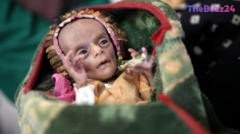
Yemen’s Deepening Humanitarian Crisis: Newborn Twins’ Struggle Highlights Nation’s Dire Plight
From their premature birth seven weeks ago, twins Raghad Hassan and her brother Raad have faced an uphill battle for survival, emblematic of Yemen’s escalating humanitarian catastrophe. Born amidst intense fighting in the country’s protracted civil war between Houthi rebel fighters and government forces, their family of seven was forced to flee their village in the Kahboub mountains. Enduring a perilous three-day journey under constant threat of bombs and drone attacks, the twins, shielded only by blankets, grew weaker with each passing hour, suffering from exhaustion, cold, dust, and worsening vomiting and diarrhea.
Upon their arrival at al-Sadaqah hospital in Aden, the twins were in a critical state, diagnosed with severe acute malnutrition—a condition as deadly as any weapon. Their father, Bajash Ali Sagir Hassan, a shepherd who lost his livelihood fleeing the conflict, recounted the struggle to feed them, often resorting to water due to the soaring price of baby milk. Their plight reflects a broader crisis; the United Nations reports that an informal ceasefire’s collapse has displaced over 250,000 people and cut off life-saving aid for approximately 800,000, particularly in areas like Taiz, now besieged by Houthi advances.
The hospital itself operates under immense pressure, with dedicated staff like supervising nurse Aisha Ragab, a war survivor herself, working tirelessly to secure care despite limited resources. Dr. Noor Mohammed, a young doctor, lamented the tragic loss of patients due to a severe lack of international funding, essential equipment like ventilation machines, and even basic oxygen bottles. The malnutrition unit, designed for 22 beds, can only admit 13 critical cases at a time, creating a grim cycle where discharged children often return within days or weeks because their impoverished families cannot afford proper nutrition or medication.
Bajash’s family, like countless others, is caught between the ravages of war and extreme poverty. Having abandoned his flock of ten sheep—his sole source of income—he now struggles to care for his five young children. While his twins fought for life inside the hospital, Bajash and his three older children were forced to sleep on the streets, a stark illustration of the invisible, yet profound, wounds inflicted by the conflict that threaten to disfigure an entire generation.
Key Takeaways
- Newborn twins Raghad and Raad exemplify the severe humanitarian crisis and widespread malnutrition in Yemen, exacerbated by ongoing conflict.
- The collapse of an informal ceasefire has led to increased displacement (over 250,000 people) and a worsening hunger crisis, with 800,000 people losing access to aid.
- Hospitals like al-Sadaqah in Aden are overwhelmed and under-resourced, struggling to provide life-saving care amidst a surge in severe acute malnutrition cases, often leading to repeat admissions due to poverty.
Editor’s Analysis & Impact
Yemen’s ongoing conflict continues to exact a devastating humanitarian toll, as highlighted by the severe malnutrition crisis. The collapse of the ceasefire and subsequent Houthi advances have exacerbated an already dire situation, straining an already fragile healthcare infrastructure to its breaking point. This crisis underscores the critical need for sustained international funding and diplomatic efforts to secure a lasting peace. The long-term implications include a lost generation suffering from chronic health issues, widespread poverty, and societal instability, which could have ripple effects across the broader Middle East. Without urgent intervention, the cycle of displacement, hunger, and disease will continue, deepening a catastrophe that demands global attention and action.
Frequently Asked Questions
Q: What is severe acute malnutrition (SAM)?
A: Severe acute malnutrition (SAM) is the most extreme and visible form of undernutrition. It is characterized by very low weight-for-height, visible wasting, or the presence of nutritional oedema. Children with SAM have a nine-fold increased risk of death compared to well-nourished children.
Q: How has the conflict impacted Yemen's humanitarian situation?
A: The protracted civil war in Yemen has led to widespread displacement, economic collapse, and a severe humanitarian crisis. It has disrupted food supply chains, driven up prices, and destroyed infrastructure, leaving millions without access to food, clean water, and healthcare, resulting in one of the world's worst hunger crises.
Q: What challenges do hospitals in Yemen face amidst the crisis?
A: Hospitals in Yemen, like al-Sadaqah, face immense challenges including severe shortages of international funding, essential medical equipment (such as ventilation machines and oxygen bottles), and qualified staff. They are often overwhelmed by the sheer volume of patients, particularly those suffering from severe acute malnutrition, and struggle to provide adequate care, leading to preventable deaths and frequent readmissions.
AI Disclosure: This article is based on verified data and official reports. Our Team and AI have cross-referenced every financial detail with primary sources to ensure total accuracy.
More from this Category