NASA Executes Crucial Hot-Fire Test on Artemis Rocket Engine at Stennis Space Center
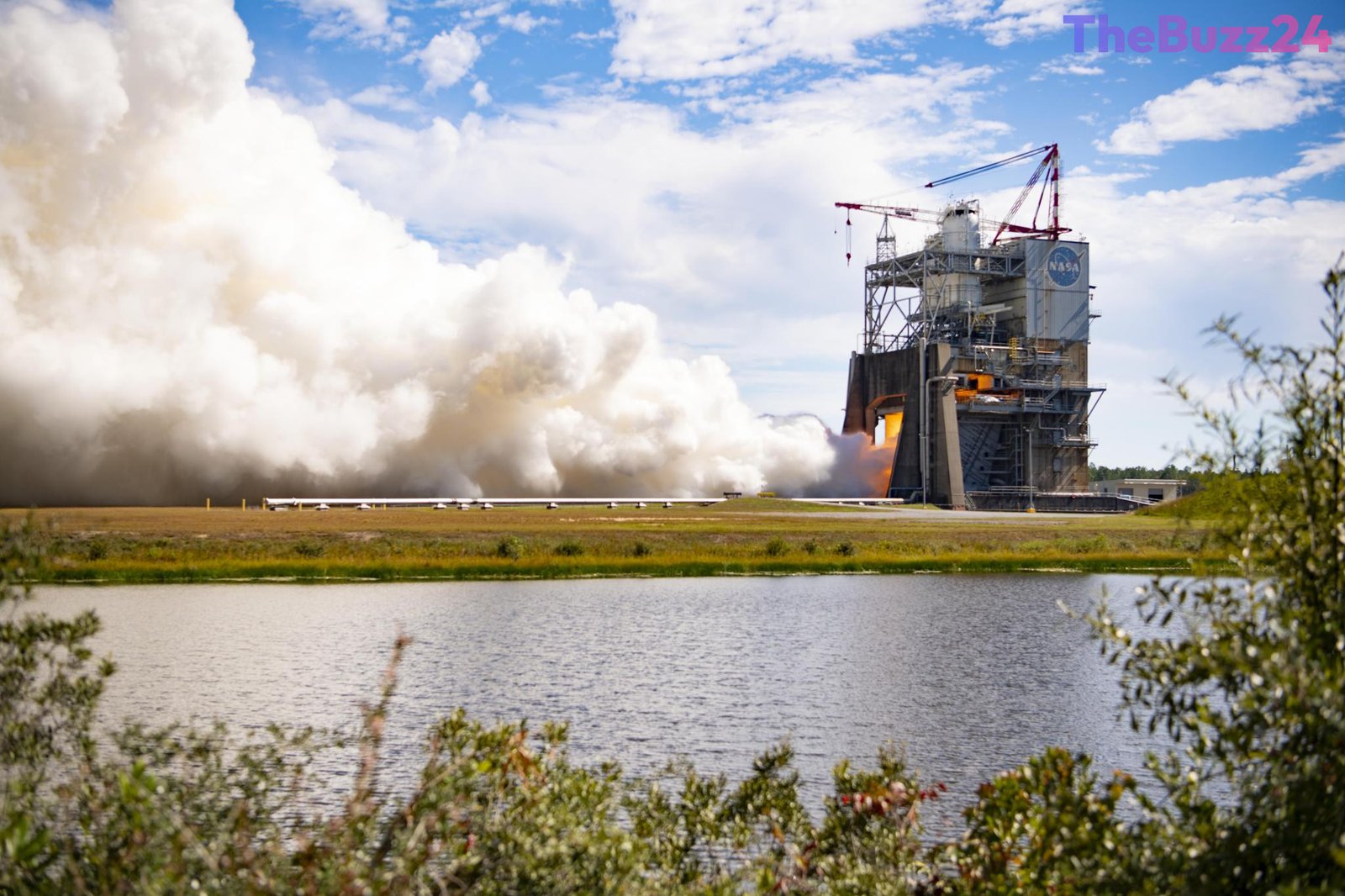
Engineers at NASA’s Stennis Space Center near Bay St. Louis, Mississippi, successfully completed a full-duration hot-fire test on developmental RS-25 engine No. 10001. The test ran for nearly eight and a half minutes—500 seconds total—which precisely replicates the required operating time during a live launch of the Space Launch System (SLS) super heavy-lift rocket. Pushed to an elevated 111% power level, the trial demonstrated the hardware’s resilience under intense thermal and structural stresses.
During each crewed Artemis lunar mission, four RS-25 engines fire simultaneously to produce up to two million pounds of combined thrust, propelling humanity’s next-generation spacecraft beyond Earth orbit. Ground testing at Stennis is a required milestone to certify propulsion hardware as flightworthy before integration onto active flight vehicles.
While engine No. 10001 is a dedicated developmental unit and will not travel into space, the test provided critical operational data. Working in collaboration with prime engine contractor L3Harris Technologies, aerospace teams will analyze the results to optimize manufacturing methods, boost engine reliability, and refine overall propulsion efficiency for upcoming missions to the Moon.
Key Takeaways
- NASA successfully executed an 8.5-minute (500-second) hot-fire test on developmental RS-25 engine No. 10001 at a 111% power level.
- Four RS-25 engines generate up to two million pounds of combined thrust to power the Space Launch System (SLS) rocket during Artemis launches.
- Data collected alongside contractor L3Harris Technologies will be used to optimize engine reliability and performance for future deep-space missions.
Editor’s Analysis & Impact
The successful 500-second test burn of the RS-25 engine represents a significant operational validation for the Artemis program’s long-term timeline. Pushing developmental engines to 111% power allows engineers to map performance thresholds and identify potential wear points without risking costly flight hardware. Collaborating closely with prime contractor L3Harris Technologies helps streamline the production pipeline, which is essential for maintaining a steady cadence of lunar missions. As NASA pivots toward sustained human presence on and around the Moon, consistent ground-test successes reinforce confidence in the Space Launch System’s core propulsion architecture.
Frequently Asked Questions
Q: What is the purpose of the RS-25 engine?
A: The RS-25 engine serves as the main propulsion engine for NASA's Space Launch System (SLS) rocket, providing the thrust needed to launch crewed Artemis missions into deep space.
Q: Why did the test last for 500 seconds?
A: A 500-second burn (nearly 8.5 minutes) mirrors the exact amount of time the RS-25 engines must fire during a live SLS rocket launch to reach orbit.
Q: Will engine No. 10001 be used on a space mission?
A: No, engine No. 10001 is a developmental model strictly used for ground testing to collect telemetry and refine future engine designs.
AI Disclosure: This article is based on verified data and official reports. Our Team and AI have cross-referenced every financial detail with primary sources to ensure total accuracy.
More from this Category