Legacy of the Neil Gehrels Swift Observatory: A Two-Decade Journey Through the Cosmos
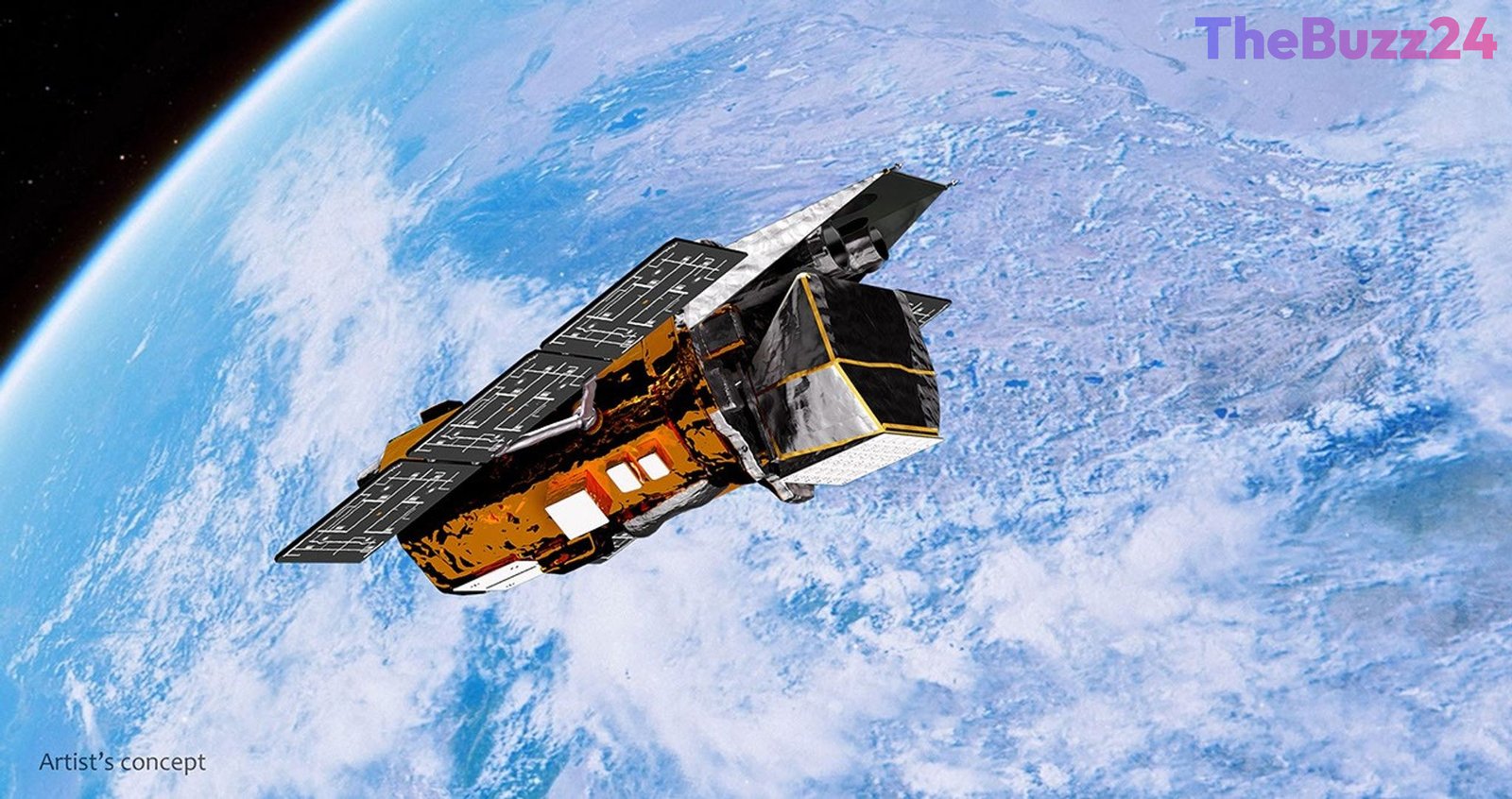
The Neil Gehrels Swift Observatory has officially concluded its historic mission, marking the end of a transformative era in high-energy astrophysics. After more than two decades of operation—far exceeding its original two-year design life—the spacecraft has descended to an altitude of less than 171 miles. At this proximity to Earth, increased atmospheric drag has rendered the satellite unable to maintain the precise pointing required for its sensitive astronomical instruments.
Launched in 2004, the observatory became a cornerstone of modern space science, specifically designed to detect and analyze gamma-ray bursts, the most powerful explosions in the universe. Its unique ability to autonomously pivot and capture the afterglow of these fleeting events within a minute revolutionized the field. Throughout its tenure, the mission documented over 2,000 gamma-ray bursts, 1,400 supernovae, and numerous instances of black holes consuming stars. The data collected, totaling approximately 12 terabytes, has been instrumental in the publication of roughly 7,000 scientific papers.
Beyond its primary objective, the observatory functioned as a versatile astronomical tool, capable of scheduling up to 75 independent targets daily. Its contributions were pivotal in confirming that short gamma-ray bursts are likely the result of neutron star mergers. As the spacecraft prepares for atmospheric re-entry, it leaves behind an unparalleled archive of multiwavelength observations that will continue to serve as a vital resource for researchers investigating the dynamic nature of the cosmos for decades to come.
Key Takeaways
- The Neil Gehrels Swift Observatory concluded its mission after 22 years of service, significantly outlasting its initial two-year design.
- The satellite was instrumental in capturing over 2,000 gamma-ray bursts and providing data for approximately 7,000 scientific publications.
- The mission's legacy includes a 12-terabyte public archive that will continue to support astrophysical research for future generations.
Editor’s Analysis & Impact
The conclusion of the Swift mission represents a significant transition point for high-energy astrophysics. By pioneering rapid-response observation, Swift fundamentally changed how the scientific community approaches transient cosmic events. Its success proved that agility in space-based instrumentation is just as critical as raw sensitivity. Moving forward, the industry is likely to see a shift toward more decentralized, multi-mission networks that can replicate Swift’s rapid-response capabilities. The reliance on a single, highly specialized satellite is being replaced by a strategy that leverages a fleet of diverse telescopes and commercial space assets. This evolution ensures that while individual missions have finite lifespans, the capability to monitor the ‘changing universe’ remains robust, setting the stage for a new generation of automated, collaborative space exploration.
Frequently Asked Questions
Q: Why did the Swift mission have to end?
A: The mission ended because the spacecraft's orbit decayed to an altitude of less than 171 miles. At this height, atmospheric drag became too strong for the satellite to maintain the steady, precise pointing required to observe astronomical targets.
Q: What was the primary scientific contribution of the Swift observatory?
A: Swift's primary contribution was its ability to rapidly detect and locate gamma-ray bursts. By quickly pivoting its telescopes to capture the afterglow of these explosions, it provided critical data that helped scientists understand the origins of these events, including the confirmation that they often result from neutron star mergers.
AI Disclosure: This article is based on verified data and official reports. Our Team and AI have cross-referenced every financial detail with primary sources to ensure total accuracy.
More from this Category