From Russian Cages to Irish Sanctuary: A Five-Year Odyssey for Rescued Bears
Two brown bears, Bu and Tyapa, are beginning a new chapter of their lives in the lush Irish countryside after a complex and lengthy rescue operation. Their journey, spanning five years and multiple international borders, was fraught with significant challenges, including two major global conflicts, and required the dedication of over 100 individuals.
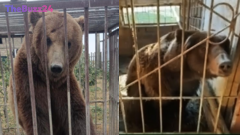
Bu, a former circus performer, and Tyapa, who endured confinement in a cage too small to stand upright, have found refuge at Wild Ireland, a sanctuary in County Donegal. This facility, established in 2019, provides a safe haven for a variety of rescued animals. Upon their arrival, both bears were found to be in extremely poor health, suffering from severe malnutrition, psychological trauma, and significant kidney issues exacerbated by dehydration. Tyapa’s former enclosure was particularly dire, a mere 2.5m by 2.5m space with a height too low for him to stand, leaving him exposed to extreme weather conditions and without adequate water provisions.
The rescue mission faced considerable hurdles. An initial transport plan was thwarted by Russia’s invasion of Ukraine in February 2022, rendering the planned route impossible. A subsequent attempt to reroute through the Middle East was again disrupted in February 2026 due to escalating conflicts involving Iran, which led to widespread airspace closures. Despite these setbacks, a dedicated team comprising lawyers, veterinarians, animal transport specialists, and officials from Russia, the United Arab Emirates, and Ireland worked tirelessly. The bears ultimately traveled from Moscow, via Abu Dhabi, to Dublin, arriving in Ireland on August 3, 2026.
Since settling into their new habitat at Wild Ireland, Bu and Tyapa have shown remarkable recovery. Sanctuary founder Killian McLaughlin reports significant weight gain, improved coat condition, and a return to normal kidney function. The sanctuary’s environment, featuring woodland, water features, and ample space for exploration, is designed to encourage natural behaviors and aid their psychological healing. Staff are actively engaging the bears in foraging activities to build their confidence and help them adapt to their new, spacious surroundings. Visitors have expressed awe at seeing the bears, noting their impressive size and the positive changes observed since their arrival, a testament to the dedication of the Wild Ireland team.
Key Takeaways
- Two bears, Bu and Tyapa, were successfully rescued from dire conditions in Russia and relocated to a sanctuary in Ireland after a five-year international effort.
- The rescue mission was significantly complicated by geopolitical events, including the war in Ukraine and conflicts in the Middle East, requiring multiple route changes and extensive international cooperation.
- Since arriving at Wild Ireland, the bears have shown significant health and psychological improvements, demonstrating the positive impact of a dedicated sanctuary environment.
Editor’s Analysis & Impact
This rescue story highlights the growing global focus on animal welfare, even in the face of significant geopolitical instability and logistical nightmares. The multi-year, multi-national effort underscores the increasing complexity and cost associated with relocating animals from inadequate conditions, often involving private sanctuaries and a network of international experts. The success of the Wild Ireland sanctuary in rehabilitating Bu and Tyapa demonstrates the vital role such organizations play in addressing the consequences of animal exploitation and neglect. This case may inspire further efforts and potentially influence policies regarding animal welfare standards and international rescue protocols, particularly in regions affected by conflict.
Frequently Asked Questions
Q: What were the primary challenges in rescuing Bu and Tyapa?
A: The rescue faced major obstacles including two international conflicts: Russia's invasion of Ukraine disrupted the initial transport route, and later conflicts involving Iran led to airspace closures, forcing repeated rerouting and significant delays.
Q: What kind of conditions were the bears kept in before their rescue?
A: Bu, a former circus bear, was kept in a small indoor cage. Tyapa was confined to an enclosure measuring just 2.5m by 2.5m by 2m, which was too low for him to stand upright and lacked a roof, exposing him to harsh weather. Both bears suffered from malnutrition and psychological trauma.
Q: How have the bears' health improved since their rescue?
A: Since arriving at Wild Ireland, Bu and Tyapa have gained weight, their coats have improved, and follow-up blood tests indicate their kidney function has returned to normal. They are also showing signs of reduced psychological trauma as they adapt to their new environment.
AI Disclosure: This article is based on verified data and official reports. Our Team and AI have cross-referenced every financial detail with primary sources to ensure total accuracy.
More from this Category