Mystery Deepens in Haiti: El Salvador’s President Challenges Identification of Recovered Bodies
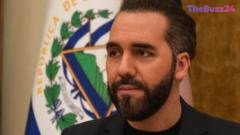
El Salvador’s President, Nayib Bukele, has publicly refuted claims that four bodies recently handed over to a special forces mission in Haiti belong to the missing Salvadoran air technicians. The assertion comes amidst an ongoing operation to locate and recover the men, who vanished after being ambushed in the gang-controlled Caribbean nation.
President Bukele expressed significant skepticism regarding the identification, stating that a non-governmental organization delivered the human remains to a Haitian airport, purporting them to be the four missing Salvadoran personnel. However, Bukele highlighted several critical discrepancies: one of the corpses was identified as a child, another was wearing a military uniform from a country other than El Salvador, and a third individual was of considerably greater height than the missing air technicians. He further noted the presence of identification cards and uniforms from other nations among the remains, even posting images of a GSF member’s ID alongside a national ID from Chad, Africa.
The four missing men were part of the UN-backed Gang Suppression Force (GSF), tasked with addressing the escalating gang violence in Haiti. They disappeared after their armored vehicle was attacked by “heavily armed criminal groups” in the Croix-des-Bouquets area while returning to their camp. El Salvador had dispatched a military contingent, reportedly numbering around 450 soldiers, with President Bukele emphasizing that their sole purpose was to bring the men back alive, primarily for medical evacuations and saving lives, not to engage in warfare.
Haiti has been grappling with severe gang violence for years, a crisis that has intensified following the 2021 assassination of its president and the subsequent political vacuum. International efforts, including multinational forces, have struggled to establish control in areas dominated by armed groups. The United Nations reported over 5,700 people killed or injured by gangs or during anti-gang operations between January and September of this year, underscoring the perilous environment in which the Salvadoran mission operates.
Key Takeaways
- El Salvador's President Nayib Bukele denies that bodies found in Haiti are the missing Salvadoran air technicians.
- Bukele cited significant discrepancies, including a child's body, a foreign military uniform, and differing physical characteristics, as reasons for his skepticism.
- The missing men were part of a UN-backed Gang Suppression Force (GSF) in Haiti, deployed amidst severe gang violence, with El Salvador's mission focused on their safe return.
Editor’s Analysis & Impact
This incident underscores the profound challenges and inherent dangers faced by international security and humanitarian missions operating in highly volatile regions like Haiti. President Bukele’s public refutation of the body identification highlights potential intelligence gaps or miscommunications in conflict zones, which can erode public trust and complicate diplomatic efforts. The ongoing uncertainty surrounding the fate of the Salvadoran personnel could influence future international engagement in Haiti, potentially leading to more cautious approaches or stricter protocols for personnel deployment. Furthermore, it draws renewed attention to the escalating humanitarian crisis and the persistent struggle against entrenched gang violence in Haiti, emphasizing the urgent need for robust, coordinated international strategies beyond military intervention.
Frequently Asked Questions
Q: Who are the missing Salvadoran personnel in Haiti?
A: The missing individuals are four Salvadoran air technicians who were part of the UN-backed Gang Suppression Force (GSF) in Haiti, a mission aimed at tackling gang violence.
Q: Why did President Bukele dispute the identification of the recovered bodies?
A: President Bukele disputed the identification based on several discrepancies, including one body being a child's, another wearing a foreign army uniform, and physical characteristics not matching the missing technicians, along with foreign identification found among the remains.
Q: What is the current situation regarding gang violence in Haiti?
A: Haiti is experiencing severe and escalating gang violence, exacerbated by a political vacuum. Thousands have been killed or injured, and international efforts to quell the violence have faced significant challenges in areas controlled by armed groups.
AI Disclosure: This article is based on verified data and official reports. Our Team and AI have cross-referenced every financial detail with primary sources to ensure total accuracy.
More from this Category