Israel on Edge: Pivotal Election Sees Deep Divisions and a Tight Race
Israel is bracing for a pivotal election marked by deep societal divisions and a fiercely contested race. Recent polls indicate a near dead-heat between the incumbent coalition and the primary opposition bloc, with a significant number of first-time voters and Israelis returning from abroad poised to cast their ballots. The election campaign has been characterized by innovative tactics, including the use of AI-generated content, and the emergence of new political figures challenging established norms.
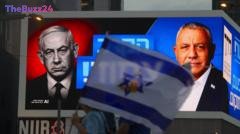
At the forefront of the opposition is Gadi Eisenkot, a former military chief of staff whose calm demeanor and working-class background offer a stark contrast to the media-savvy approach of Prime Minister Benjamin Netanyahu. Eisenkot, representing the centrist Yashar party, has seen his popularity surge, with polls placing him and his party ahead of Netanyahu’s Likud party. His appeal is rooted in his image as a pragmatic, non-politician, a former military leader whose personal tragedies, including the loss of his son in the Gaza War, resonate with voters seeking a different kind of leadership. His campaign focuses on issues of security, economy, education, and crucially, the fundamental identity of Israel as a Jewish, democratic, liberal, and egalitarian state.
Prime Minister Netanyahu, meanwhile, is campaigning on a platform of security and resilience, rallying voters with the slogan “No Surrender.” He has emphasized his role in navigating the nation’s security challenges, particularly in the aftermath of the October 7th attacks and subsequent conflicts in Gaza, Lebanon, and Iran. Netanyahu’s supporters believe he is the only leader capable of ensuring Israel’s safety and completing the work of reducing existential threats. However, his government faces criticism regarding its approach to the judicial system and its refusal to establish a state commission of inquiry into the October 7th attacks, issues that galvanize the opposition.
The election’s outcome could be significantly influenced by the shifting sentiments among younger voters and those directly impacted by the October 7th attacks. Some voters, including those from traditionally Likud-supporting areas, are gravitating towards the far-right, driven by a desire for more forceful responses. Conversely, others, particularly those who have experienced the trauma of the attacks firsthand, are seeking a change in leadership and a renewed focus on national dialogue. The potential for coalition deadlock, with Arab parties emerging as kingmakers, adds another layer of complexity to an election that many Israelis view as existential for their country’s future.
Key Takeaways
- Israel faces a closely contested election with deep divisions between the incumbent coalition and the opposition.
- Gadi Eisenkot, a former military chief, is emerging as a strong challenger to Prime Minister Benjamin Netanyahu, focusing on issues of governance and national identity.
- The election outcome is influenced by voter sentiment following the October 7th attacks, with potential shifts towards both the far-right and calls for change, and the possibility of coalition deadlock.
Editor’s Analysis & Impact
This election represents a critical juncture for Israel, highlighting a profound societal schism exacerbated by recent security events. The tight race between Netanyahu’s established leadership and Eisenkot’s ‘outsider’ appeal underscores a public desire for different approaches to governance, security, and national identity. The rise of the far-right among younger voters, influenced by the trauma of recent attacks, signals a potential hardening of stances. Conversely, the opposition’s focus on democratic institutions and a more inclusive vision of Israel’s future presents a clear alternative. The potential for coalition instability, with Arab parties holding significant sway, could lead to prolonged political uncertainty, impacting both domestic policy and Israel’s international relations. The election’s results will likely shape the nation’s trajectory for years to come.
Frequently Asked Questions
Q: What are the main issues driving this Israeli election?
A: Key issues include national security, the handling of the aftermath of the October 7th attacks, the role of the judiciary, economic concerns, and the fundamental identity of Israel as a Jewish, democratic, and liberal state. There are also significant debates around military conscription and the establishment of a commission of inquiry into the October 7th events.
Q: Who are the main contenders in this election?
A: The primary contest is between Prime Minister Benjamin Netanyahu and his Likud party, representing the incumbent coalition, and Gadi Eisenkot, a former military chief of staff leading the centrist Yashar party and other opposition factions. Several other parties, including those on the far-right and Arab parties, also play significant roles.
Q: What is the significance of the October 7th attacks on this election?
A: The October 7th attacks have profoundly impacted the election, intensifying debates on security, leadership, and national strategy. They have fueled calls for both stronger security measures and a re-evaluation of the government's preparedness and response, influencing voter sentiment across the political spectrum.
AI Disclosure: This article is based on verified data and official reports. Our Team and AI have cross-referenced every financial detail with primary sources to ensure total accuracy.
More from this Category