Mars Simulation Crew Emerges After Year-Long Isolation, Paving Way for Deep Space Exploration
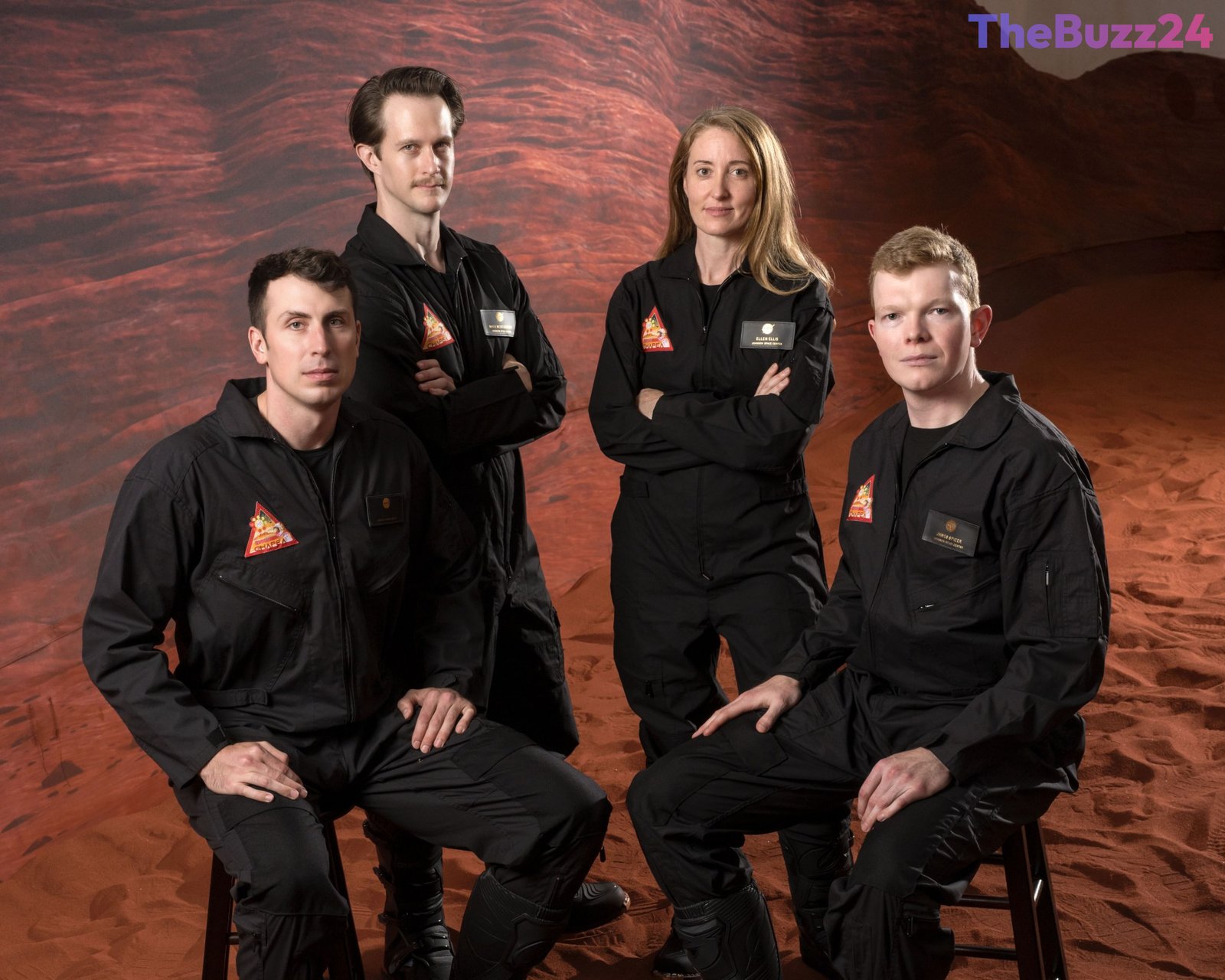
Four dedicated volunteers have successfully concluded a rigorous 378-day simulated Mars mission, stepping out of their isolated habitat at NASA’s Johnson Space Center in Houston on Saturday, October 31. The Crew Health and Performance Exploration Analog (CHAPEA) Mission 2 saw Ross Elder, Matthew Montgomery, Ellen Ellis, and James Spicer live and work in conditions designed to mimic a deep-space journey, providing invaluable data crucial for future human expeditions to the Moon and Mars.
Operating within a 1,700-square-foot, 3D-printed facility, the crew engaged in a comprehensive regimen of simulated Mars operations. Their daily tasks included conducting mock spacewalks, maintaining the habitat, exercising, and even growing plants. Throughout their extensive isolation, they navigated challenges such as communication delays, limited resources, and the psychological impact of prolonged confinement – all stressors anticipated for actual deep-space crews.
The extensive health and performance data gathered from this year-long experiment is expected to significantly advance preparations for NASA’s ambitious Artemis program and the development of future Moon Base missions. Insights from CHAPEA Mission 2 will be instrumental in optimizing critical aspects of long-duration space travel, including food system design, efficient allocation of crew time, bandwidth utilization for the Deep Space Network, and enhancing spaceflight medical care and behavioral support practices to ensure crew readiness and peak performance.
The completion of their mission was marked by a public ceremony, celebrating their profound contribution to humanity’s journey beyond Earth and offering a glimpse into the future of interplanetary exploration.
Key Takeaways
- Four volunteers completed a 378-day simulated Mars mission (CHAPEA Mission 2) at NASA's Johnson Space Center.
- The simulation aimed to collect critical health and performance data under conditions mimicking deep-space travel, including isolation and resource limitations.
- Data from the mission will inform and optimize future human spaceflight endeavors, such as NASA's Artemis program and Moon Base development, across areas like crew well-being, resource management, and operational efficiency.
Editor’s Analysis & Impact
The successful completion of the CHAPEA Mission 2 marks a significant milestone in preparing humanity for long-duration deep-space missions. This simulation provides a wealth of empirical data on the physiological and psychological impacts of extended isolation, resource constraints, and communication delays – all critical factors for future Mars or Moon expeditions. The insights gained will directly influence the design of habitats, life support systems, crew training protocols, and psychological support mechanisms. This research is vital for mitigating risks and ensuring the well-being and productivity of astronauts on future Artemis missions and beyond, ultimately accelerating the timeline for sustainable human presence on other celestial bodies and fostering a new era of space exploration.
Frequently Asked Questions
Q: What is the CHAPEA mission?
A: CHAPEA (Crew Health and Performance Exploration Analog) is a series of NASA missions designed to simulate long-duration human spaceflight to Mars. Volunteers live and work in a 3D-printed habitat, experiencing conditions and stressors similar to those anticipated on an actual deep-space mission.
Q: What is the primary goal of CHAPEA Mission 2?
A: The main goal of CHAPEA Mission 2 was to collect comprehensive health and performance data from the four-person crew over 378 days. This data will help NASA develop strategies and technologies to counter human spaceflight risks and optimize systems for future missions, such as the Artemis program and potential Moon bases.
Q: Who were the crew members of CHAPEA Mission 2?
A: The four volunteers who participated in CHAPEA Mission 2 were Ross Elder, Matthew Montgomery, Ellen Ellis, and James Spicer.
AI Disclosure: This article is based on verified data and official reports. Our Team and AI have cross-referenced every financial detail with primary sources to ensure total accuracy.
More from this Category