NASA Expands Public Engagement with Selection of 19 New Citizen Science Initiatives
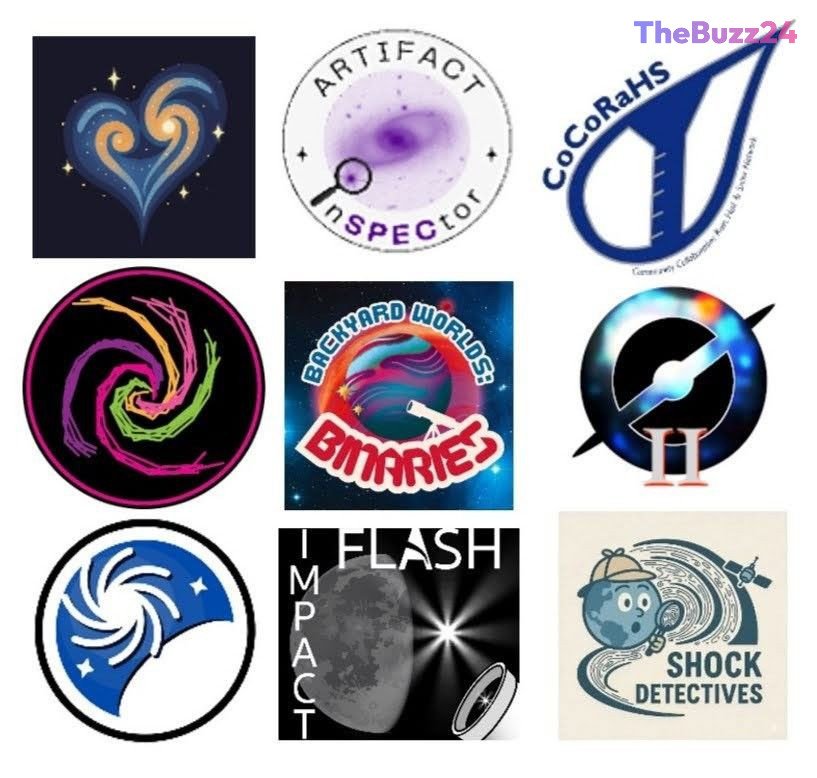
NASA’s Science Mission Directorate has selected 19 new research proposals for 2026, marking a significant expansion of its public-driven scientific projects. Building on recent milestones—including the Zooniverse crowd-sourcing platform reaching one billion classifications and volunteer teams identifying most of the known brown dwarfs—these upcoming initiatives are designed to enable non-professional researchers to contribute directly to complex space and Earth science investigations.
Twelve of the newly selected projects fall under the Citizen Science Seed Funding Program (CSSFP-25), designed to expand the application of crowd-sourced research techniques across astrophysics, heliophysics, and planetary sciences. High-profile projects in astrophysics include “The Rogue Worlds Project,” which engages volunteers to analyze near-infrared data from the SPHEREx observatory to uncover free-floating planets, and “Planet Hunters Roman,” which searches for exoplanets using microlensing data from the Nancy Grace Roman Space Telescope. Heliophysics efforts will involve volunteers in deploying local ground magnetometers in Alaska and analyzing solar wind interaction patterns.
An additional seven awards were granted under the Science Activation Program (SciAct), which focuses on educational outreach and direct community engagement. Key projects under this stream include “Growing Beyond Earth,” a program equipping middle and high school classrooms to test crop cultivation techniques for future space missions, and “Sungrazer 2.0,” which allows public participants to discover previously uncatalogued comets within solar satellite imagery.
The 2026 slate of projects emphasizes the integration of advanced data platforms, amateur radio networks, and regional environmental sensors from Alaska to Antarctica. By pairing community-driven observation with professional satellite data and automated analytical tools, the initiative aims to accelerate scientific discovery while expanding access to real-world scientific research.
Key Takeaways
- NASA selected 19 new citizen science projects in 2026 spanning astrophysics, heliophysics, planetary studies, and Earth monitoring.
- Twelve projects received support through the Citizen Science Seed Funding Program, while seven were selected via the Science Activation Program.
- Volunteers will actively analyze data from major missions including SPHEREx, the Nancy Grace Roman Space Telescope, and various solar observatories.
Editor’s Analysis & Impact
The expansion of citizen science programs highlights a crucial evolution in modern scientific research: managing the immense volume of data generated by modern satellite observatories. Earth and space missions produce petabytes of imagery and signal data that surpass the manual review capacity of research institutions. By inviting public participation and integrating machine-assisted tools, science agencies dramatically scale up their analytical capacity without proportional budget increases. Beyond accelerating research output in exoplanet discovery and space weather modeling, these initiatives strengthen public trust in science and build pipeline opportunities for future STEM professionals by lowering barriers to authentic research.
Frequently Asked Questions
Q: What is the purpose of NASA's citizen science projects?
A: These projects allow members of the general public to collaborate directly with professional researchers by analyzing satellite data, identifying celestial features, and collecting ground-based observations.
Q: What areas of science do the new 2026 projects focus on?
A: The selected proposals cover astrophysics, planetary geology, space weather tracking, space crop cultivation for long-duration missions, and regional climate monitoring.
Q: How do volunteers participate in these research efforts?
A: Volunteers can participate online by classifying images and signals on digital platforms, or on the ground through local environmental monitoring, amateur radio studies, and operating standardized telescopes.
AI Disclosure: This article is based on verified data and official reports. Our Team and AI have cross-referenced every financial detail with primary sources to ensure total accuracy.
More from this Category