James Webb Telescope Captures Chaotic Star Formation in the Large Magellanic Cloud
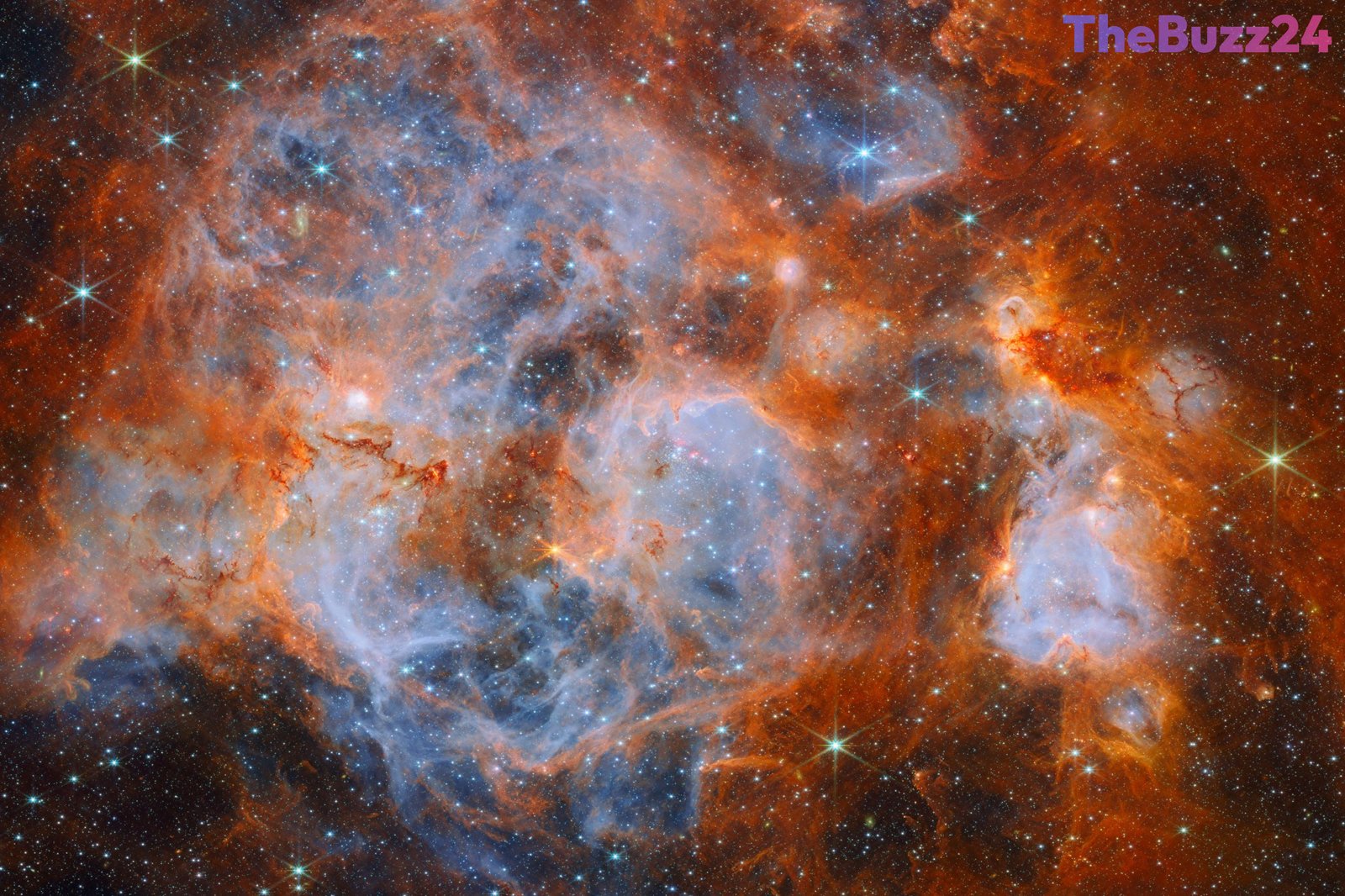
The James Webb Space Telescope has unveiled a striking new image of N159, a highly active star-forming region located approximately 161,000 light-years from Earth. Situated within the Large Magellanic Cloud, a satellite galaxy of the Milky Way, this cosmic nursery is characterized by a turbulent environment filled with dense, swirling clumps of gas and dust that serve as the raw material for new stellar births.
Astronomers are particularly interested in N159 because of its unique chemical composition. The region possesses a lower metallicity compared to our own galaxy, meaning it contains a smaller proportion of elements heavier than hydrogen and helium. By studying this environment, researchers can gain critical insights into the conditions that prevailed during the early stages of the universe, providing a clearer picture of how stars evolved when the cosmos was much younger.
This latest observation highlights the unparalleled sensitivity of the James Webb Space Telescope in peering through dense interstellar clouds. As scientists continue to analyze the data from this region, the findings are expected to refine current models of star formation and deepen our understanding of galactic evolution in low-metallicity environments.
Key Takeaways
- The James Webb Space Telescope captured high-resolution imagery of the N159 star-forming region in the Large Magellanic Cloud.
- N159 is characterized by low metallicity, offering a window into star formation processes similar to those in the early universe.
- The region serves as a natural laboratory for studying how stars develop within dense, turbulent gas clouds.
Editor’s Analysis & Impact
The observation of N159 represents a significant milestone in observational astronomy, as it allows researchers to bypass the limitations of studying star formation solely within the high-metallicity environment of the Milky Way. By examining regions with lower concentrations of heavy elements, scientists can better calibrate their simulations of the early universe, where such conditions were the norm rather than the exception. This research has profound implications for our understanding of galactic assembly and the lifecycle of stars across cosmic time. As the James Webb Space Telescope continues to provide unprecedented clarity on these distant nurseries, we can expect a paradigm shift in how we categorize stellar birth rates and the chemical enrichment of galaxies throughout history.
Frequently Asked Questions
Q: What is the significance of the Large Magellanic Cloud for astronomers?
A: The Large Magellanic Cloud is a satellite galaxy of the Milky Way that provides a nearby, accessible laboratory for studying star formation and galactic dynamics in an environment with different chemical properties than our own.
Q: Why does low metallicity matter in space research?
A: Low metallicity refers to a lower abundance of elements heavier than hydrogen and helium. Studying these regions helps astronomers understand how stars formed in the early universe, which was also composed primarily of lighter elements.
AI Disclosure: This article is based on verified data and official reports. Our Team and AI have cross-referenced every financial detail with primary sources to ensure total accuracy.
More from this Category