Vietnam Joins Global Coalition for Responsible Space Exploration
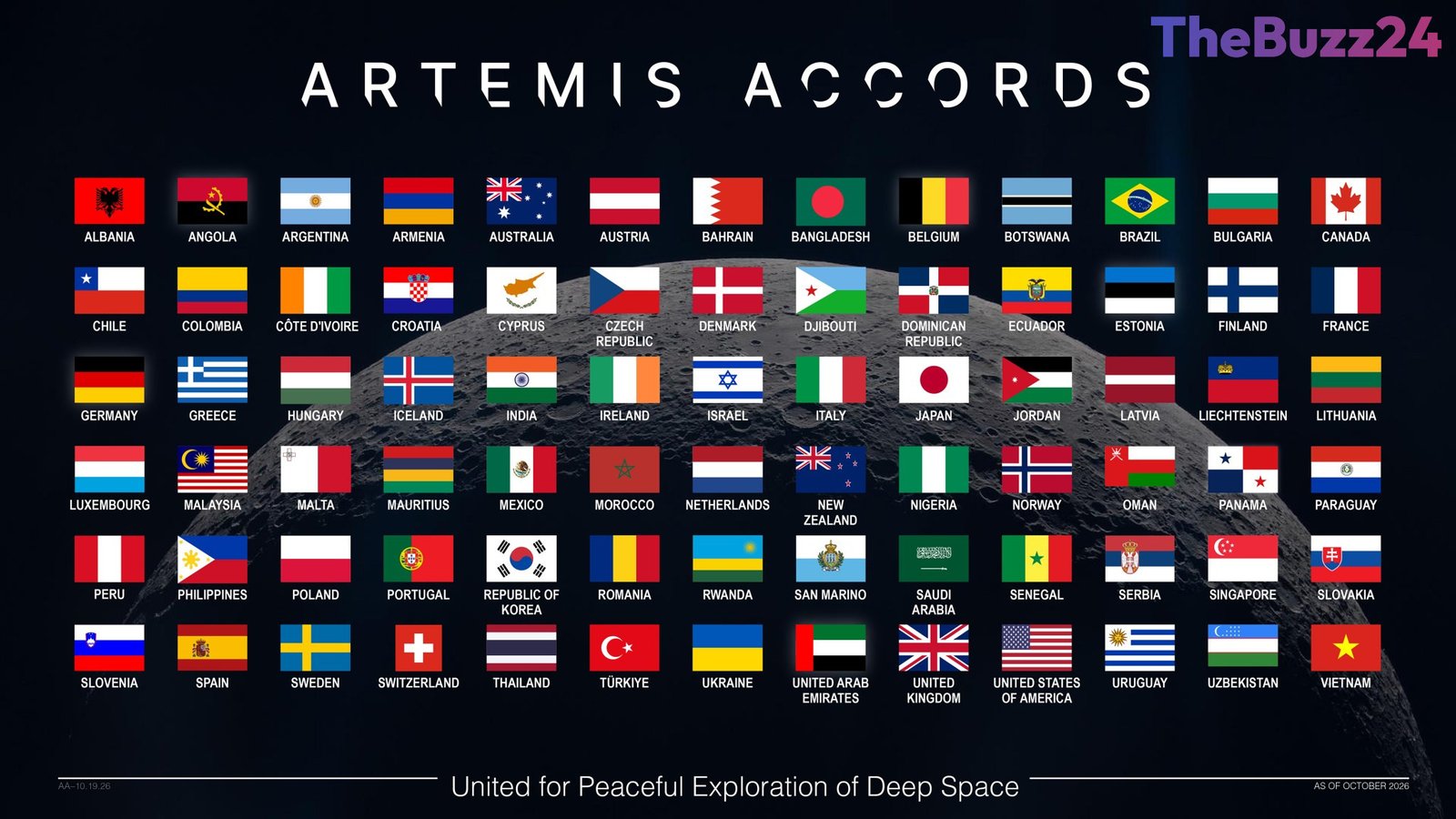
Vietnam has officially become the 78th nation to sign the Artemis Accords, marking a significant expansion of the international coalition dedicated to the peaceful and transparent exploration of space. The signing ceremony, which took place during the Vietnam International Digital Week in Ha Long, was led by Vietnam’s Minister of Science and Technology, Vũ Hải Quân, with U.S. Ambassador to Vietnam Jennifer Wicks in attendance. This commitment aligns Vietnam with a growing group of countries establishing shared principles for lunar and deep-space activities.
The move represents a deepening of the U.S.-Vietnam Comprehensive Strategic Partnership, extending decades of cooperation into the aerospace sector. By joining the Accords, Vietnam pledges to adhere to guidelines that prioritize the safety of space operations, the sharing of scientific data, and the preservation of historical sites in space. This collaboration is expected to bolster Vietnam’s domestic space ambitions, particularly as the nation continues to develop its satellite capabilities through the LOTUSat program.
NASA officials highlighted that Vietnam’s entry into the agreement comes at a pivotal time for the country’s space program. With existing initiatives already focused on Earth observation, disaster response, and radar-based research, the partnership provides a framework for further technological integration. As more nations join the Artemis Accords, the initiative continues to serve as the primary diplomatic vehicle for ensuring that future missions to the Moon, Mars, and beyond are conducted in a coordinated and responsible manner.
Key Takeaways
- Vietnam has become the 78th signatory to the Artemis Accords, committing to peaceful and transparent space exploration.
- The agreement strengthens the U.S.-Vietnam Comprehensive Strategic Partnership by extending cooperation into aerospace and satellite technology.
- Vietnam is actively developing its domestic space infrastructure, including the LOTUSat program for Earth observation and disaster monitoring.
Editor’s Analysis & Impact
The inclusion of Vietnam in the Artemis Accords is a strategic move that reflects the shifting landscape of global space diplomacy. As the race to the Moon and Mars intensifies, the U.S. is effectively building a ‘rules-based order’ for space that counters alternative frameworks proposed by competing powers. For Vietnam, this partnership is not merely symbolic; it provides access to international standards and potential collaborative opportunities that can accelerate its domestic satellite and Earth observation capabilities. The broader implication is the normalization of space as a critical domain for international relations, where technological cooperation serves as a proxy for geopolitical alignment. As more nations join, the Artemis Accords are becoming the de facto regulatory framework for the next generation of space exploration, significantly increasing the barrier to entry for non-signatory nations.
Frequently Asked Questions
Q: What are the Artemis Accords?
A: The Artemis Accords are a set of non-binding principles designed to guide civil space exploration and use in the 21st century, focusing on transparency, safety, and the peaceful use of space.
Q: Does signing the Artemis Accords require a country to participate in NASA missions?
A: No, signing the Accords is a commitment to a set of shared principles for responsible behavior in space, rather than a mandatory requirement to participate in specific NASA-led missions.
AI Disclosure: This article is based on verified data and official reports. Our Team and AI have cross-referenced every financial detail with primary sources to ensure total accuracy.
More from this Category