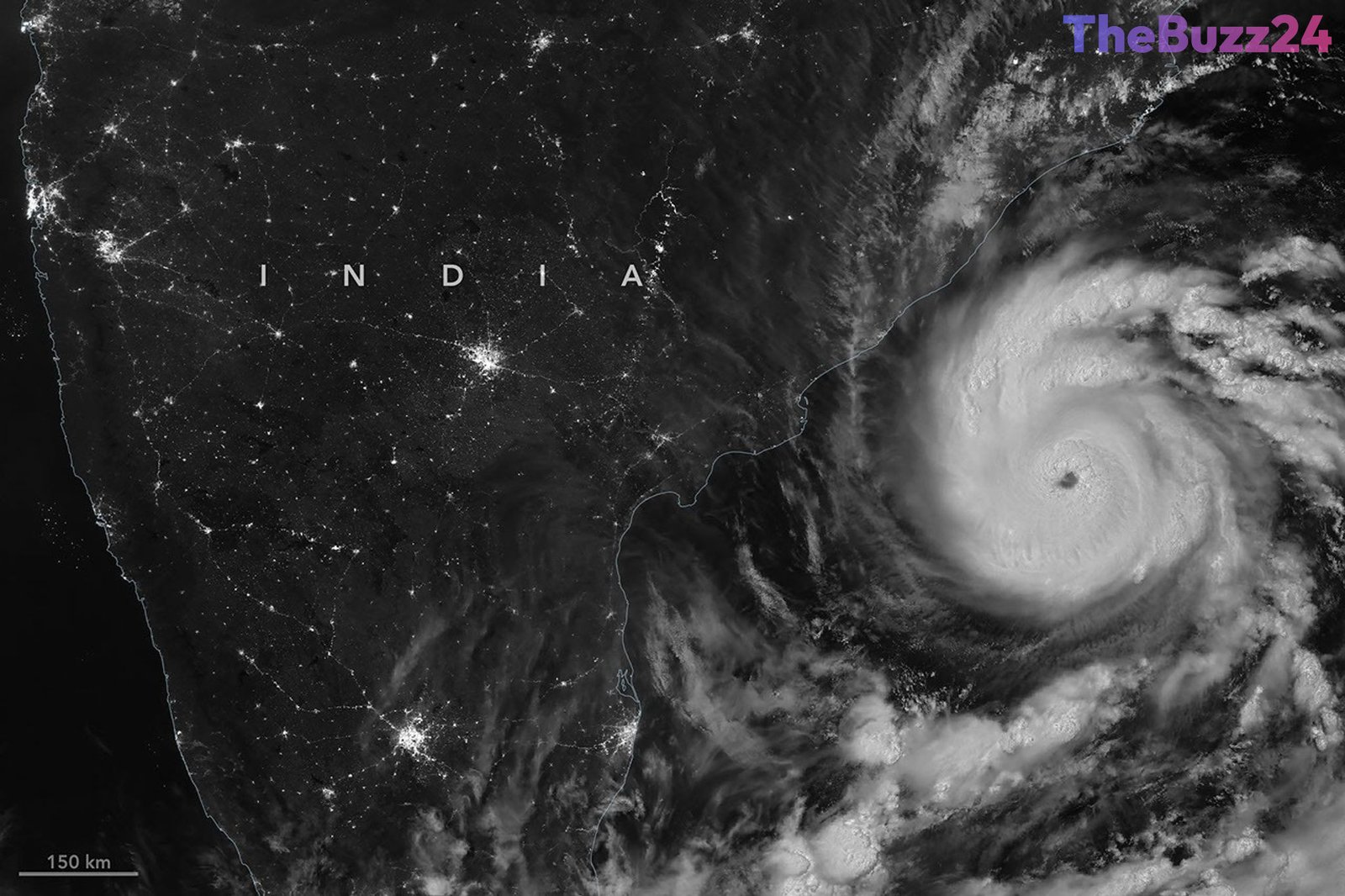
Cyclone Arnab Makes Destructive Landfall on India’s Eastern Coast
The North Indian Ocean cyclone season saw a rare and late-season development as Cyclone Arnab emerged in the Bay of Bengal on October 25, 2026. While the region typically experiences such storms in the spring, Arnab defied seasonal norms, intensifying rapidly as it tracked toward the Indian coastline. By the early hours of October 27, satellite imagery confirmed the storm had reached sustained wind speeds of 140 kilometers per hour, prompting urgent warnings for coastal residents.
On October 28, the storm made landfall between Bapatla and Visakhapatnam along the Andhra Pradesh and Yanam coast. Classified as a “very severe cyclonic storm”—roughly equivalent to a Category 1 hurricane—Arnab brought sustained winds of 130 kilometers per hour to a densely populated region. The impact was immediate and severe, with the storm causing widespread destruction to infrastructure, including the uprooting of trees, the inundation of critical farmland, and the disruption of essential power and transportation networks.
In anticipation of the landfall, local authorities executed large-scale emergency operations, successfully evacuating tens of thousands of people from high-risk zones to temporary shelters. Despite these proactive measures, the storm caused significant damage to fishing communities and residential areas. The event occurred during an active El Niño cycle, a climate phenomenon known to alter ocean temperatures and atmospheric conditions, which historically has been linked to variations in the frequency and intensity of tropical cyclones within the Bay of Bengal.
Key Takeaways
- Cyclone Arnab made landfall on India's Andhra Pradesh coast as a 'very severe cyclonic storm' with 130 km/h winds.
- The storm caused extensive damage to infrastructure, agriculture, and power grids, necessitating the evacuation of tens of thousands of residents.
- The cyclone's late-October arrival is unusual for the North Indian Ocean basin, which typically sees peak activity in April or May.
Editor’s Analysis & Impact
The emergence of Cyclone Arnab highlights the increasing unpredictability of extreme weather events in the North Indian Ocean. While historical data suggests that El Niño conditions often suppress cyclone activity in this basin, the development of a ‘very severe’ storm late in the season serves as a reminder of the limitations of long-range climate forecasting. For the region, the economic impact is significant; the destruction of farmland and fishing infrastructure threatens local food security and livelihoods. Moving forward, the event underscores the necessity for robust disaster management frameworks and resilient infrastructure in coastal India. As climate patterns continue to shift, authorities must balance historical climatology with real-time satellite monitoring to ensure that evacuation protocols remain effective against increasingly erratic storm behaviors.
Frequently Asked Questions
Q: What is a 'very severe cyclonic storm' in the context of the Indian Ocean?
A: In the Indian meteorological classification system, a 'very severe cyclonic storm' refers to a system with sustained wind speeds that are roughly comparable to a Category 1 hurricane on the Saffir-Simpson scale.
Q: How does El Niño typically affect cyclone activity in the Bay of Bengal?
A: Research generally indicates that El Niño conditions are associated with a reduction in both the frequency and intensity of tropical cyclones in the Bay of Bengal, making the arrival of a storm like Arnab particularly notable.
AI Disclosure: This article is based on verified data and official reports. Our Team and AI have cross-referenced every financial detail with primary sources to ensure total accuracy.
More from this Category