Speculation vs. Reality: How Prediction Market Volatility Risks Distorting Democratic Elections
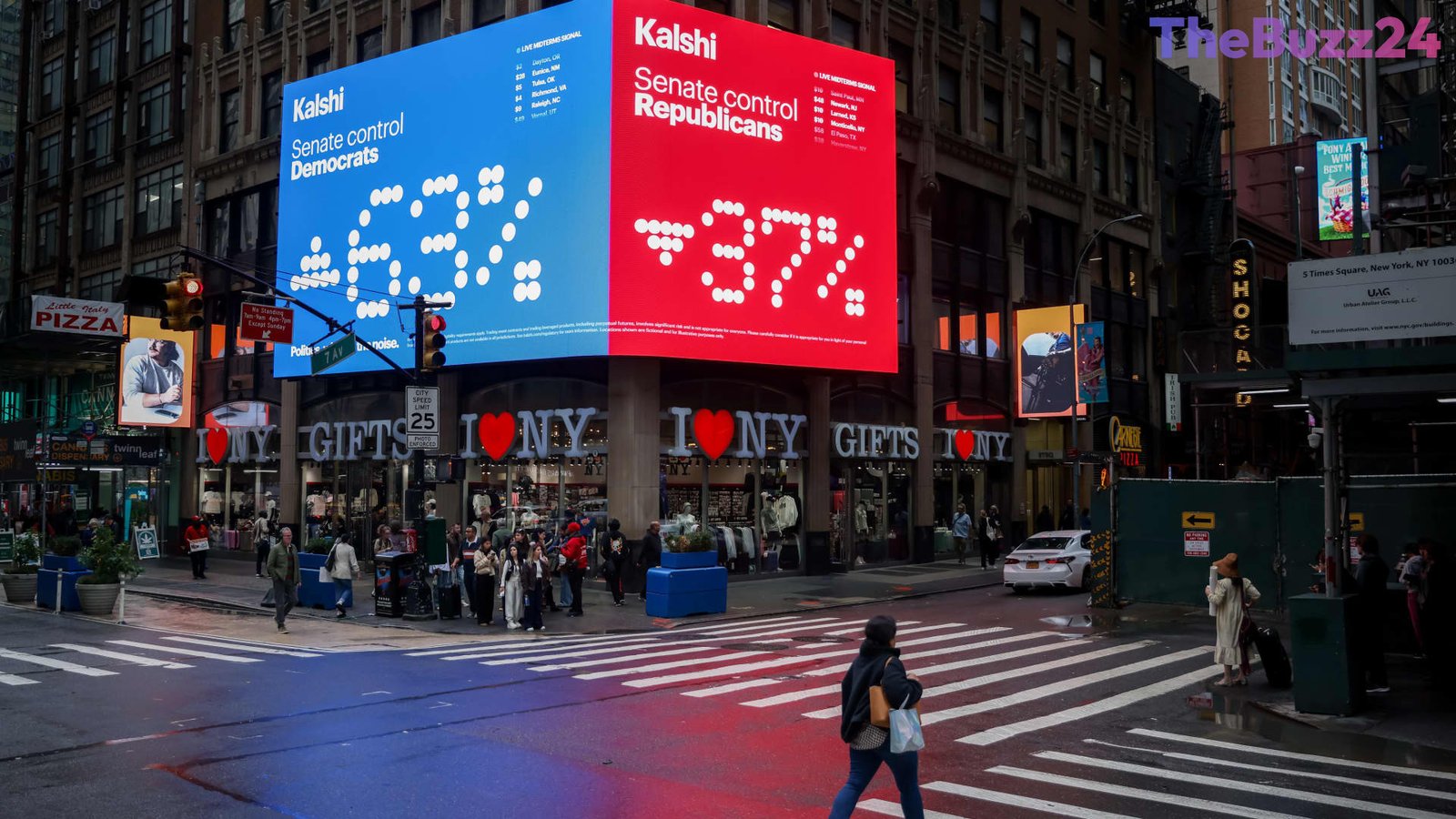
The rapid rise of political prediction markets has transformed election forecasting into high-stakes financial speculation, but high-profile misfires are highlighting serious vulnerabilities in how these platforms function. During the Los Angeles mayoral primary, former reality television personality Spencer Pratt emerged as a heavy favorite on major trading platforms such as Kalshi and Polymarket, backed by tens of millions of dollars in total market volume. Hours before the primary election, market odds assigned Pratt nearly an 80% probability of advancing to the runoff. When actual votes were tabulated, however, Pratt finished in third place, missing the cut entirely. Rather than recognizing the flaw in speculative probabilities, some campaign supporters leveraged the divergence to raise public doubts about the voting process itself.
This gap between trading odds and official vote tallies illustrates a growing risk as speculative platforms are increasingly treated as authoritative substitutes for political polling. Unlike scientific public opinion polling, prediction markets rely on tradeable financial contracts valued between zero and one dollar. Data analysis reveals that political contracts—especially those with low liquidity—are particularly susceptible to artificial price spikes. In many lower-volume markets, a single buy order under $1,000 can move a candidate’s implied probability by ten cents or more, while larger strategic purchases can drastically inflate perceived support before market arbitrage forces a correction.
Despite automated self-correction mechanisms and internal monitoring, the psychological impact of temporary price swings on the public can be substantial. Studies show that voters are significantly more likely to believe a candidate will win if prediction markets favor them, regardless of what traditional polling indicates. When market participants execute heavy trades on low-payout contracts, the immediate financial upside is often negligible, pointing toward alternative motives such as altering public perception, manufacturing artificial momentum, or skewing media coverage ahead of election day.
In response to these concerns, platform operators and regulatory agencies are under pressure to enhance oversight. Marketplaces like Kalshi and Polymarket have begun introducing live order feeds, low-volume warnings, and specialized surveillance algorithms designed to detect suspicious price spikes and potential market manipulation. Concurrently, state election officials across the country are pushing back, with several authorities pursuing legal bans on political wagering to safeguard public trust. As legal battles unfold regarding federal jurisdiction under the Commodity Futures Trading Commission, the tension between speculative finance and election integrity continues to escalate.
Key Takeaways
- Prediction market failures, such as incorrectly forecasting the Los Angeles mayoral race, are being used to raise unnecessary doubts about election integrity.
- Low-liquidity political contracts allow single wagers to temporarily manipulate implied candidate odds, shaping voter perception despite lack of polling support.
- State election officials are increasingly challenging federal oversight, arguing that political wagering threatens democratic credibility and demanding bans on election markets.
Editor’s Analysis & Impact
The integration of speculative trading into political forecasting represents a profound shift in how information moves through an electorate. While proponents argue prediction markets aggregate diverse sentiment more effectively than traditional polling, the low liquidity of many local contracts creates clear vectors for intentional manipulation. Deep-pocketed actors can strategically inflate a candidate’s odds at critical political moments with relatively low capital investment, effectively manufacturing artificial consensus. As voter reliance on these platforms grows, this dynamic creates an environment where temporary financial distortion directly feeds into real-world political momentum. Moving forward, the regulatory clash between state election administrators seeking absolute prohibitions and federal agencies attempting to oversee binary swaps will likely reach the highest judicial levels. Without strict enforcement and complete operational transparency, prediction markets risk becoming powerful tools for political narrative engineering.
Frequently Asked Questions
Q: How do political prediction markets determine candidate odds?
A: Prediction markets allow traders to buy and sell binary contracts priced between $0 and $1 based on an outcome occurring. The contract price represents the collective probability estimated by traders; for example, a contract trading at $0.65 implies a 65% chance of victory.
Q: Can small investments alter election odds on prediction platforms?
A: Yes. In markets with low trading volume, single orders under $1,000 can shift contract prices by 10 cents or more. While prices often correct over time as secondary traders step in, the initial spike creates a temporary illusion of heightened candidate support.
Q: Who regulates political prediction markets in the United States?
A: Federal platforms operate primarily under the oversight of the Commodity Futures Trading Commission (CFTC). However, many state authorities argue that election betting violates local laws and are pursuing legal action to restrict or prohibit political contracts.
AI Disclosure: This article is based on verified data and official reports. Our Team and AI have cross-referenced every financial detail with primary sources to ensure total accuracy.
More from this Category