Geopolitical Divisions Block Consensus at G20 Foreign Ministers Meeting in Atlanta
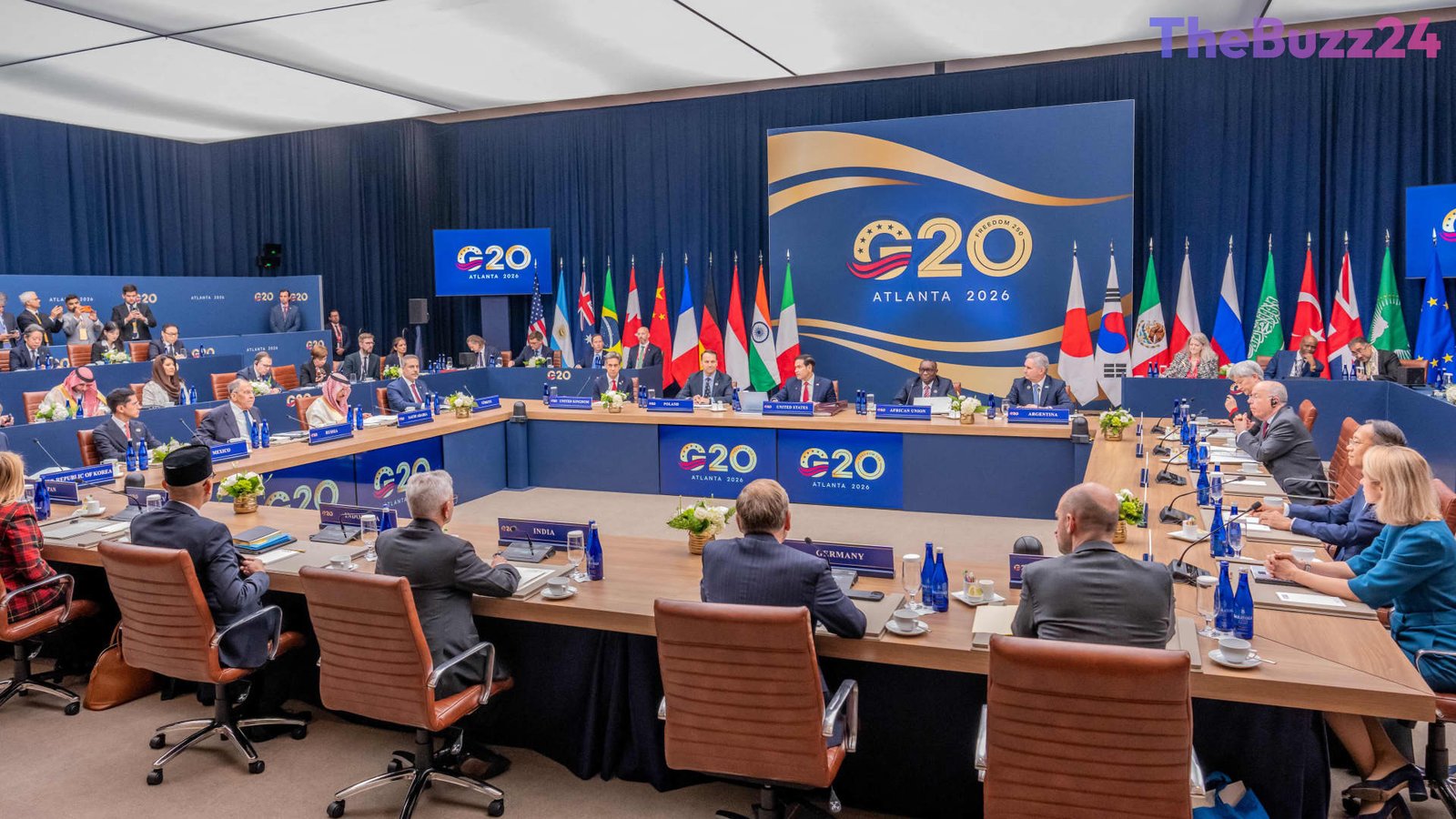
A high-stakes two-day gathering of Group of 20 foreign ministers in Atlanta concluded without a joint communique, as deep divisions over major international conflicts prevented delegates from reaching a unified stance. With widespread disagreements over the ongoing war in Ukraine, economic tariffs, and rising tensions in the Middle East, U.S. Secretary of State Marco Rubio confirmed that the gathering would instead issue a chairman’s summary of the proceedings. While acknowledging that universal solutions remain out of reach, officials noted progress on multilateral talks focused on supply chain resilience and securing access to critical minerals.
Diplomatic friction was palpable throughout the summit, culminating in the cancellation of the traditional G20 family photograph. European representatives, including Polish Foreign Minister Radosław Sikorski, voiced strong opposition to the presence of Russian Foreign Minister Sergey Lavrov, prompting organizers to forego the photo session to prevent potential boycotts. Despite the discord, side discussions took place among representatives from the United States, Australia, India, and Japan, emphasizing the urgent need to maintain open commercial navigation across vital maritime chokepoints, such as the Strait of Hormuz, the Red Sea, and the South China Sea.
Beyond military conflicts, economic uncertainty hung heavy over the Atlanta summit. Global energy price fluctuations, trade policy disputes, and decisions regarding summit invitations—including the exclusion of South Africa—further complicated negotiations. Diplomats indicated that despite the tense atmosphere, participating nations resolved to maintain dialogue in preparation for the upcoming G20 leaders’ summit in Florida, hosted by President Donald Trump. However, with key actors taking unyielding positions on global security matters, establishing a cohesive international framework remains a formidable challenge.
Key Takeaways
- The G20 foreign ministers meeting in Atlanta ended without a joint communique due to severe divisions over global security and trade policies.
- European diplomats protested the presence of Russian Foreign Minister Sergey Lavrov, leading to the cancellation of the official group photograph.
- Talks yielded limited consensus, though delegates engaged in targeted discussions on protecting maritime trade routes and securing critical mineral supply chains.
Editor’s Analysis & Impact
The lack of a unified consensus at the G20 foreign ministers meeting underscores the deepening political fractures dividing the world’s major economies. As global security crises proliferate—ranging from Eastern Europe to the Middle East—multilateral institutions face mounting difficulty in forging actionable agreements. For global markets, this persistent geopolitical gridlock heightens volatility in energy prices and disrupts international supply networks. Rubio’s emphasis on critical minerals and maritime transit highlights how nations are pivoting toward defensive economic strategies. Looking ahead to the leaders’ summit in Florida, economic stability will largely depend on whether world leaders can compartmentalize security disputes to protect vital trade corridors and supply chains from systemic disruptions.
Frequently Asked Questions
Q: Why did the G20 meeting end without a joint communique?
A: Deep geopolitical divisions among member nations regarding the Russia-Ukraine conflict, Middle East security, tariffs, and trade routes prevented delegates from agreeing on a shared final document.
Q: Why was the traditional G20 group photo canceled?
A: Several European foreign ministers objected to taking a photo alongside Russian Foreign Minister Sergey Lavrov, creating a risk of walkouts and leading organizers to cancel the photograph entirely.
Q: What key economic topics were addressed during the talks?
A: Despite political disagreements, ministers discussed strategies to protect essential global supply chains, maintain open navigation through critical waterways like the Strait of Hormuz, and ensure stable access to vital minerals.
AI Disclosure: This article is based on verified data and official reports. Our Team and AI have cross-referenced every financial detail with primary sources to ensure total accuracy.
More from this Category