DuckDuckGo Challenges Google’s AI Stance, Pitches Privacy to Schools Amid Backlash
A recent policy adjustment by Google regarding artificial intelligence integration in educational settings has created a significant opening for alternative search engine DuckDuckGo. Google informed schools that while they could opt out of its Gemini AI, disabling other integrated AI features would concurrently remove access to Google Search, a platform now deeply embedded with AI functionalities.
DuckDuckGo, known for its strong emphasis on user privacy and minimal data collection, is actively leveraging this moment to expand its presence in the education sector, a domain historically dominated by Google. With an estimated 50 million Chromebooks in schools and Google Classroom serving over 150 million global users, the market is substantial. Gabriel Weinberg, DuckDuckGo’s founder and CEO, highlighted the company’s documentation for switching default search engines, inviting schools to seek assistance. Kamyl Bazbaz, DuckDuckGo’s chief public affairs officer, issued a pointed statement, accusing Google of monopolistic behavior by “forcing AI on school children” and urging users to “Prove Google wrong.”
DuckDuckGo has criticized Google’s decision, asserting that the tech giant could easily offer schools the option to disable AI features within Search if it chose to. This debate unfolds as the public grapples with the extent of AI integration in daily life. While Google defended its stance, stating it was responding to school feedback and that Gemini, Gemini Notebook, and Search would be off by default with individual enablement options, the core issue remains: Google Search itself is now heavily reliant on AI through features like AI Overviews and conversational AI Mode.
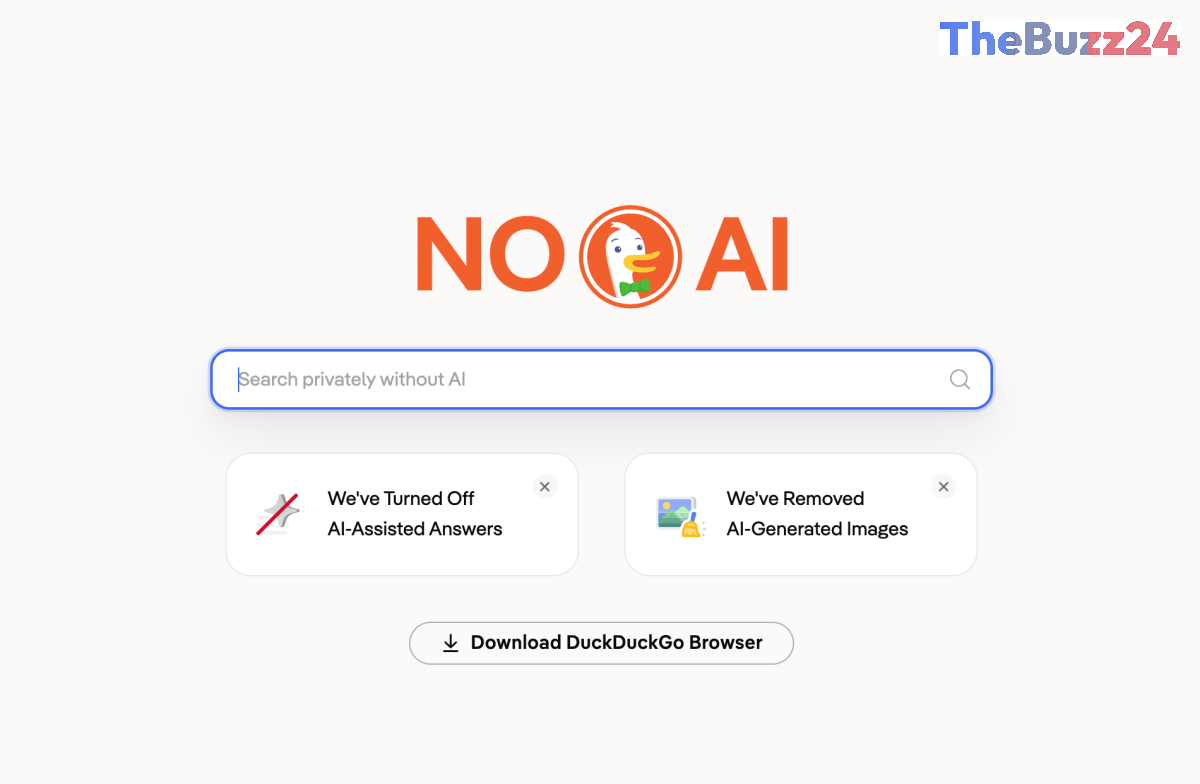
In contrast, DuckDuckGo, while not anti-AI (offering its own Duck.ai chat interface and AI search assistant), provides users with explicit options to disable these features in both its search and browser settings. The company even maintains a dedicated website, noai.duckduckgo.com, where all AI-assisted answers, generated images, and feature suggestions are turned off. This commitment to user control appears to be resonating, with DuckDuckGo reporting a 30% increase in app installs earlier this year, attributed to users rejecting forced AI integration.
Key Takeaways
- Google's new policy allows schools to disable Gemini but ties other AI features to Google Search, limiting choice for educators.
- DuckDuckGo is actively promoting its privacy-focused search engine to schools, highlighting its user-controlled AI features as a direct alternative to Google's integrated approach.
- The situation underscores a broader public discussion about AI integration, user control, and data privacy, particularly within sensitive educational environments.
Editor’s Analysis & Impact
This development highlights a growing tension between pervasive AI integration by tech giants and the increasing demand for user control and privacy, especially in critical sectors like education. Google’s dominant position in schools is now facing a significant challenge from DuckDuckGo, which is strategically positioning itself as the privacy-first, AI-optional alternative. The market could see a shift as schools and parents prioritize data autonomy for students. This could compel Google to re-evaluate its ‘AI-first’ default strategy for sensitive user groups. Broader implications include potential regulatory scrutiny on default AI settings and a precedent for how AI is deployed in public institutions, emphasizing the balance between technological advancement and individual choice.
Frequently Asked Questions
Q: What is Google's new AI policy for schools?
A: Google announced that schools can disable its Gemini AI, but opting out of other integrated AI features would also mean losing access to Google Search, which now heavily incorporates AI functionalities.
Q: How is DuckDuckGo responding to Google's policy?
A: DuckDuckGo is actively encouraging schools to switch to its privacy-focused search engine, emphasizing its commitment to user control over AI features and offering explicit options to disable them entirely, unlike Google's integrated approach.
Q: Why are schools concerned about AI integration?
A: Educators are seeking more control over AI tools in the learning process, with some desiring the ability to remove AI entirely, driven by concerns about student data privacy, academic integrity, and the pedagogical impact of AI-generated answers.
AI Disclosure: This article is based on verified data and official reports. Our Team and AI have cross-referenced every financial detail with primary sources to ensure total accuracy.
More from this Category