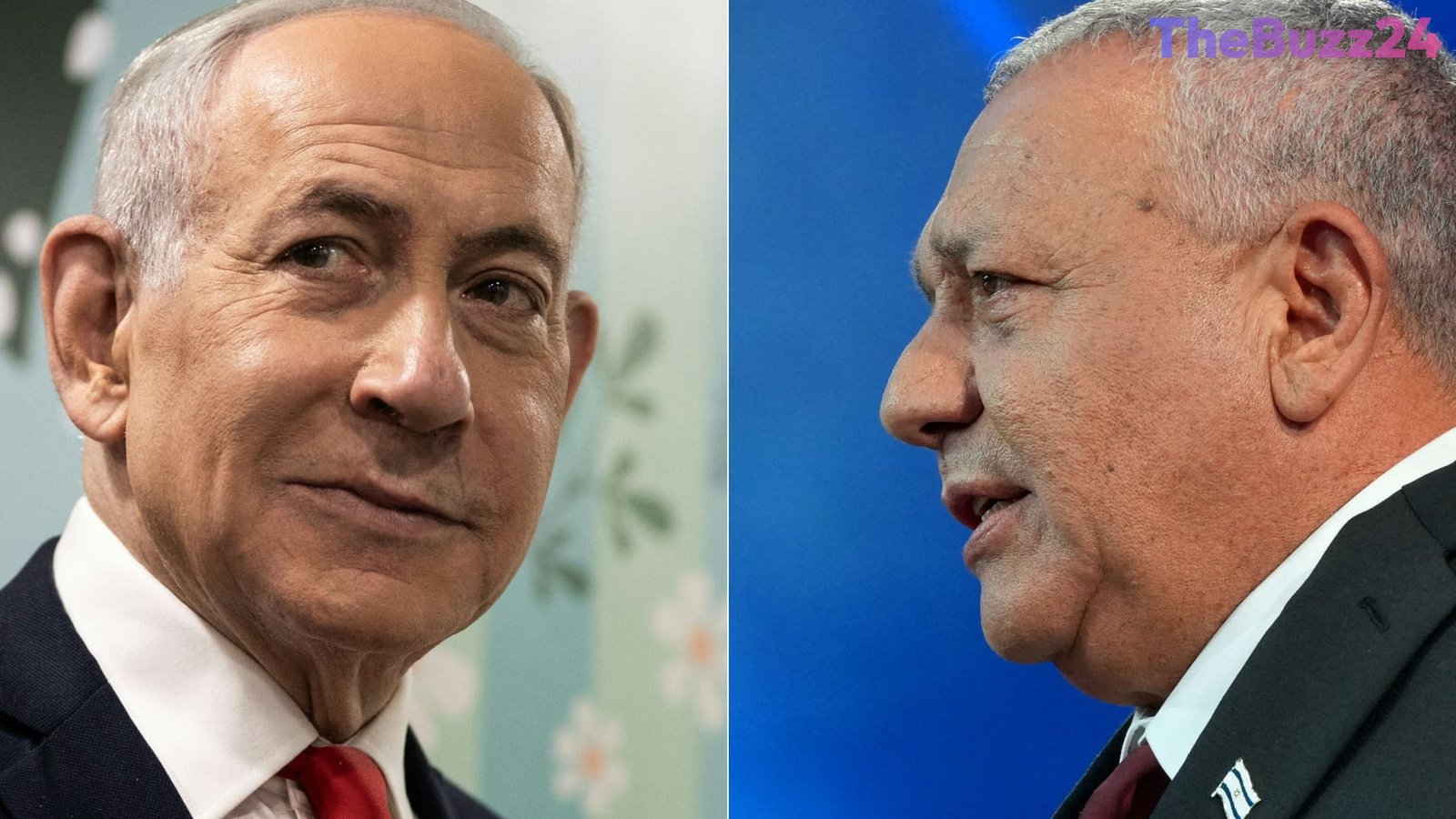
Political Shift in Israel as Opposition Figure Eisenkot Tasked with Forming Government
In a significant political development, the Israeli presidency announced that opposition figure Gadi Eisenkot has been given the mandate to form the country’s next governing coalition. This move follows recent parliamentary elections that resulted in a setback for long-serving Prime Minister Benjamin Netanyahu and his allies, who failed to secure the necessary majority to retain control.
Eisenkot, a former military chief of staff who emerged as a principal challenger to Netanyahu, now faces a demanding window of up to six weeks to assemble a viable parliamentary majority. The nation remains deeply divided following years of conflict and the ongoing fallout from regional security challenges, complicating the coalition-building process. While discussions with party representatives yielded recommendations for Eisenkot to lead the effort, forming a stable government will require delicate negotiations and difficult compromises among various political factions.
The path to a majority is fraught with complications, as neither the right-wing bloc nor the opposition secured an outright majority. This dynamic elevates the role of Arab-led parties, which achieved notable gains in the recent vote and could potentially serve as kingmakers. However, any formal partnership or external cooperation with these groups remains politically sensitive and has drawn fierce opposition from Netanyahu, who has cautioned against such alliances.
Alternative pathways, such as a broad unity government involving major Jewish parties, remain technically possible but face steep hurdles due to deep ideological divides between Eisenkot and Netanyahu. Key disagreements persist over issues including religious draft exemptions and accountability for past security failures. As the political maneuvering continues, Eisenkot’s camp has emphasized its commitment to principles of national unity while urging rivals to distance themselves from extremist elements.
Key Takeaways
- Israeli President Isaac Herzog tasked opposition figure Gadi Eisenkot with forming a new governing coalition.
- Benjamin Netanyahu and his allies lost their parliamentary majority in the recent elections.
- Eisenkot has up to six weeks to build a coalition, navigating deep political divisions and potential alliances with Arab-led parties.
Editor’s Analysis & Impact
The political transition in Israel marks a critical juncture for the nation’s governance and regional stability. Gadi Eisenkot’s attempt to form a coalition highlights the shifting dynamics away from long-term leadership toward fragmented, coalition-dependent governance. The necessity of bridging deep ideological divides—and the controversial potential inclusion of Arab-led factions—introduces significant volatility into the legislative process. Market participants and international observers will closely monitor whether Eisenkot can successfully forge a stable administration or if Israel faces prolonged political gridlock, which could impact domestic policy continuity and international diplomatic relations in a highly sensitive geopolitical environment.
Frequently Asked Questions
Q: Who has been tasked with forming Israel's new government?
A: Opposition candidate and former military chief Gadi Eisenkot has been given the mandate by President Isaac Herzog to form a governing coalition.
Q: How long does Eisenkot have to form a coalition?
A: Eisenkot has up to six weeks to assemble a parliamentary majority and establish a new government.
Q: Why are Arab-led parties considered significant in this political process?
A: Following elections where neither major bloc secured an outright majority, Arab-led parties made historic gains, positioning them as potential kingmakers whose support or coalition participation could determine the success of a new government.
AI Disclosure: This article is based on verified data and official reports. Our Team and AI have cross-referenced every financial detail with primary sources to ensure total accuracy.
More from this Category