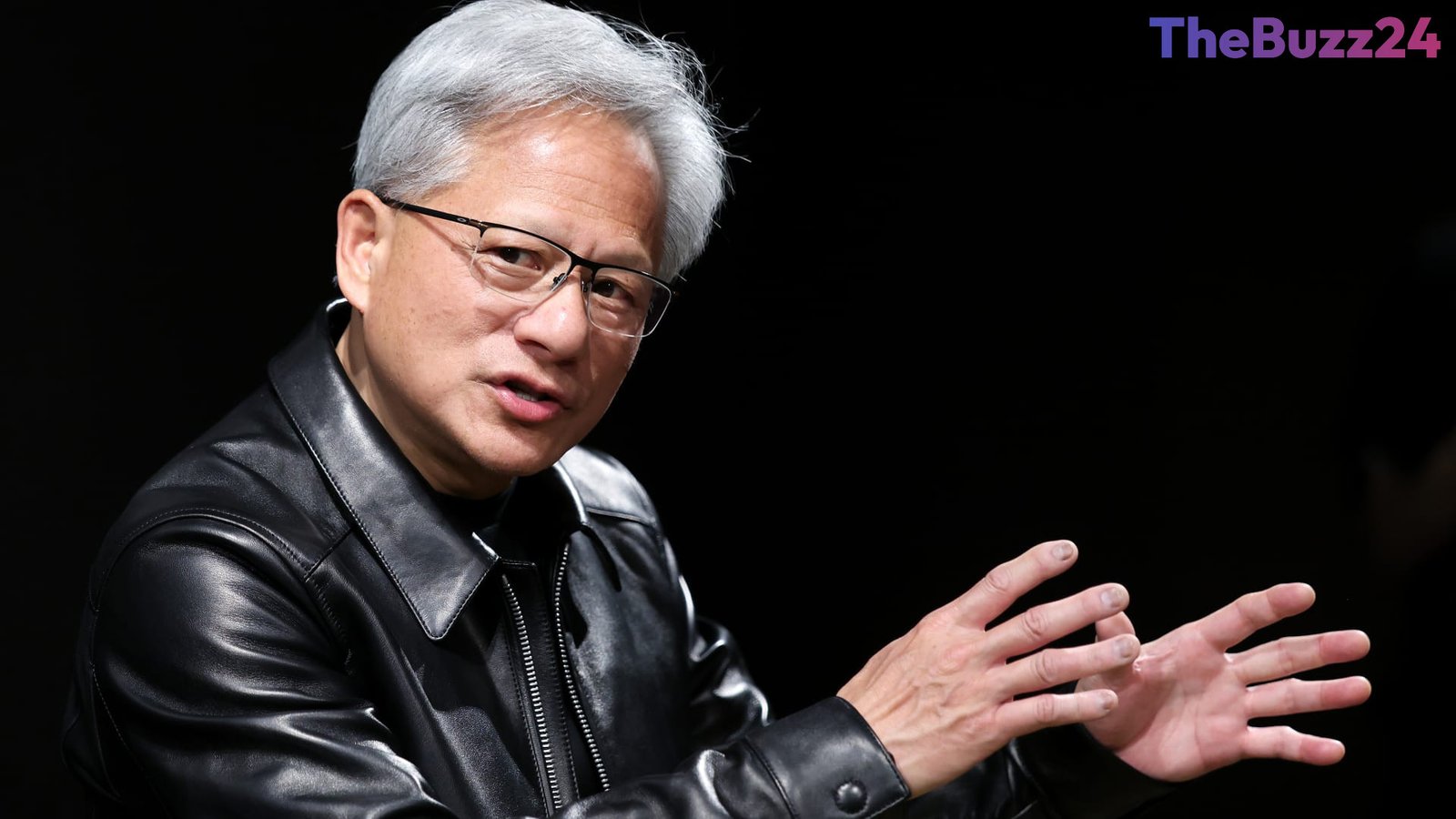
Nvidia Faces Uncertainty as CEO Jensen Huang Resigns Amid Scandal
Nvidia is navigating a period of significant leadership transition following the sudden resignation of long-time president and CEO Jensen Huang. The departure, announced on Thursday, comes in the wake of revelations regarding the executive’s personal conduct, including reports of extramarital affairs, one of which allegedly involved an individual identified by U.S. intelligence as a foreign intelligence operative. Following the announcement, Nvidia shares experienced immediate volatility, dropping over 13% before stabilizing.
As the company searches for a permanent successor, Chief Financial Officer Colette Kress has been appointed to serve as interim CEO. Huang, who founded the company in 1993, has been the primary architect of Nvidia’s rise to become the cornerstone of the global artificial intelligence infrastructure. His exit leaves a leadership vacuum at a critical juncture for the firm, which has recently positioned itself as the central engine of the AI boom.
Beyond the internal leadership shift, the resignation casts doubt on a landmark $500 billion AI financing initiative. Nvidia had previously entered into preliminary memorandums of understanding with major financial institutions, including BlackRock, Goldman Sachs, Apollo Global Management, Blackstone, Brookfield, and KKR. The ambitious plan aimed to securitize Nvidia’s high-end AI chips as collateral, effectively treating them as bankable infrastructure assets similar to real estate or toll roads. With Huang’s departure, analysts suggest that these financial partners may now demand more stringent terms or conduct deeper due diligence, potentially slowing the momentum of the sector’s capital expansion.
Key Takeaways
- Nvidia CEO Jensen Huang has resigned following personal conduct revelations, leaving CFO Colette Kress as interim leader.
- The company's $500 billion AI infrastructure financing plan, involving major Wall Street firms, now faces increased scrutiny and potential delays.
- Market analysts warn that while the financing partnerships are unlikely to collapse, the leadership change may lead to tighter lending terms and a broader repricing of risk in the AI sector.
Editor’s Analysis & Impact
The resignation of Jensen Huang represents a watershed moment for the AI industry. As the primary visionary behind Nvidia’s dominance, Huang’s departure creates a ‘key person’ risk that Wall Street is currently struggling to price. The proposed $500 billion financing model—which attempts to treat depreciating hardware like GPUs as stable, long-term infrastructure assets—was already an aggressive financial experiment. With the architect of this vision gone, institutional lenders are likely to pivot toward a more conservative risk-assessment framework. This shift could signal the end of the ‘easy money’ era for AI infrastructure, forcing companies to demonstrate more tangible returns on investment. Moving forward, the market will be watching closely to see if the interim leadership can maintain the confidence of these massive financial partners or if the AI sector faces a broader liquidity crunch.
Frequently Asked Questions
Q: Who is currently leading Nvidia following the resignation?
A: Nvidia’s Chief Financial Officer, Colette Kress, has been named the interim CEO while the company searches for a permanent successor.
Q: What happens to the $500 billion AI financing deal?
A: The deal is currently in a preliminary stage. While analysts do not expect the partnerships to dissolve immediately, the leadership change has introduced uncertainty, likely leading to stricter scrutiny and potentially more expensive financing terms from the involved financial institutions.
AI Disclosure: This article is based on verified data and official reports. Our Team and AI have cross-referenced every financial detail with primary sources to ensure total accuracy.
More from this Category