Apple Launches Clinical AI Research Study to Evaluate Health Information Accuracy
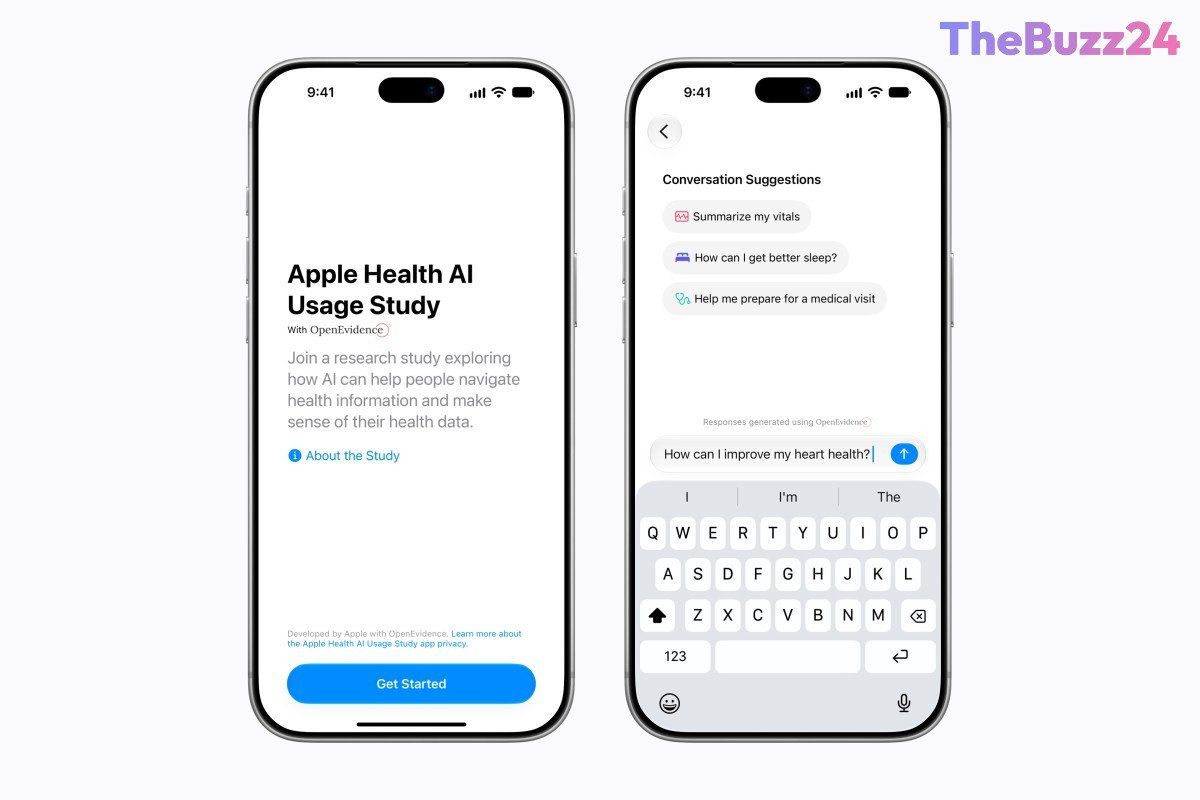
Apple has officially launched a new research initiative aimed at understanding how users interact with artificial intelligence when seeking health-related information. By partnering with the healthcare-focused AI firm OpenEvidence, the company is rolling out a specialized study app designed to provide clinically grounded answers to medical queries. Unlike general-purpose chatbots, this initiative focuses on sourcing information from peer-reviewed publications such as The New England Journal of Medicine and the Journal of the American Medical Association to ensure scientific accuracy.
The study is currently open to U.S. residents aged 21 and older who own an iPhone 15 or newer and are running the latest iOS software with Apple Intelligence enabled. Apple intends to enroll up to 200,000 participants for a year-long observation period. During this time, users will submit health questions, rate the quality of the AI-generated responses, and complete monthly surveys to help researchers gauge the efficacy and reliability of the technology in a real-world setting.
To enhance the personalization of the experience, participants have the option to integrate data from HealthKit, including metrics like sleep patterns, activity levels, and heart rate. Apple has emphasized that privacy remains a cornerstone of this project; all data is anonymized before being processed by a third-party cloud provider. Furthermore, the company has explicitly stated that the data collected will not be used to train AI models, and OpenEvidence is mandated to delete all query and response logs within 24 hours.
While the company has not yet confirmed if this technology will be integrated into Siri or the standard Health app, the move signals a strategic shift toward prioritizing clinical rigor in the AI space. By focusing on how users comprehend and evaluate medical information, Apple aims to establish a framework for trusted health tools that can assist individuals in preparing for doctor visits and navigating complex health concerns.
Key Takeaways
- Apple is launching a 200,000-person study to test how users interact with clinically grounded AI for health queries.
- The app sources information from reputable medical journals and allows users to share HealthKit data for more personalized insights.
- Privacy protections include data anonymization, a 24-hour deletion policy for queries, and a strict prohibition against using participant data for AI model training.
Editor’s Analysis & Impact
Apple’s entry into the health-focused AI research space represents a calculated move to differentiate its ecosystem from general-purpose chatbots like ChatGPT or Claude. By prioritizing ‘clinical grounding’ and scientific rigor, Apple is attempting to mitigate the ‘hallucination’ risks that currently plague large language models in medical contexts. This study is likely a precursor to integrating advanced AI features into the Apple Health app or Siri, which would provide the company with a significant competitive advantage in the digital health market. If successful, this approach could set a new industry standard for how technology companies handle sensitive health data, potentially forcing competitors to adopt similar transparency and privacy-first protocols to maintain user trust in an increasingly AI-driven healthcare landscape.
Frequently Asked Questions
Q: Who is eligible to participate in the Apple health AI study?
A: The study is open to U.S. residents aged 21 and older who use an iPhone 15 or later, running the latest iOS version with Apple Intelligence enabled.
Q: Will my health data be used to train Apple's AI models?
A: No. Apple has stated that the data collected during this study will not be used to train any AI models and will be anonymized before being processed.
AI Disclosure: This article is based on verified data and official reports. Our Team and AI have cross-referenced every financial detail with primary sources to ensure total accuracy.
More from this Category