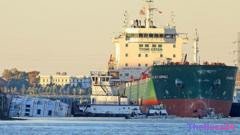
Strategic Retreat: Yemeni Forces Cede Key Red Sea Territory to Houthis Amid Aden Defense Prioritization
Yemeni pro-government forces, backed by a Saudi-led coalition, have reportedly withdrawn from a critical coastal area overlooking the strategically vital Bab al-Mandab Strait. This significant redeployment, aimed at bolstering defenses around the country’s interim capital, Aden, has allowed the Iran-backed Houthi movement to assert control over the evacuated territory. The move marks a notable shift after weeks of intensified fighting in the region.
The Bab al-Mandab Strait, situated at the southern end of the Red Sea, is a crucial global shipping lane. The withdrawal follows a recent offensive by pro-government forces to secure this area, which the Houthis had initially seized in a surprise move in September. While pro-government forces had claimed to have ‘secured’ the strait in early October, the current decision prioritizes the defense of Aden and neighboring governorates. The Houthis have previously stated they pose no threat to international shipping passing through the waterway but have vowed to continue targeting vessels from Saudi Arabia.
The Houthi’s control over territory overlooking this vital waterway has previously contributed to spikes in global oil prices, as Saudi Arabia relies on the Red Sea for its oil exports. The ongoing conflict, which escalated significantly in August, has led to a dire humanitarian situation. United Nations figures indicate that nearly 330,000 people have been displaced in Yemen, with over 60% of documented civilian casualties since the escalation being women and children. Both sides have intensified attacks, with Houthi assaults on Aden, including a recent attack on the presidential palace, met with hundreds of retaliatory Saudi airstrikes.
The civil war, which began in 2014 when the Houthis ousted the government from Sanaa, escalated further in 2015 with the intervention of the Saudi-led coalition. A four-year informal ceasefire began to unravel in July, marked by Houthi threats of a ‘maritime embargo’ against Saudi Arabia and increased missile and drone attacks on Saudi cities and infrastructure. The Houthis claim these actions are in retaliation for a Saudi blockade of their territories and an airstrike on Sanaa airport.
Key Takeaways
- Yemeni pro-government forces have withdrawn from a strategic Red Sea coastal area near the Bab al-Mandab Strait.
- The Iran-backed Houthi movement has taken control of the evacuated territory, marking a significant shift in the conflict.
- The redeployment aims to reinforce defenses around the interim capital, Aden, amidst escalating fighting and a worsening humanitarian crisis.
Editor’s Analysis & Impact
The strategic retreat of Saudi-backed Yemeni forces from the Bab al-Mandab Strait region to prioritize Aden’s defense signals a critical shift in the Yemeni conflict. Houthi control over this vital maritime choke point introduces significant geopolitical risk, potentially impacting global shipping and oil prices, especially given Saudi Arabia’s reliance on the Red Sea for exports. This development suggests a prolonged and complex conflict, with intensified urban warfare likely around Aden. The unraveling ceasefire and escalating attacks from both sides point towards a worsening humanitarian crisis and continued regional instability. The Houthi’s territorial gains strengthen their leverage, underscoring Iran’s growing influence and demanding sustained diplomatic efforts to mitigate the conflict’s far-reaching consequences on global energy markets and international maritime security.
Frequently Asked Questions
Q: Why is the Bab al-Mandab Strait important?
A: The Bab al-Mandab Strait is a crucial maritime choke point connecting the Red Sea to the Gulf of Aden and the Indian Ocean. It is vital for global shipping and oil transit between Europe, Asia, and Africa, making its control strategically significant.
Q: What is the current status of the Yemeni civil war?
A: The Yemeni civil war, which began in 2014, has seen a recent escalation after a four-year informal ceasefire unraveled in July. Fighting has intensified between the Saudi-backed pro-government forces and the Iran-backed Houthi movement, leading to significant displacement and casualties, particularly among civilians.
Q: How has the conflict impacted global oil prices?
A: Houthi control over areas overlooking the Bab al-Mandab Strait has previously contributed to surges in global oil prices due to concerns about disruptions to shipping. This is particularly relevant as Saudi Arabia, a major oil exporter, relies on the Red Sea for its oil transit.
AI Disclosure: This article is based on verified data and official reports. Our Team and AI have cross-referenced every financial detail with primary sources to ensure total accuracy.
More from this Category