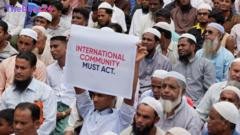
Historic ICJ Ruling: Myanmar Found Guilty of Genocide Against Rohingya Minority
In a landmark decision, the International Court of Justice (ICJ) has ruled that Myanmar committed genocide against its Rohingya minority. This verdict marks the first time a state has been found guilty of genocide by an international court, establishing a significant precedent in international law.
Presiding judge Yuji Iwasawa stated that the evidence presented indicated Myanmar possessed the “intention to destroy” a significant portion of the Rohingya population. The court also found that Myanmar engaged in “extensive destruction of evidence” to conceal its actions. The ruling stems from the brutal military crackdown initiated in 2017, which resulted in thousands of deaths and forced over 700,000 Rohingya to flee their homes in Buddhist-majority Myanmar. The court concluded that “genocidal intent is the only reasonable inference that can be drawn from the evidence.”
The case, brought forth by The Gambia, focused on the “clearance operations” in Rakhine State. Following attacks by the Arakan Rohingya Salvation Army (Arsa), Myanmar’s military, supported by local Buddhist mobs, unleashed a wave of violence. Survivors and witnesses have detailed the burning of villages, mass killings, and widespread sexual violence against Rohingya women and girls. The ICJ determined that approximately 10,000 Rohingya were killed and over 700,000 were displaced, with an estimated 815,000 targeted in some capacity. The court also noted the military’s “indiscriminate” killings, execution of men, “widespread” sexual violence, and the deliberate destruction of homes, including attacks on fleeing Rohingya.
Myanmar has consistently denied the genocide allegations, asserting that its operations were a response to militant threats. However, the ICJ found that discriminatory policies predating the 2017 crackdown, such as limiting family size, were also aimed at eroding Rohingya rights. The court has mandated that Myanmar pay reparations, though the exact amount is yet to be determined. This ruling has been hailed by Rohingya communities and human rights organizations as a crucial step towards justice and recognition of their suffering, while international bodies are urged to translate this verdict into concrete action.
Key Takeaways
- The International Court of Justice has ruled that Myanmar committed genocide against its Rohingya minority, a historic first for a state.
- The court found evidence of "genocidal intent" and "extensive destruction of evidence" by Myanmar's military during the 2017 crackdown.
- Myanmar has been ordered to pay reparations, and the ruling sets a significant precedent for future international genocide cases.
Editor’s Analysis & Impact
This ICJ ruling represents a watershed moment in international justice, establishing a critical precedent by holding a state directly accountable for genocide. The finding of “genocidal intent” and the acknowledgment of systematic evidence destruction underscore the gravity of the situation. The implications extend beyond Myanmar, potentially influencing how future cases, such as the one brought against Israel concerning Gaza, are approached by international courts. While the ICJ’s enforcement powers are limited, relying on political pressure and the UN Security Council, this verdict carries immense moral and legal weight. It signals a stronger stance against mass atrocities and could embolden international efforts to prevent and prosecute genocide, though the path to accountability and reparations for the Rohingya remains challenging.
Frequently Asked Questions
Q: What is the significance of the ICJ ruling against Myanmar?
A: This ruling is significant because it is the first time an international court has found a state guilty of committing genocide. It establishes a crucial legal precedent for holding nations accountable for such crimes.
Q: What evidence did the ICJ consider?
A: The ICJ considered evidence of "genocidal intent," including "indiscriminate" killings, widespread sexual violence, execution of men, extreme violence against children, and the deliberate burning of homes. The court also noted Myanmar's "extensive destruction of evidence" and discriminatory policies against the Rohingya.
Q: What are the consequences for Myanmar?
A: Myanmar has been ordered to pay reparations to the Rohingya, although the exact amount is yet to be determined. The ruling also carries significant international legal and political implications, potentially impacting future international legal proceedings and Myanmar's standing on the global stage.
AI Disclosure: This article is based on verified data and official reports. Our Team and AI have cross-referenced every financial detail with primary sources to ensure total accuracy.
More from this Category