Martian Twilight: Curiosity Rover Captures Rare Cloud Formations Over Gale Crater
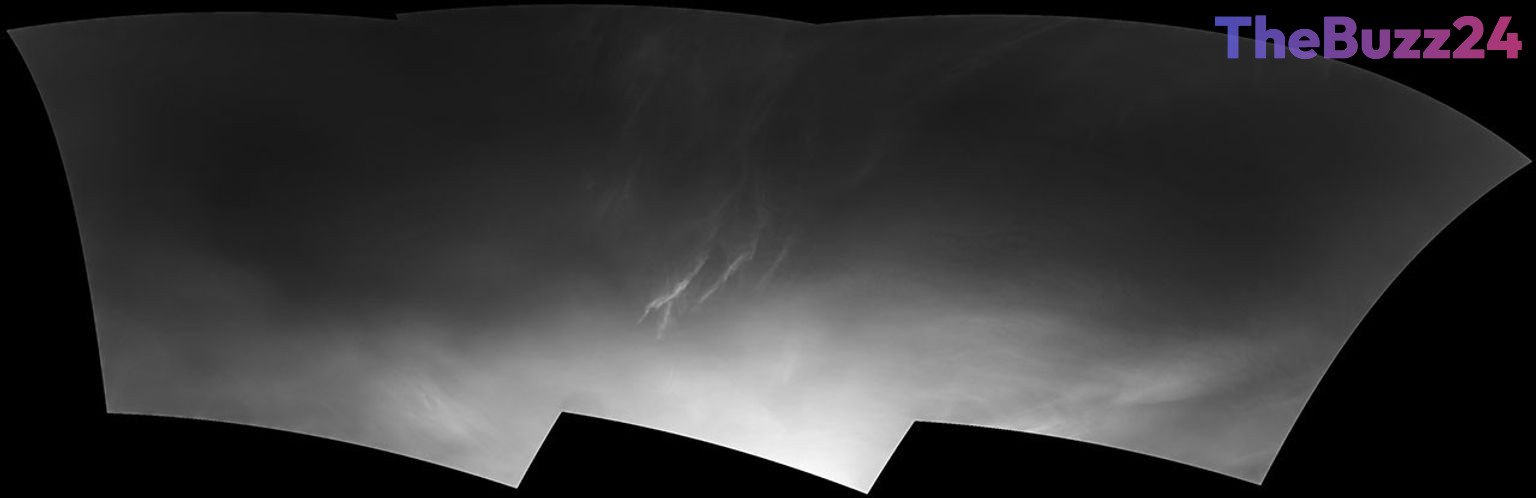
The Curiosity rover has successfully documented a series of rare, drifting clouds within the Martian atmosphere. Captured on October 31, 2026—marking the 5,061st sol of the mission—these post-sunset phenomena, known as twilight clouds, were observed as they passed over Gale Crater. The rover utilized its onboard navigation cameras to record these fleeting atmospheric events, which typically only appear during the autumn season on the Red Planet.
This observation adds to the extensive data collected by Curiosity during its long-term exploration of Gale Crater, a mission that has now spanned over 14 years. The presence of these clouds provides scientists with valuable insights into the Martian climate and atmospheric composition. By studying the timing and formation of these twilight clouds, researchers can better understand the complex weather patterns that characterize the Martian environment.
Curiosity continues to serve as a vital asset in the ongoing effort to map the geological and atmospheric history of Mars. Managed by the Jet Propulsion Laboratory, the rover remains a cornerstone of the broader Mars Exploration Program, consistently delivering high-resolution imagery and scientific data that deepen our understanding of our planetary neighbor.
Key Takeaways
- The Curiosity rover captured rare twilight clouds over Gale Crater on its 5,061st Martian day.
- These cloud formations are seasonal, appearing specifically during the autumn months on Mars.
- The mission, now in its 14th year, continues to provide critical data regarding Martian atmospheric behavior.
Editor’s Analysis & Impact
The continued operational success of the Curiosity rover highlights the resilience of long-term robotic exploration missions. By capturing transient atmospheric phenomena like twilight clouds, the mission provides essential data for climate modeling on Mars, which is critical for future human exploration efforts. These observations are not merely aesthetic; they allow scientists to refine models of water vapor distribution and atmospheric circulation in the thin Martian air. As the mission progresses, the ability to document seasonal changes over more than a decade offers a longitudinal perspective that is rare in planetary science. This data is foundational for understanding how Mars transitioned from a potentially habitable world to the arid environment observed today, and it sets the stage for more sophisticated meteorological studies in future missions.
Frequently Asked Questions
Q: What are twilight clouds on Mars?
A: Twilight clouds are rare cloud formations that appear shortly after sunset, visible only during specific seasons, such as autumn, in regions like Gale Crater.
Q: How long has the Curiosity rover been on Mars?
A: The Curiosity rover has been exploring the surface of Mars for over 14 years, having surpassed 5,000 Martian days (sols) of operation.
AI Disclosure: This article is based on verified data and official reports. Our Team and AI have cross-referenced every financial detail with primary sources to ensure total accuracy.
More from this Category