NASA Directs $171 Million in Seed Funding to Fuel Space Exploration Technology
NASA has injected up to $171 million in fresh capital into the U.S. space economy by selecting 302 innovative projects through its Small Business Innovation Research and Small Business Technology Transfer (SBIR/STTR) initiative. This funding wave aims to address critical technology gaps required for deep space missions, including lunar habitation under the Artemis program and future crewed expeditions to Mars.
The agency’s latest investment supports a wide spectrum of early-stage research, split across Phase I and Phase II contracts. Phase I awards grant up to $225,000 to establish the feasibility of novel concepts, whereas Phase II contracts offer up to $1.3 million to advance technologies toward tangible demonstrations and operational readiness. Several notable small businesses and research partnerships have already secured funding to develop specialized hardware designed for harsh extraterrestrial environments.
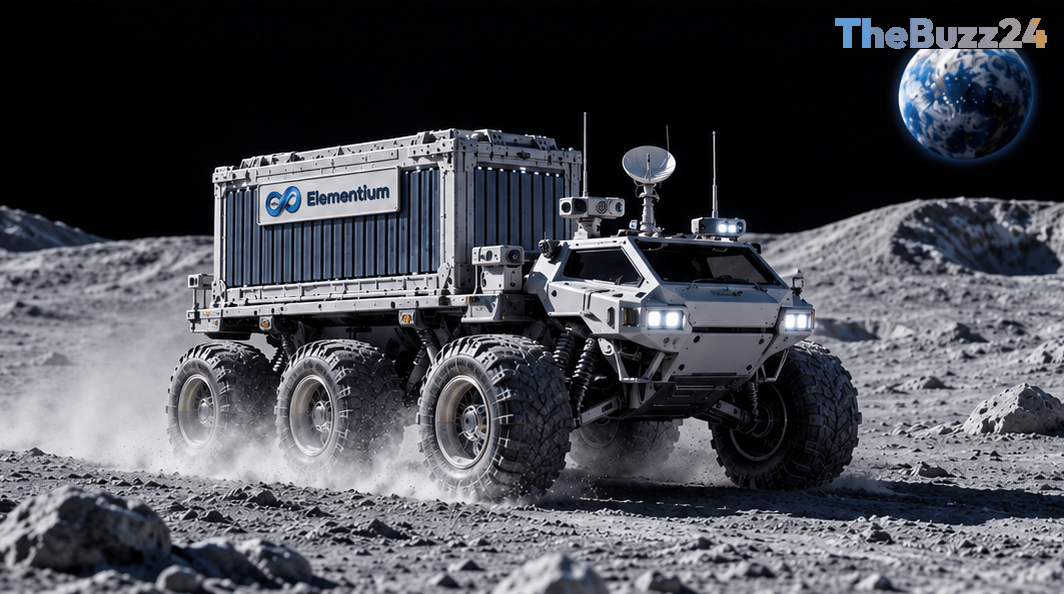
Among the beneficiaries, Opterus Research and Development Inc. is developing scalable, rollable solar arrays capable of withstanding dusty conditions on the Moon and Mars to deliver up to 50 kilowatts of power. Meanwhile, Intelligent Fiber Optic Systems Corporation is building a 10-foot robotic arm equipped with advanced vision and tactile sensing to help rovers perform complex tasks independently. Additionally, Elementium Materials Inc. is working on an ultra-cold-tolerant battery module that functions in temperatures as low as minus 76 degrees Fahrenheit without active heating, saving valuable payload mass.
Infrastructure development is another core focus, highlighted by a collaboration between Slate Geotechnical Consultants Inc. and the Colorado School of Mines. This team is engineering durable, reusable landing pads and automated repair methods to prevent rocket exhaust from displacing lunar regolith and damaging nearby equipment. By fostering these technological breakthroughs, the space agency continues to lay the groundwork for a permanent commercial and scientific presence beyond Earth.
Key Takeaways
- NASA selected 302 innovative projects, providing up to $171 million in seed funding via its SBIR/STTR program.
- Funded innovations include ultra-cold batteries, rollable solar arrays, tactile robotic arms, and reusable lunar landing pads.
- The initiative bridges the gap between small business entrepreneurship and the technological demands of the Artemis and Mars missions.
Editor’s Analysis & Impact
NASA’s ongoing commitment to small business funding through the SBIR/STTR program plays a vital role in accelerating the commercial space economy. By outsourcing critical research and development to nimble startups and specialized institutions, the space agency drastically reduces the time-to-market for pioneering technologies. Innovations originally designed to survive the harsh, freezing conditions of the lunar night—such as ultra-cold batteries and autonomous robotic systems—frequently find lucrative dual-use applications on Earth, including extreme-climate energy storage and hazardous infrastructure inspection. As the push toward a sustained lunar base accelerates, nurturing this ecosystem of agile innovators ensures a robust, diversified supply chain for the future of interplanetary exploration.
Frequently Asked Questions
Q: What is the primary goal of NASA's SBIR/STTR program?
A: The program provides early-stage seed funding to entrepreneurs, startups, and small businesses to develop and commercialize technologies that support NASA missions and fuel the U.S. space economy.
Q: What is the difference between Phase I and Phase II contracts in this funding round?
A: Phase I contracts receive up to $225,000 to establish the merit and feasibility of an innovation. Phase II contracts, valued at up to $1.3 million, focus on the demonstration and delivery of technologies that began in earlier phases.
Q: How do projects like Elementium Materials' battery help space missions?
A: Elementium Materials is developing a battery that operates down to minus 76 degrees Fahrenheit without active heating. This eliminates the need for heavy insulating layers, freeing up payload space and mass for other scientific tools and experiments.
AI Disclosure: This article is based on verified data and official reports. Our Team and AI have cross-referenced every financial detail with primary sources to ensure total accuracy.
More from this Category