Fossil Fuel Standoff Threatens to Derail Global Climate Summit
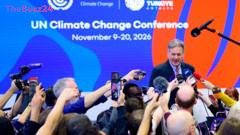
Climate negotiations at the COP31 summit in Turkey have reached a critical impasse, with delegates working through the night without consensus on a new global climate accord. The talks are currently deadlocked over the inclusion of language addressing the reduction of fossil fuel demand.
A significant pushback against the draft agreement emerged late Friday, spearheaded by nations including France and Panama. These countries are advocating for explicit commitments to phase out oil, gas, and coal, a stance that has been met with resistance from fossil fuel-producing nations, notably Saudi Arabia, which have lobbied for the removal of such references.
Adding to the complexity, the African Group of negotiators is demanding increased financial commitments for climate adaptation measures. Ghana’s Environment Minister, Zanetor Agyeman Rawlings, representing the group, stated that developing nations are seeking what is rightfully theirs to address the impacts of climate change, which disproportionately affect their populations due to the historical emissions of developed countries.
The current draft agreement, known as the Antalya Accords, marks a significant shift by acknowledging that the goal of limiting global temperature rise to 1.5 degrees Celsius has already been surpassed. This acknowledgment ushers in an era of ‘overshoot,’ a period scientists warn will bring increased risks of sea-level rise and extreme heat for millions worldwide. The summit’s outcome remains uncertain, with a final agreement anticipated on Saturday, but the deep divisions over fossil fuels and adaptation finance cast a shadow over its potential effectiveness.
Key Takeaways
- COP31 climate talks are deadlocked over the inclusion of language to reduce fossil fuel demand.
- Developing nations, particularly the African Group, are demanding greater financial commitments for climate adaptation.
- The draft agreement acknowledges that the 1.5°C global warming limit has been missed, entering an 'overshoot' period.
Editor’s Analysis & Impact
The deadlock at COP31 highlights the persistent tension between nations reliant on fossil fuel exports and those advocating for aggressive climate action. The refusal to explicitly mention fossil fuel reduction in the final agreement, despite scientific consensus on the urgency, underscores the powerful influence of petro-states. Furthermore, the African Group’s insistence on adaptation finance points to a growing divide in climate responsibility, with developing nations bearing the brunt of climate impacts while demanding greater support from historically larger emitters. The acknowledgment of ‘overshoot’ signals a critical juncture, demanding immediate and substantial action beyond mitigation, yet the current negotiations suggest a struggle to achieve even basic consensus on the path forward.
Frequently Asked Questions
Q: What is COP31?
A: COP31 refers to the 31st Conference of the Parties to the UNFCCC (United Nations Framework Convention on Climate Change), a major international summit focused on climate change negotiations and agreements.
Q: What does 'overshoot' mean in the context of climate change?
A: Climate 'overshoot' refers to a scenario where global average temperatures temporarily or permanently exceed a specific target, such as the 1.5°C limit set in the Paris Agreement, before potentially returning to below that level. It signifies crossing a critical threshold with increased risks of severe climate impacts.
Q: Why is adaptation finance important for developing nations?
A: Adaptation finance is crucial for developing nations as they often lack the resources to cope with the adverse effects of climate change, such as extreme weather events, sea-level rise, and agricultural disruption, which are largely caused by historical emissions from developed countries.
AI Disclosure: This article is based on verified data and official reports. Our Team and AI have cross-referenced every financial detail with primary sources to ensure total accuracy.
More from this Category