The 2025 Stress Test: How Digital Asset Infrastructure Withstood a Year of Volatility
The year 2025 served as a pivotal proving ground for the digital asset ecosystem, forcing the industry to confront a series of high-stakes operational challenges and security threats. From unprecedented spikes in network traffic to sophisticated security breaches and stablecoin anomalies, the sector faced a gauntlet of tests that pushed existing infrastructure to its absolute limits. These events provided a clear window into the current state of blockchain maturity, highlighting both the robust nature of decentralized networks and the persistent risks associated with centralized management.
One of the most notable infrastructure trials occurred early in the year when the Solana blockchain experienced a massive surge in activity driven by the rapid rise of a memecoin. Despite the token reaching a $9 billion market cap and placing immense pressure on the network, Solana’s architecture proved resilient. While transaction fees experienced temporary volatility, the network maintained its core functionality, demonstrating an ability to scale under extreme speculative demand. This success was contrasted by a significant security incident at the exchange Bybit, where a multi-signature wallet vulnerability led to the unauthorized transfer of $1.5 billion in ETH. The exchange’s ability to quickly replenish funds and maintain operations underscored the importance of liquidity management and crisis response protocols in the modern crypto economy.
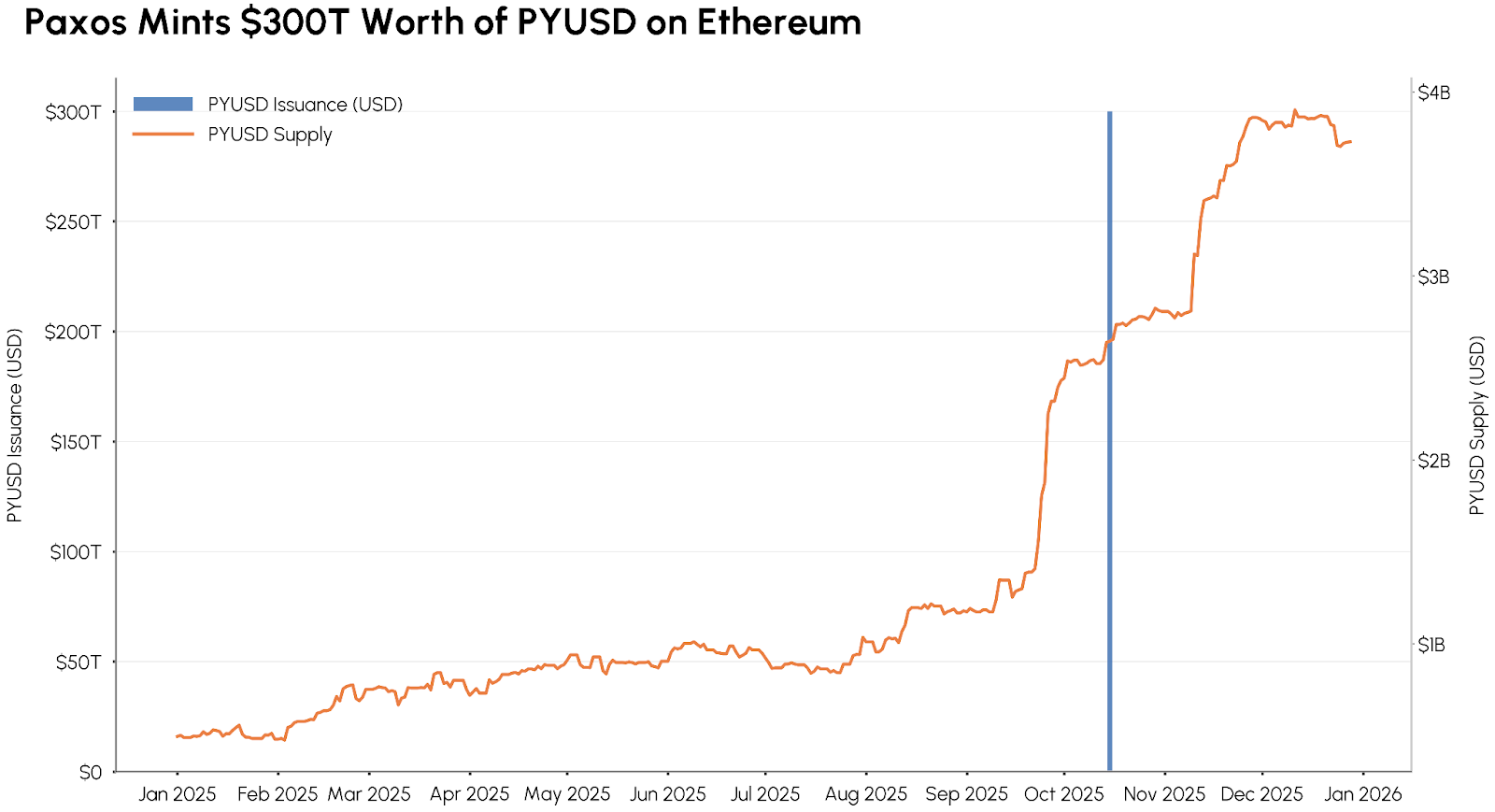
Stablecoin stability also faced scrutiny throughout the year, particularly during an October incident involving Paxos. An internal error led to the accidental minting of $300 trillion in PYUSD, which, while corrected within 20 minutes, exposed the risks inherent in centralized minting systems. Furthermore, market-wide liquidations caused temporary depegging events for assets like Ethena’s USDe, highlighting the sensitivity of synthetic stablecoins to reflexive market conditions. Despite these disruptions, the broader ecosystem avoided systemic collapse, suggesting that the industry is successfully transitioning from a period of experimental fragility to one of hardened, battle-tested infrastructure.
Key Takeaways
- Major blockchain networks like Solana demonstrated high scalability and resilience during extreme spikes in transaction volume.
- Centralized entities remain vulnerable to human error and sophisticated security exploits, necessitating more rigorous multi-signature and internal control protocols.
- Stablecoin mechanisms, particularly synthetic models, remain sensitive to market-wide liquidity shocks, requiring better risk management frameworks.
Editor’s Analysis & Impact
The events of 2025 represent a maturation phase for the digital asset industry. By surviving high-pressure scenarios—ranging from technical glitches to massive security breaches—the sector has effectively ‘stress-tested’ its foundational layers. The market impact is clear: institutional and retail confidence is increasingly tied to how platforms handle crises rather than just their performance during bull markets. Moving forward, we expect a shift toward more automated, decentralized security measures to mitigate human error, as seen in the Paxos incident. The resilience shown by major networks suggests that the infrastructure is becoming robust enough to support broader financial integration, provided that issuers and exchanges continue to prioritize transparency and liquidity buffers. The industry is moving away from ‘move fast and break things’ toward a more disciplined, risk-aware operational model.
Frequently Asked Questions
Q: Did the Solana network fail during the 2025 memecoin surge?
A: No, the Solana network maintained its integrity and continued to process transactions effectively, even though transaction fees saw a temporary increase due to the high volume of activity.
Q: How did Bybit recover from the $1.5 billion security breach?
A: Bybit successfully replenished the lost capital through a combination of external financing and existing deposits, which allowed them to maintain active withdrawals and prevent a liquidity crisis.
AI Disclosure: This article is based on verified data and official reports. Our Team and AI have cross-referenced every financial detail with primary sources to ensure total accuracy.
More from this Category