Devastating Twin Wildfires Strike Greek Island of Salamina, Leaving Two Dead and Hundreds Evacuated
A swift and devastating emergency unfolded on the Greek island of Salamina on Sunday as two major wildfires erupted almost simultaneously, claiming two lives and forcing the urgent evacuation of hundreds of residents. Located just west of Athens, the island was under a high wildfire risk when the blazes broke out within minutes of each other. Firefighters launched a massive operation to prevent the two distinct fronts from merging into a single, uncontrollable inferno.
The first fire was reported in the early afternoon in Peristeria, a forested residential area on the island’s southern coast, and quickly intensified due to strong winds. Approximately 20 minutes later, a second blaze ignited in the eastern town of Selinia. Emergency responders discovered two casualties, believed to be a local couple, at the scene of the southern fire. Additionally, at least ten individuals suffered burns or smoke inhalation, with several requiring hospitalization.
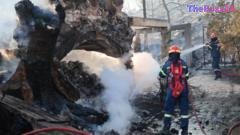
A massive deployment of around 200 firefighters, 50 fire engines, multiple aircraft, and water tankers worked alongside local construction machinery to battle the flames. To assist with evacuations and monitor the coastline, coast guard and private vessels successfully evacuated around 500 people by sea. By Sunday evening, containment efforts had progressed significantly, with the eastern fire reported to have no active front and the southern blaze brought under control.
This disaster comes amid a broader wave of extreme summer weather and wildfires across Europe. Firefighters in Belgium have been battling a record-breaking blaze in the Hautes Fagnes nature reserve, while Croatia recently experienced one of its worst coastal wildfires in history. These events align with data from the Copernicus climate monitoring service, which confirmed that western Europe has just endured its hottest June-to-July period on record, highlighting the growing threat of climate-driven natural disasters.
Key Takeaways
- Two near-simultaneous wildfires on the Greek island of Salamina resulted in two fatalities and forced the evacuation of approximately 500 people by sea.
- A coordinated response involving 200 firefighters, aircraft, and naval vessels successfully prevented the two fire fronts from merging.
- The incident coincides with a broader European wildfire crisis, fueled by record-breaking summer temperatures documented by the Copernicus climate service.
Editor’s Analysis & Impact
The simultaneous outbreak of wildfires on Salamina underscores the escalating vulnerability of the Mediterranean region to climate-induced disasters. As the Copernicus climate service notes record-breaking summer temperatures, the window for traditional fire management is shrinking. This crisis highlights the critical need for enhanced regional coordination and modernized early-warning systems. For Greece, whose economy relies heavily on tourism, recurring wildfires pose a dual threat to public safety and economic stability. Insurance markets and local governments must brace for rising costs associated with disaster response and infrastructure rehabilitation. Moving forward, European nations must transition from reactive firefighting to proactive forest management and climate adaptation strategies to mitigate the devastating impacts of these increasingly frequent extreme weather events.
Frequently Asked Questions
Q: What caused the twin fires on the island of Salamina?
A: The exact cause of the two fires, which broke out within 20 minutes of each other, remains unknown and is currently under investigation by local authorities.
Q: How many people were affected by the Salamina wildfires?
A: Tragically, two people lost their lives in the southern fire. Additionally, at least ten individuals suffered from burns or smoke inhalation, and approximately 500 people were evacuated from the island by sea.
Q: Are other parts of Europe experiencing similar wildfire activity?
A: Yes, Europe is facing a severe wildfire season, with major blazes recently reported in Belgium's Hautes Fagnes nature reserve and along Croatia's coastline, driven by record-breaking summer temperatures.
AI Disclosure: This article is based on verified data and official reports. Our Team and AI have cross-referenced every financial detail with primary sources to ensure total accuracy.
More from this Category