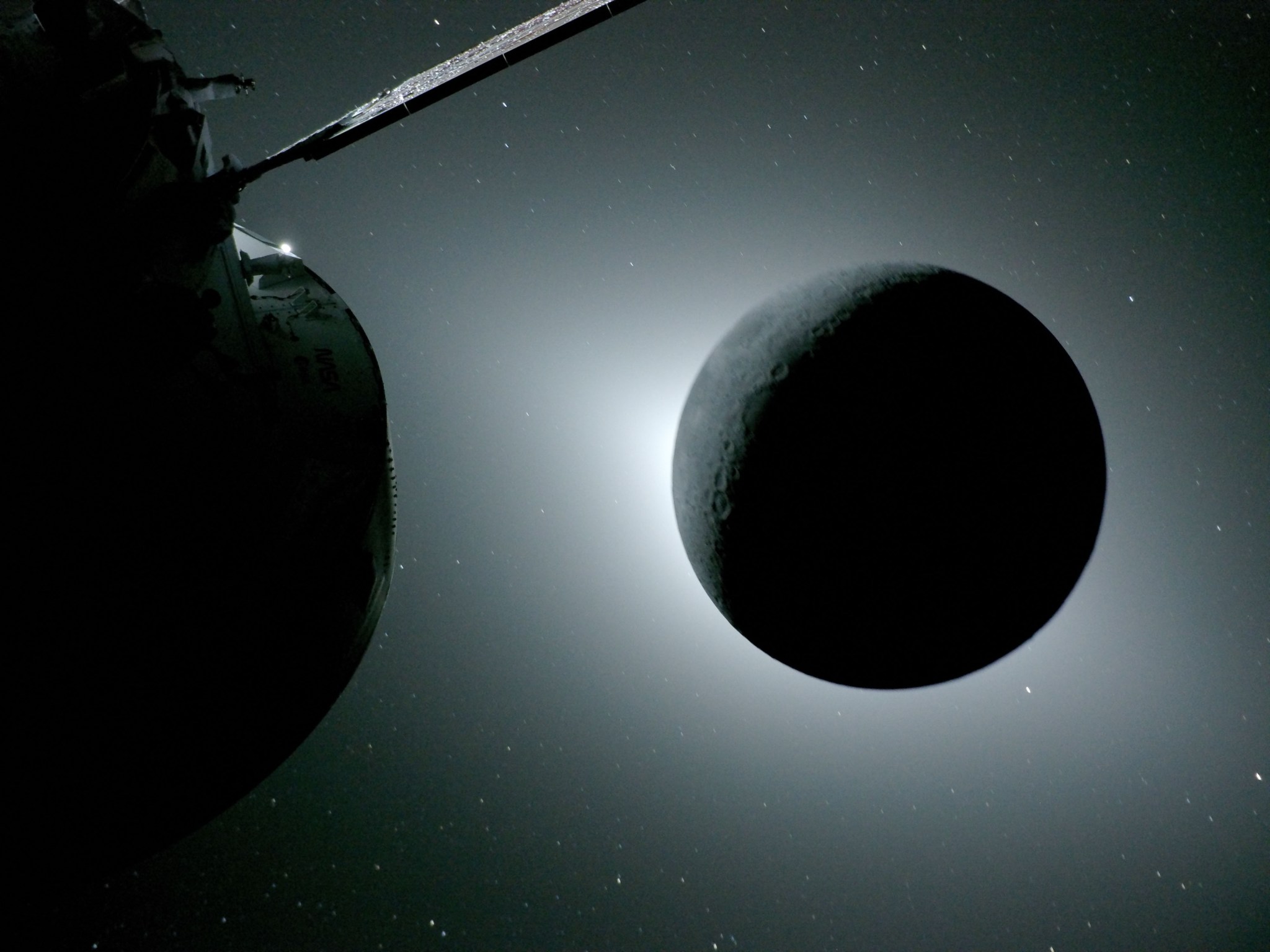
Artemis II Astronauts Capture Unprecedented Deep-Space Solar Eclipse
The Artemis II mission achieved a significant scientific milestone on April 6, 2026, when the crew successfully observed and documented a rare solar eclipse from the unique vantage point of deep space. During their scheduled lunar flyby, the astronauts were positioned to witness the Moon backlit by the Sun, a perspective that remains physically impossible to replicate from Earth’s surface. This celestial alignment allowed the team to study the interaction between these two bodies without the distorting interference of the planet’s atmosphere.
To capture the event, the crew utilized high-resolution imaging equipment mounted on the Orion spacecraft’s solar array wings. The footage documents the Moon passing directly between the Sun and the capsule, providing a clear, unobstructed view of the eclipse that was exclusive to the mission team. This visual data is expected to yield significant new insights into solar and lunar dynamics, contributing to a deeper understanding of the mechanics governing our solar system.
This achievement underscores the expanding capabilities of the Artemis program as it lays the groundwork for future human landings on the lunar surface. By pushing the boundaries of deep-space travel, the mission demonstrates the unique value of human presence in orbit, offering observational advantages that robotic probes cannot fully replicate. The successful documentation of this event serves as a testament to the immense scientific potential inherent in ongoing lunar exploration efforts.
Key Takeaways
- The Artemis II crew successfully observed a solar eclipse from deep space during their lunar flyby.
- High-resolution cameras on the Orion spacecraft captured unique footage of the Moon passing between the Sun and the capsule.
- The mission data will provide researchers with new insights into solar and lunar dynamics, free from atmospheric interference.
Editor’s Analysis & Impact
The successful documentation of a solar eclipse from deep space marks a pivotal moment for the Artemis program, shifting the narrative from mere exploration to high-level scientific research. By demonstrating that human-crewed missions can perform complex observational tasks that robotic probes might miss, NASA is validating the necessity of the Artemis program for long-term space science. This event highlights the growing sophistication of the Orion spacecraft’s instrumentation and the crew’s ability to conduct real-time, high-stakes research. Looking forward, this capability suggests that future lunar missions will serve as critical platforms for astrophysics, potentially revolutionizing our understanding of solar phenomena. As the program progresses toward human landings, the integration of such observational milestones will likely increase public and political support for sustained lunar presence and deeper space exploration.
Frequently Asked Questions
Q: Why was this solar eclipse observation unique?
A: The observation was unique because it occurred from deep space, allowing the crew to see the Moon backlit by the Sun without the interference of Earth's atmosphere.
Q: How did the crew capture the footage?
A: The astronauts used high-resolution cameras mounted on the Orion spacecraft's solar array wings to document the event.
AI Disclosure: This article is based on verified data and official reports. Our Team and AI have cross-referenced every financial detail with primary sources to ensure total accuracy.
More from this Category