The Rise of the Million-Dollar Enclave: America’s Most Exclusive Housing Markets
A select group of U.S. housing markets has emerged as the new gold standard for luxury real estate, with properties priced above $1 million accounting for at least half of all active listings. These 13 exclusive enclaves are defined by their extreme scarcity, with each market typically offering fewer than 500 high-value properties at any given time. Unlike broader metropolitan areas where high costs may be driven by general inflation, these specific regions represent a concentrated tier of ‘pure luxury.’
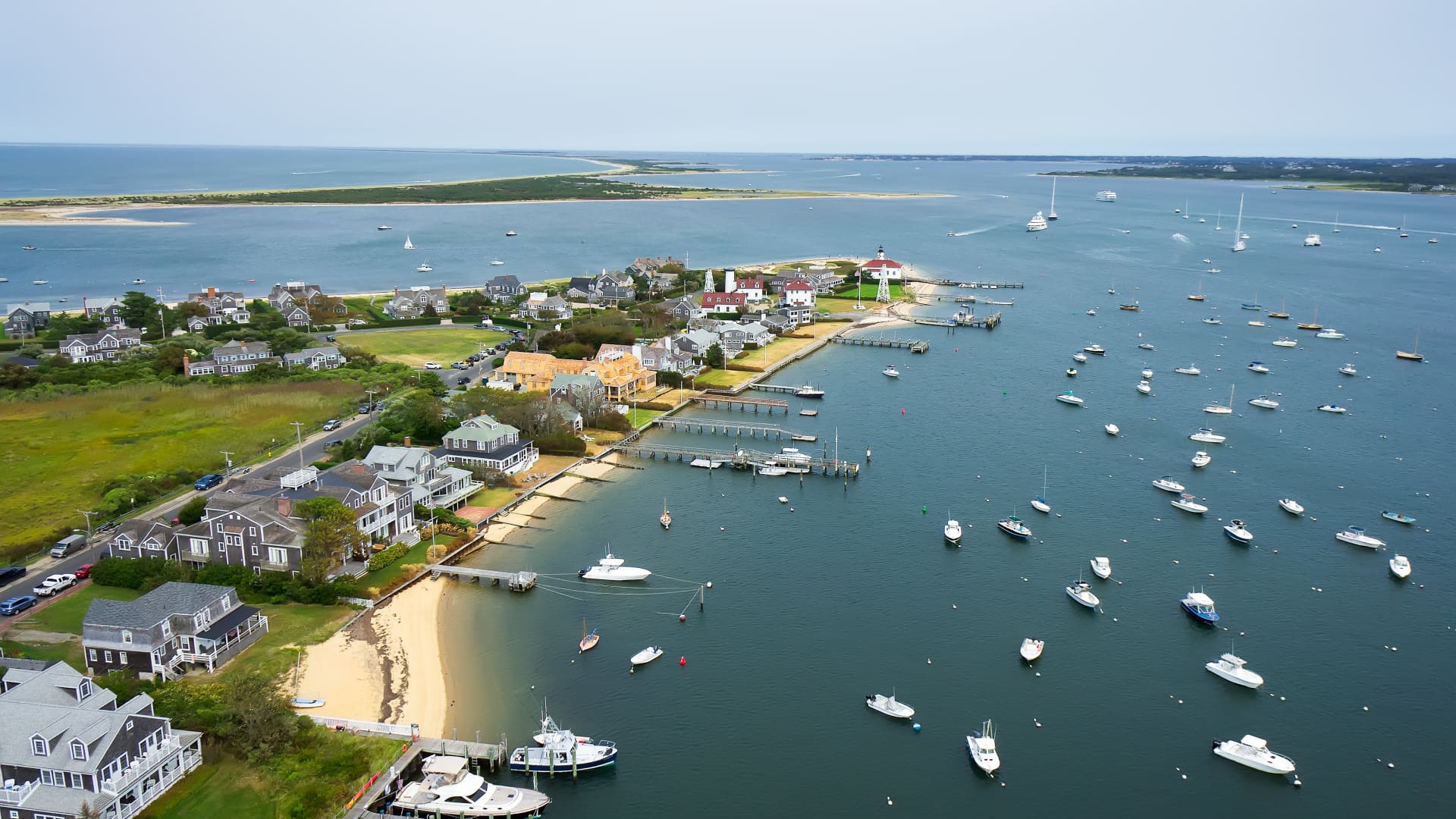
Nantucket, Massachusetts, currently leads the nation in this category, with nearly every active listing exceeding the million-dollar threshold and a staggering median listing price of $4.08 million. Nearby Vineyard Haven on Martha’s Vineyard follows closely, with 90% of its inventory priced above $1 million. These island communities face significant geographic and regulatory constraints, which limit new development and drive up property values. Similarly, Jackson, Wyoming, secures a top spot due to strict land conservation policies that leave only a small fraction of the area available for private ownership.
While California hosts five of these premium hubs, the trend is geographically diverse, reaching as far as Kapaa, Hawaii, and Hailey, Idaho. Even smaller, less traditional luxury markets like Petoskey, Michigan, have seen a surge in high-end interest, with over half of its listings now surpassing the million-dollar mark. Despite the prestige associated with these locations, the broader luxury housing sector has experienced a slight cooling period, with national luxury thresholds seeing a modest year-over-year decline before showing signs of stabilization as the spring market approached.
Key Takeaways
- Thirteen U.S. markets are now defined as 'pure luxury' enclaves where over 50% of listings exceed $1 million.
- Geographic constraints, such as island boundaries and land conservation mandates, are the primary drivers of price inflation in these regions.
- While the luxury housing market saw a slight year-over-year dip, prices began to firm up and rise heading into the spring season.
Editor’s Analysis & Impact
The emergence of these ‘million-dollar enclaves’ highlights a growing bifurcation in the U.S. real estate market. While the broader housing sector remains sensitive to interest rate fluctuations and inventory shortages, these ultra-exclusive markets are largely insulated by the principle of extreme scarcity. The future outlook for these regions remains bullish, as wealthy buyers increasingly prioritize lifestyle-oriented locations with limited development potential. However, the slight softening of the national luxury threshold suggests that even the most affluent buyers are becoming more discerning regarding value. Investors should monitor how these markets perform as remote work trends evolve, as the demand for ‘destination’ luxury living continues to compete with traditional urban centers. The long-term implication is a permanent shift in property valuation where land scarcity in desirable locales outweighs broader economic headwinds.
Frequently Asked Questions
Q: What defines a 'million-dollar enclave' in the current housing market?
A: These are specific housing markets where at least 50% of all active listings are priced above $1 million and total high-value inventory is typically limited to fewer than 500 properties.
Q: Why are prices so high in areas like Nantucket and Jackson?
A: Prices are primarily driven by extreme scarcity. In island communities like Nantucket, land is physically limited, while in areas like Jackson, Wyoming, strict conservation regulations prevent significant new development, keeping supply low and demand high.
AI Disclosure: This article is based on verified data and official reports. Our Team and AI have cross-referenced every financial detail with primary sources to ensure total accuracy.
More from this Category