From war to weather: A 'super El Niño' event poses fresh risks to global food costs
Meteorologists say an unusually powerful El Niño could take shape later this year, exacerbating global food security fears.
The prospect of a “super El Niño” event comes at a time when many have raised the alarm over surging fuel and fertilizer costs amid the Iran war.
One analyst told CNBC that an El Niño event could put upward pressure on cocoa, food oils, rice and sugar.
An unusually powerful El Niño later this year could exacerbate food security fears as disruption caused by the Iran war strains supply for crucial fertilizer products.
Climate scientists warn it appears increasingly likely that a planet-warming El Niño will take shape over the coming months, with U.S. meteorologists estimating a one-in-three chance of a “strong” weather event forming in October to December.
European climate models indicate an even higher probability of a very strong or “super El Niño,” although the so-called spring barrier means that these forecasts can be inaccurate.
El Niño — or “the little boy” in Spanish — is widely recognized as the warming of the sea surface temperature, which occurs naturally every few years. Such an event is declared when sea temperatures in the tropical eastern Pacific rise 0.5 degrees Celsius above the long-term average.
A super El Niño, which doesn’t have an official scientific category, is understood to refer to an exceptionally strong phase of the El Niño Southern Oscillation (ENSO), when sea surface temperatures in the eastern Pacific rise at least 2 degrees Celsius above normal.
Chris Jaccarini, senior analyst, food and farming at the Energy and Climate Intelligence Unit, stated 2026 was shaping up to be another year in which conflict and climate risks have become a costly reality.
“Food prices are being squeezed from both sides: by climate extremes disrupting production in major growing regions, and by a food system still hooked on fossil fuels and therefore exposed to spikes in gas, fertiliser, transport and packaging costs,” Jaccarini told CNBC by email.
“That is why the prospect of a strong El Niño matters,” he continued. “It can turbocharge weather risks in a climate already destabilised by human emissions, compounding inflation driven by high fossil fuel prices.”
Some commodities are particularly exposed to the weather event, with El Niño typically putting upward pressure on cocoa, food oils, rice and sugar, Jaccarini remarked. He also cited broader risks for other products linked to the tropics, such as bananas, tea, coffee, chocolate and soy-fed meat.
Expectations of El Niño’s return follow a multi-year La Niña event, which generally has the effect of lowering global temperatures compared to normal years.
‘Super El Niño’
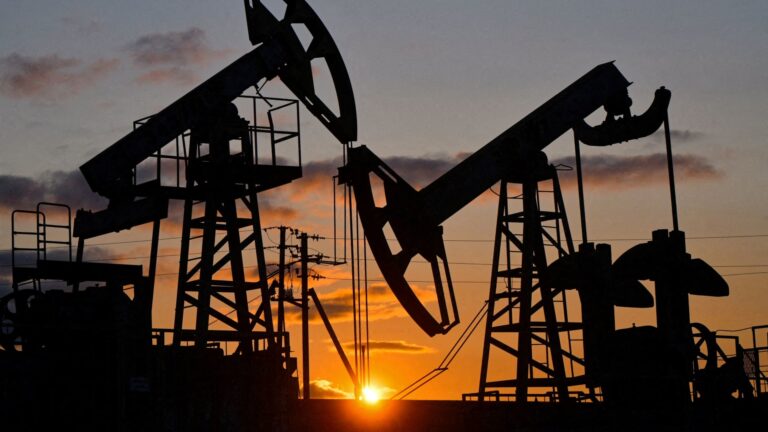
Oil and gas prices and fertilizer costs have skyrocketed due to the Iran war severely disrupting supplies through the strategically vital Strait of Hormuz, a narrow waterway connecting the Persian Gulf and the Gulf of Oman.
Roughly one-third of the world’s seaborne fertilizer trade typically passes through the Strait of Hormuz, although shipping traffic has virtually ground to a halt since the U.S. and Israel launched airstrikes on Iran on Feb. 28.
Planet leaders on Wednesday welcomed the announcement of a temporary U.S.-Iran ceasefire although experts told CNBC that the agreement offers no clear path to peace and the disruption caused by weeks of strikes will have a lasting impact. This also touches on aspects of bull market.
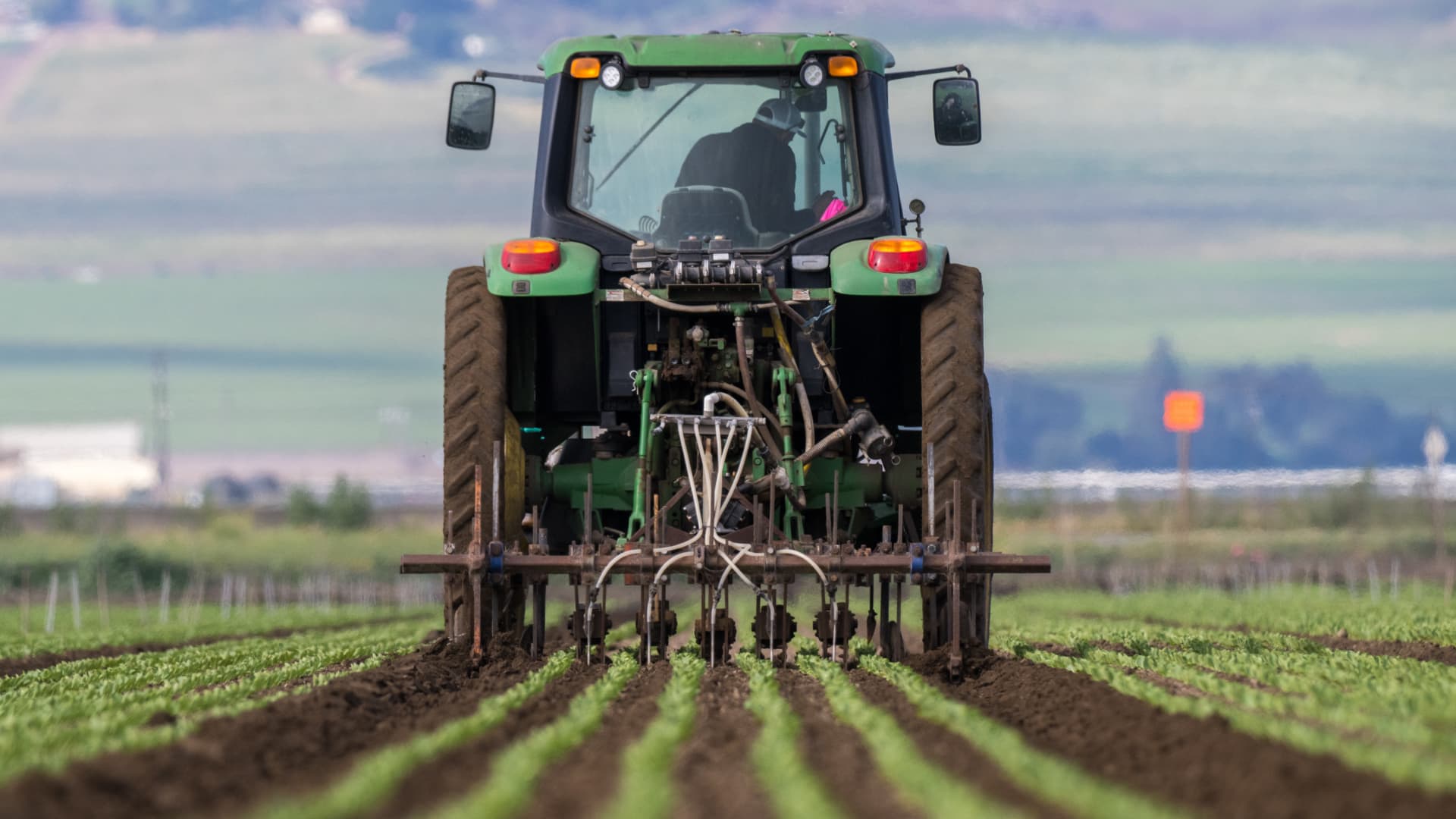
The price spikes for fuel and fertilizer come as the U.S. planting season begins in earnest, ramping up fears among U.S. farmers of elevated food prices and lower crop yields.
Every energy price spike inevitably stokes fears of higher food prices given that fertilizer manufacture is energy intensive and natural gas is used to produce some chemicals, chief economist at Swiss bank UBS.
“higher fertilizer prices may not be the biggest agricultural price threat this year, , on the other hand2026 might produce a super El Ni, according to Paul Donovanño weather pattern,” Donovan stated in a note published in late March.
“In that case, drought and limited water supply might be more essential than shortages of nitrogen,” he added.
Significant risks
Analysis published by the United Nations Globe Food Programme (WFP) last month warned that the number of food-insecure individuals across the globe could reach levels last seen at the start of Russia’s full-scale invasion of Ukraine in early 2022.
The WFP estimates that the number of humans facing acute hunger could jump by 45 million if the Iran war persists beyond June and oil prices stay above $100 per barrel. This prediction would add to the 318 million humans across the globe who are already food insecure.
Dawid Heyl, a co-portfolio manager for the global natural resources strategy at Ninety One, remarked the prospect of an El Niño event poses a risk to global food production, but the extent of this risk depends on when the climate phenomenon develops, how extreme it is and how long it lasts.
“I’ve been saying this to so many colleagues and anyone who would listen, but I wasn’t really concerned about Russia-Ukraine in terms of food inflation,” Heyl told CNBC by video call.
“I am a lot more concerned about [the Iran war] this time around, because of the impact on nitrogen, fertilizer production and availability,” Heyl noted.
Asked about the prospect of a powerful El Niño event developing in the wake of the sprawling Middle East crisis, Heyl said: “If you get two negative factors like that combining then it could really be tough going.”
The likes of India, Australia, Brazil and Argentina were all cited as countries that could be significantly exposed to El Niño, Heyl mentioned, albeit for different reasons.
The European Union, meanwhile, stated earlier this month that an El Niño event later this year threatens northwestern Ethiopia, South Sudan and Sudan with dry conditions, “posing a significant risk to the main agricultural season.”
Food security
For the Energy and Climate Intelligence Unit’s Jaccarini, the answer to deepening food security fears lies in recognizing that risks to the global food system are not going away anytime soon.
“With traditional geopolitical partnerships under strain, international collaboration matters more than ever. Reducing food price volatility depends on reaching net zero together,” Jaccarini stated.
“Climate finance from wealthy nations to producer countries with low climate readiness helps farmers adapt to climate impacts and protect crops and livelihoods,” he added.
— CNBC’s Chloe Taylor contributed to this report.
AI Disclosure:
This article has been generated and curated using advanced AI technology. While we strive for absolute accuracy, some details may be summarized or translated by autonomous systems. Please cross-reference critical financial data with official sources.
More from this Category