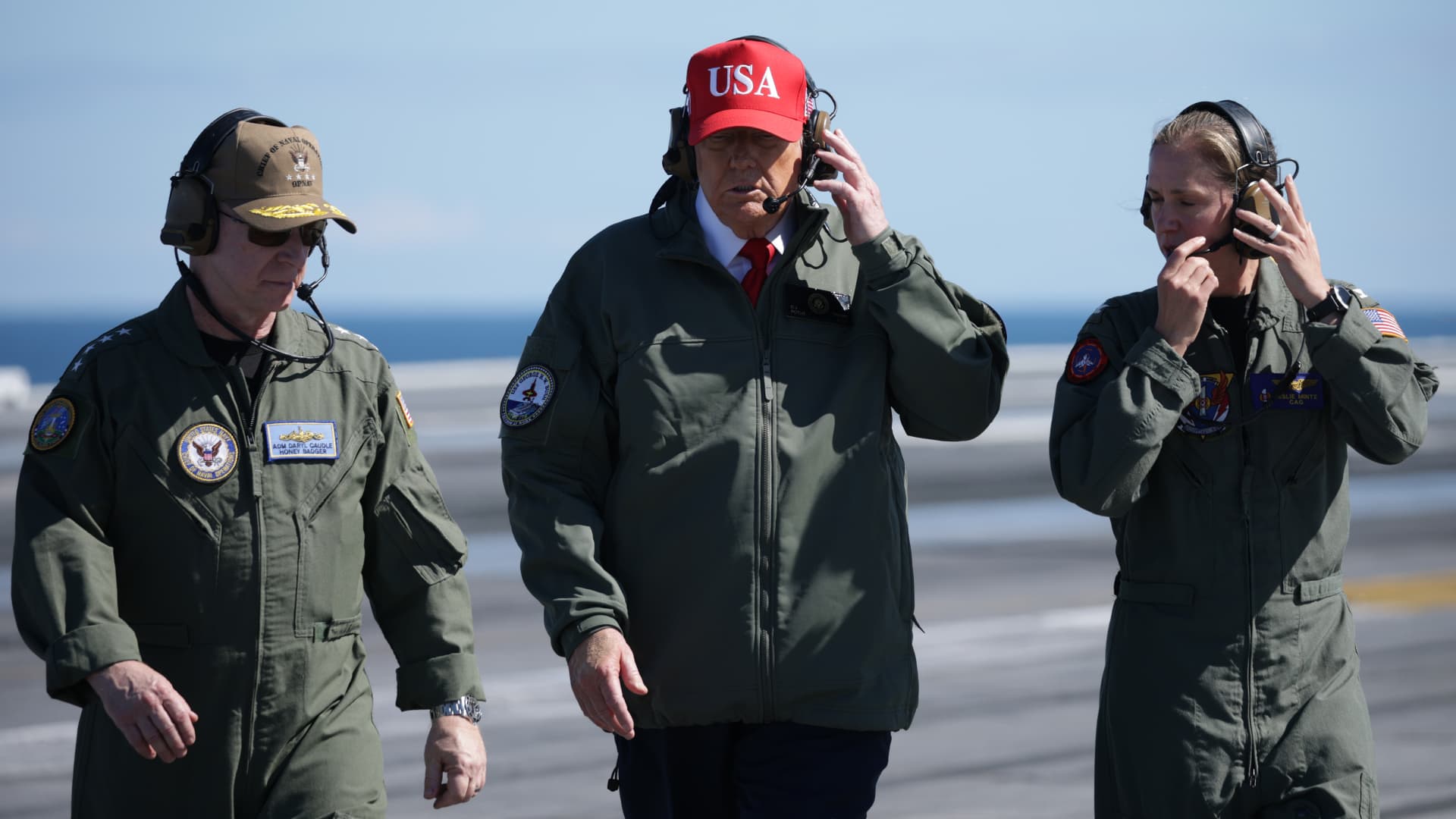
Trump Warns Iran: U.S. Military Stays Until ‘Real Agreement’ Honored, Threatens Unprecedented Action
President Donald Trump has issued a stern warning, declaring that U.S. military forces will remain stationed in and around Iran until Tehran fully adheres to what he termed the “real agreement.” He emphasized that any failure to comply would trigger an unprecedented military response, stating that the “Shootin’ Starts” bigger and stronger than ever seen before. Trump outlined key components of this agreement, including Iran’s commitment to not develop nuclear weapons and ensuring the Strait of Hormuz remains open and safe for commercial shipping. He also remarked on the military’s readiness for a “next Conquest,” signaling a robust posture.
This declaration follows a recently brokered two-week ceasefire between Washington and Tehran, facilitated by Pakistan, which temporarily halted six weeks of intense conflict. While the ceasefire initially sparked optimism for renewed energy flows through the Strait of Hormuz, its terms remain contentious. Iran has indicated that safe passage through the strait would require coordination with its armed forces. Significant discrepancies persist between the two nations’ demands, with Tehran reportedly rejecting a 15-point proposal from Washington and presenting its own 10-point plan, which Trump has publicly dismissed as “totally fake.”
The fragile peace has been further strained by regional developments. Israel, while supporting the suspension of strikes against Iran, has continued its military operations in Lebanon, resulting in significant casualties. These actions prompted Iran to suggest that further peace talks with the U.S. would be “unreasonable,” casting doubt on upcoming negotiations scheduled for Islamabad. Amidst these escalating tensions, global oil prices have resumed their upward trajectory, reflecting market concerns over the conflict’s prolonged nature and its potential impact on energy supplies.
The broader human and economic cost of the conflict was highlighted by Amer Bisat, Lebanon’s Minister of Economy, who asserted that his country was “forced into this war” by external forces. He reiterated Lebanon’s call for a “sovereign-led ceasefire” and a negotiated resolution to the crisis, underscoring the devastating price paid by nations caught in the regional strife.
Key Takeaways
- President Trump declared U.S. military forces will remain deployed near Iran until a "real agreement" is fully honored, threatening severe military action if compliance fails.
- The "real agreement" includes Iran not developing nuclear weapons and ensuring safe passage through the Strait of Hormuz.
- A recent two-week ceasefire remains fragile, with significant disagreements between the U.S. and Iran, and regional hostilities, particularly from Israel in Lebanon, threatening further peace talks.
Editor’s Analysis & Impact
The ongoing geopolitical tensions surrounding Iran, as highlighted by President Trump’s recent statements, signal a period of continued instability in the Middle East. The fragility of the recent ceasefire and the stark differences in demands between the U.S. and Iran suggest a challenging path toward a lasting resolution. The market impact is evident in rising oil prices, reflecting investor anxiety over potential disruptions to global energy supplies, particularly from the Strait of Hormuz. Broader implications include a potential re-escalation of conflict, further destabilization of the region, and significant diplomatic hurdles for international mediators. The situation underscores the complex interplay of military posturing, economic interests, and regional power dynamics, demanding careful navigation to prevent a wider conflict.
Frequently Asked Questions
Q: What is the "real agreement" President Trump referred to?
A: President Trump stated that the "real agreement" involves Iran not developing nuclear weapons and ensuring the Strait of Hormuz remains open and safe for commercial shipping.
Q: What is the current status of the conflict between the U.S. and Iran?
A: A two-week ceasefire was recently brokered by Pakistan, but significant disagreements persist between the U.S. and Iran regarding a permanent resolution. Regional hostilities, including Israeli actions in Lebanon, are also straining the peace efforts.
Q: How has this situation impacted global markets?
A: Global oil prices have resumed their climb due to continued hostilities and uncertainty in the region, reflecting market concerns about potential disruptions to energy supplies from the Strait of Hormuz.
AI Disclosure: This article is based on verified data and official reports. Our Team and AI have cross-referenced every financial detail with primary sources to ensure total accuracy.
More from this Category