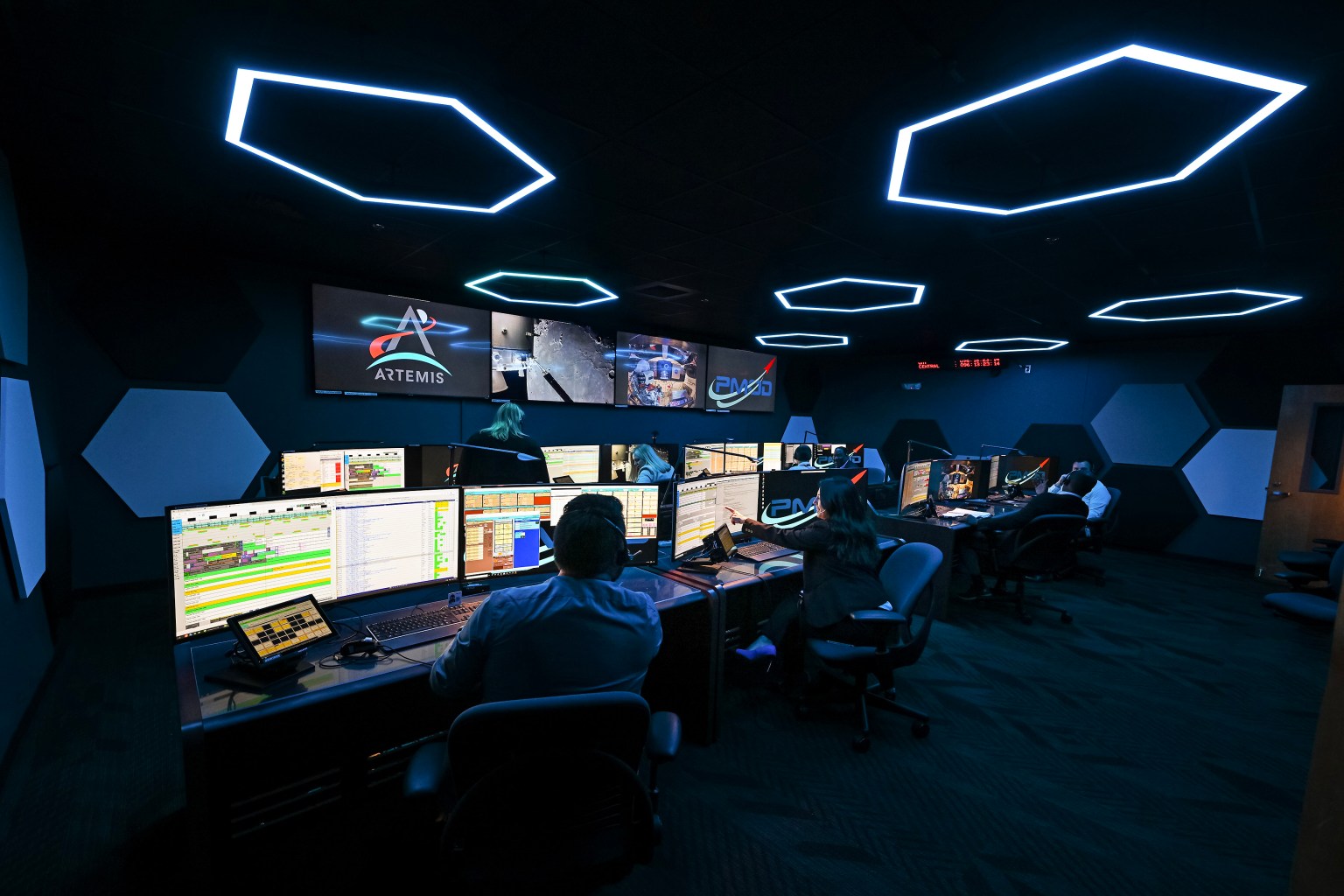
Inside the Huntsville Command Centers Driving NASA’s Return to the Moon
NASA is utilizing two specialized command hubs at the Marshall Space Flight Center in Huntsville, Alabama, to serve as the nerve center for the Artemis lunar missions. These facilities, designated as the Lunar Utilization Control Area (LUCA) and the Lander Engineering Support Area (LESA), provide the real-time oversight necessary to ensure astronaut safety and mission success as the agency works toward future crewed lunar landings.
The LUCA facility is dedicated to the scientific objectives of the Artemis program. Engineers and scientists stationed there are tasked with monitoring experiments that evaluate the effects of deep space, including radiation exposure and microgravity, on human physiology. This research is essential for developing the protocols required to sustain human life during extended deep space missions. The facility has already proven its operational flexibility by successfully managing autonomous navigation experiments in previous mission phases.
Complementing these scientific efforts, the LESA serves as the primary engineering hub for the Human Landing Systems (HLS). This team of flight operations specialists and safety experts focuses on the technical integrity of the vehicles that will transport astronauts to the lunar surface. By observing mission data in real time, the LESA team refines safety procedures and provides the critical oversight needed for rapid decision-making during the most complex stages of lunar descent and landing.
Both control areas operate under the umbrella of the Huntsville Operations Support Center (HOSC), which coordinates a vast array of agency initiatives, including the Space Launch System and the International Space Station. Through the integration of advanced telemetry and communication infrastructure, the HOSC ensures seamless coordination with global partners. These operations are foundational to the agency’s long-term strategy of establishing a sustainable human presence on the Moon as a stepping stone for future crewed missions to Mars.
Key Takeaways
- NASA’s Marshall Space Flight Center operates two specialized hubs, LUCA and LESA, to manage scientific and engineering aspects of the Artemis lunar missions.
- LUCA focuses on human physiology research and deep space environmental impacts, while LESA provides technical oversight for human landing systems.
- These facilities are integrated into the broader Huntsville Operations Support Center, which coordinates global efforts to prepare for future Mars exploration.
Editor’s Analysis & Impact
The establishment of specialized control hubs like LUCA and LESA highlights a shift toward more granular, mission-specific operational support within NASA’s infrastructure. By decentralizing mission control functions, the agency is creating a more resilient and scalable framework capable of handling the increasing complexity of private-public partnerships in spaceflight. The focus on human physiology and landing system safety suggests that NASA is prioritizing the ‘human element’ of exploration, which is the primary bottleneck for long-duration missions. As the Artemis program progresses, these Huntsville-based facilities will likely become the blueprint for how the agency manages multi-layered, autonomous, and crewed operations simultaneously. The broader implication is a more robust, data-driven approach to deep space travel that bridges the gap between current orbital operations and the eventual colonization of Mars.
Frequently Asked Questions
Q: What is the primary difference between LUCA and LESA?
A: LUCA focuses on scientific research, specifically monitoring how deep space environments affect human physiology, while LESA serves as the engineering hub responsible for the safety and operation of human landing systems.
Q: How do these control centers support the broader goal of reaching Mars?
A: By refining the technology and safety protocols for lunar missions, these centers help NASA develop the expertise and systems necessary to sustain human life and manage complex spacecraft during the much longer journey to Mars.
AI Disclosure: This article is based on verified data and official reports. Our Team and AI have cross-referenced every financial detail with primary sources to ensure total accuracy.
More from this Category