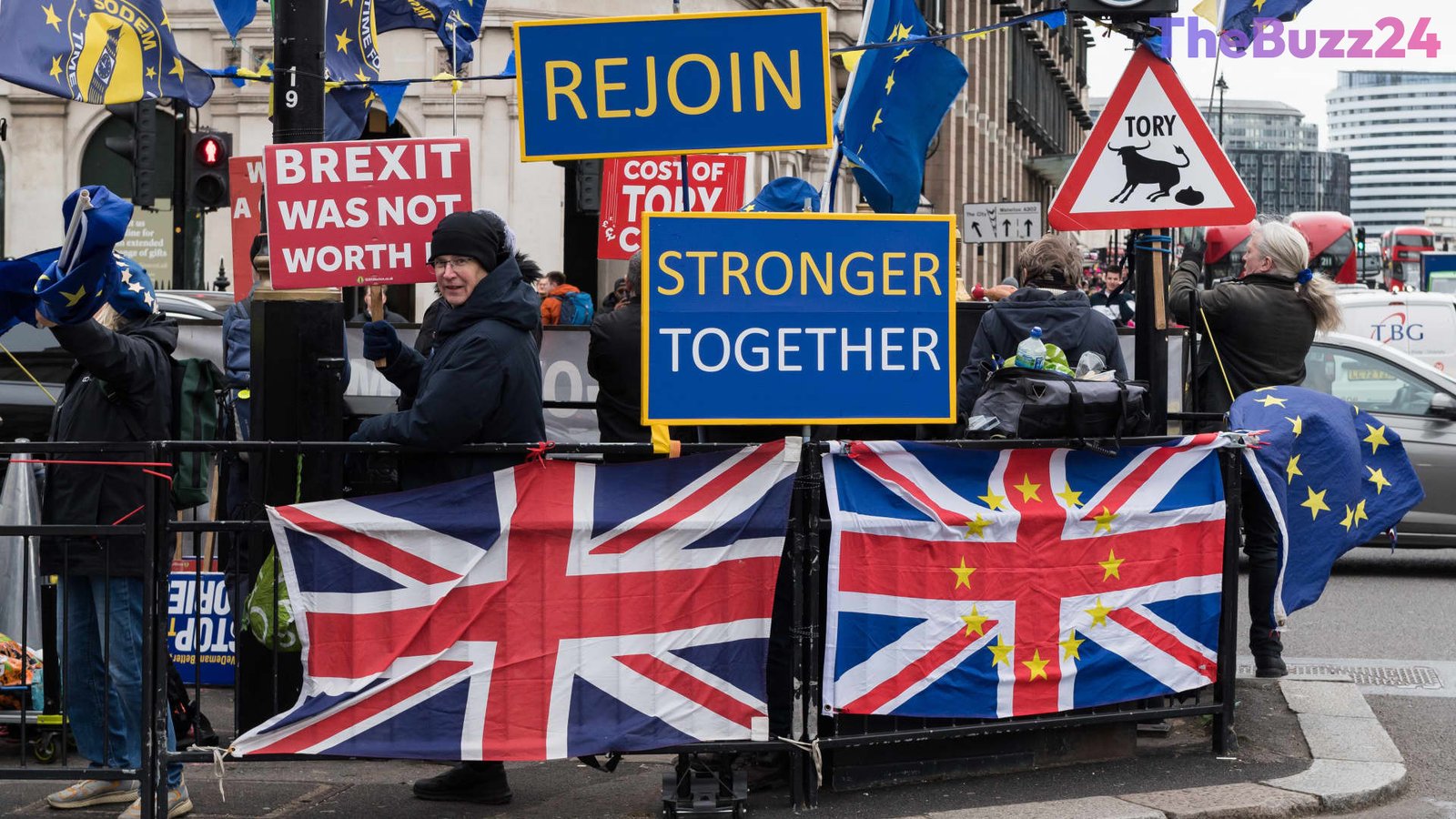
A Decade After the Historic Vote, UK Prime Minister Hints at Possible Brexit Reversal
A decade after the United Kingdom shocked the world by voting to leave the European Union, the possibility of reversing Brexit has officially entered mainstream political discourse once again. Speaking publicly, the nation’s leadership acknowledged that future election manifestos could potentially include a new referendum on EU membership, signaling a profound shift in tone regarding the country’s long-term economic and geopolitical strategy.
While stressing that an immediate in-out vote is off the table and that an early general election is not currently planned, administration officials emphasized that the status quo is proving insufficient. Critics of the 2016 decision point to sluggish economic growth, ongoing immigration hurdles, and persistent pressure on public health funding as evidence that the promises made during the original campaign have largely gone unfulfilled. Resetting ties with the nation’s largest trading partner is now viewed by some as a necessary step to restore prosperity.
However, navigating a path back toward the European bloc would be fraught with diplomatic and domestic hurdles. Economists and financial experts warn that the negotiation process could take years, with the U.K. likely entering talks from a much weaker bargaining position than it held prior to 2016. Potential requirements—such as adopting the euro or accepting the free movement of labor—could reignite intense political division. Furthermore, market analysts suggest that while closer European ties might bolster the British pound and attract foreign investment, policymakers must simultaneously address domestic competitiveness, high tax burdens, and regulatory stability to truly revitalize the economy.
Key Takeaways
- U.K. leadership has opened the door to the possibility of a future referendum on rejoining the European Union.
- Economic analyses indicate that the U.K. gross domestic product has suffered a 5% to 8% deficit compared to staying in the EU.
- Experts warn that any potential path back into the bloc would involve complex negotiations, potential concessions, and years of political uncertainty.
Editor’s Analysis & Impact
The resurgence of Brexit as a topic of political debate highlights the enduring economic friction the U.K. has faced over the past decade. While economic models consistently show that trade barriers with its closest neighbor depressed growth, the political capital required to reverse course is immense. Re-engaging with Brussels would not be a silver bullet; it requires navigating stringent EU entry conditions and managing domestic skepticism. For markets and investors, the rhetoric alone introduces a new layer of long-term policy unpredictability. Ultimately, any meaningful economic revival will demand a dual approach: stabilizing international trade relationships while aggressively reforming domestic taxation, infrastructure planning, and productivity drivers to ensure Britain remains globally competitive.
Frequently Asked Questions
Q: When did the U.K. vote to leave the European Union?
A: The U.K. held its historic referendum on EU membership on June 23, 2016, with 52% of voters choosing to leave.
Q: Are there immediate plans for a new referendum?
A: No, current leadership has ruled out an immediate referendum or an early snap election, though it has acknowledged that the option could theoretically appear in a future election manifesto.
Q: What are the main economic arguments for and against rejoining the EU?
A: Proponents argue that rejoining would ease trade friction, boost the currency, and stimulate growth by restoring ties with the U.K.'s largest market. Opponents and cautious analysts warn of lengthy, difficult negotiations, potential compromises on labor movement and currency, and the return of deep political divisiveness.
AI Disclosure: This article is based on verified data and official reports. Our Team and AI have cross-referenced every financial detail with primary sources to ensure total accuracy.
More from this Category