Staggering Cosmic Speed: Hubble Reveals the Violent Expansion of the Crab Nebula
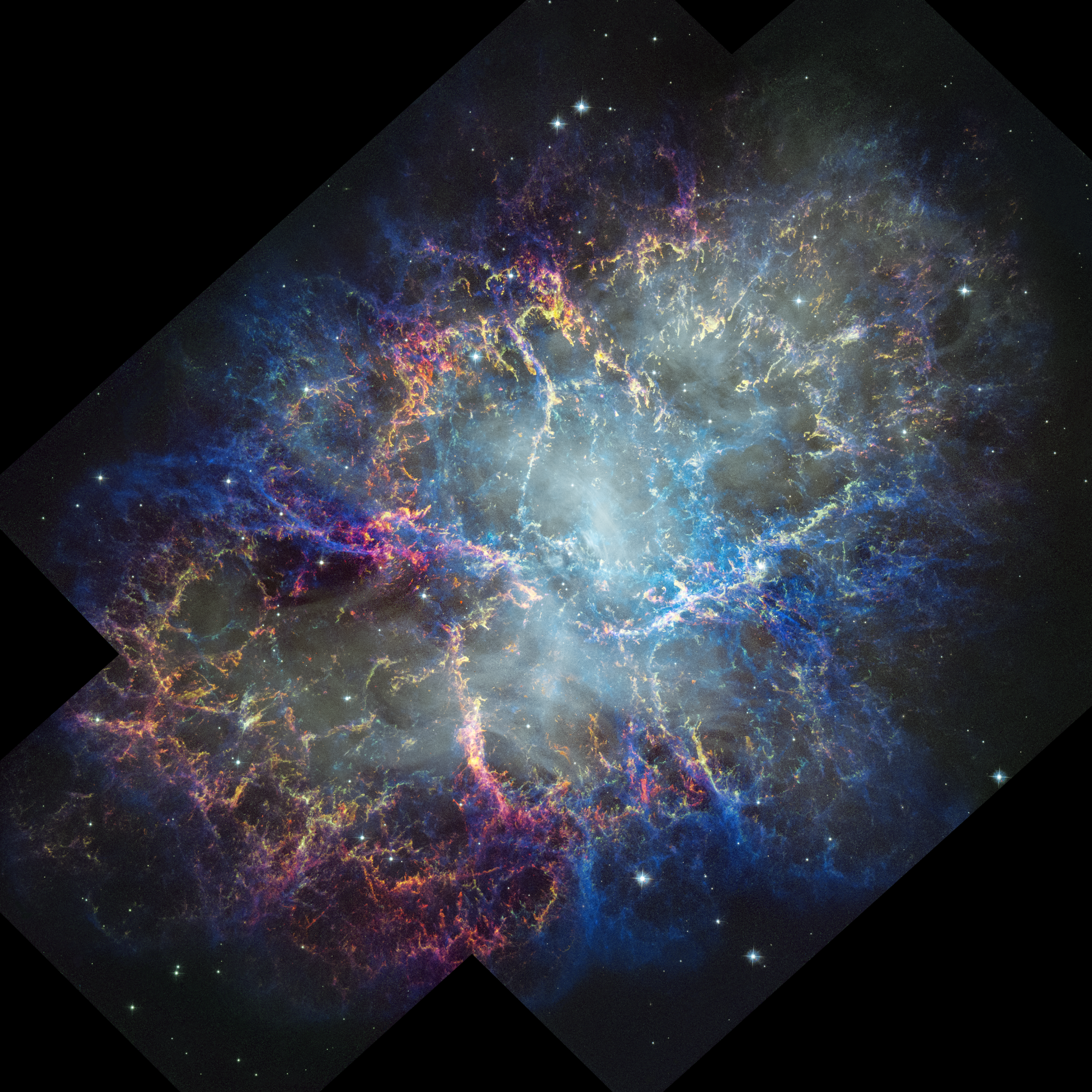
New observations from the Hubble Space Telescope have unveiled the breathtakingly violent dynamics of the Crab Nebula, offering a rare glimpse into the life cycle of a supernova remnant. By analyzing decades of high-resolution imagery, astronomers have been able to construct a detailed map of how this celestial structure evolves, providing insights that were previously impossible to capture.
The most striking discovery involves the nebula’s intricate network of gaseous filaments. These structures are currently surging outward at an incredible velocity of approximately 3.4 million miles per hour. This rapid movement, documented through a continuous 25-year observational window, provides a direct look at the immense energy released during the collapse of a massive star.
This long-term study underscores the vital role of sustained space observation in understanding the universe. By tracking these minute changes over a quarter-century, scientists are gaining a deeper comprehension of the fundamental physical processes that dictate the behavior of matter in deep space long after a stellar explosion has occurred.
Key Takeaways
- The Crab Nebula's gaseous filaments are expanding at a staggering 3.4 million miles per hour.
- A quarter-century of Hubble Space Telescope data was utilized to track the nebula's evolution.
- The findings provide critical empirical evidence regarding the long-term physical consequences of stellar explosions.
Editor’s Analysis & Impact
The ability to observe the Crab Nebula over a 25-year period marks a shift in astrophysical methodology, moving from capturing static snapshots to witnessing active cosmic evolution. This ‘time-lapse’ approach is crucial for refining our mathematical models of supernova remnants. These remnants are not merely beautiful displays; they are the primary engines for dispersing heavy elements throughout the galaxy, which eventually form new stars and planetary systems. As we integrate Hubble’s historical data with modern multi-wavelength observations, we are better positioned to understand the chemical enrichment of the interstellar medium. This research provides a foundational understanding of how stellar deaths directly influence the long-term evolution and composition of entire galaxies, bridging the gap between individual stellar events and large-scale cosmic history.
Frequently Asked Questions
Q: What is the origin of the Crab Nebula?
A: The Crab Nebula is the remnant of a massive star that underwent a supernova explosion in the year 1054.
Q: Why is the expansion speed significant?
A: The speed of 3.4 million miles per hour demonstrates the extreme kinetic energy remaining from the original stellar explosion and helps scientists model the dynamics of supernova remnants.
AI Disclosure: This article is based on verified data and official reports. Our Team and AI have cross-referenced every financial detail with primary sources to ensure total accuracy.
More from this Category