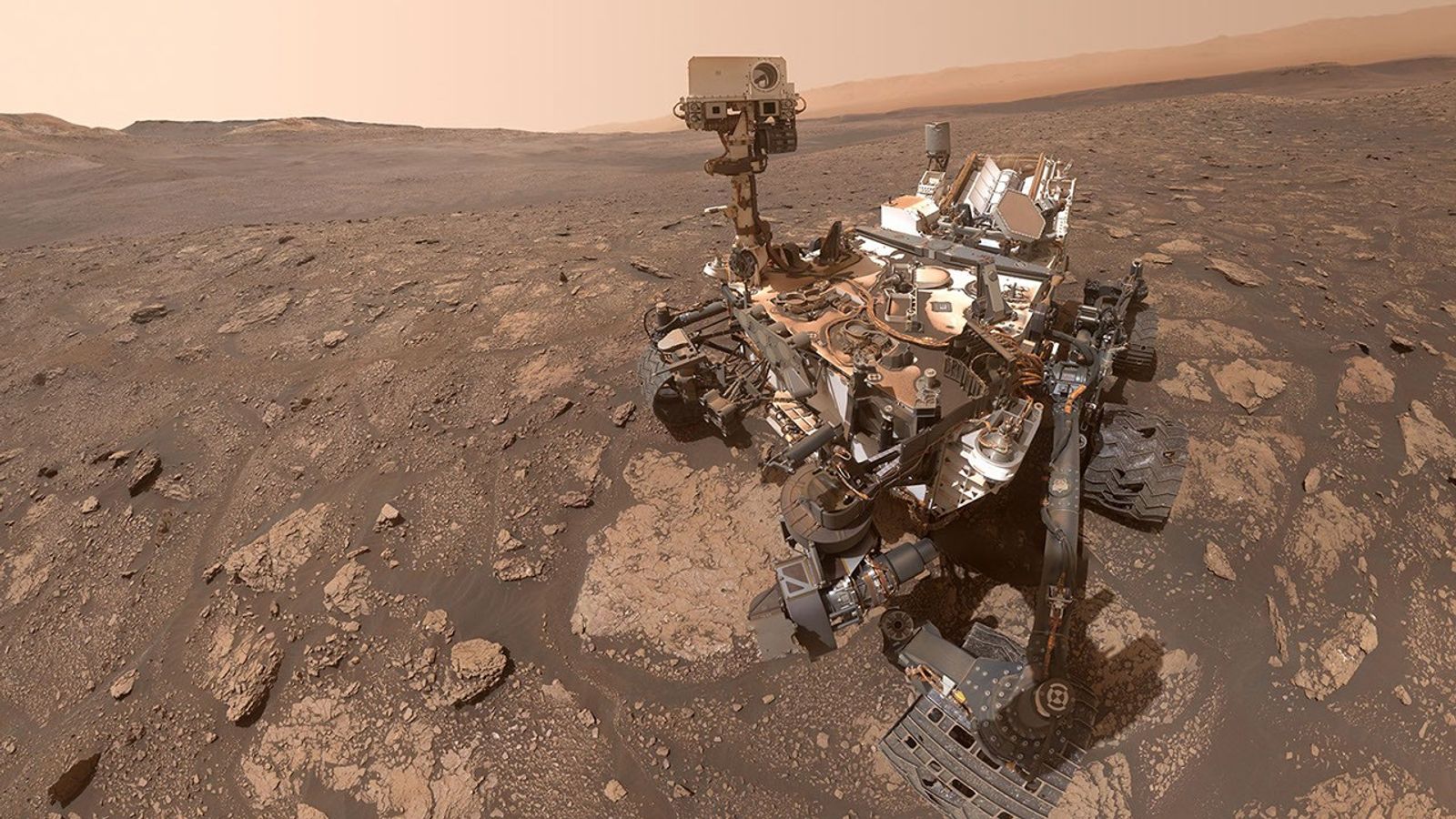
Curiosity Rover Detects Complex Organic Molecules in Martian Soil
The Curiosity rover has reached a major milestone in the ongoing investigation into Mars’ potential for ancient life. While exploring the clay-rich terrain of Mount Sharp, the rover analyzed a rock sample designated ‘Mary Anning 3,’ uncovering a diverse collection of 21 carbon-based compounds. Among these, seven were identified for the first time on the Martian surface, offering scientists a deeper understanding of the planet’s chemical history.
Of particular interest to researchers is the presence of nitrogen heterocycles, which are molecular structures closely associated with the fundamental building blocks of DNA and RNA. Additionally, the discovery of benzothiophene—a sulfur-bearing molecule commonly found in meteorites—suggests that early Mars underwent chemical processes similar to those that influenced prebiotic development elsewhere in our solar system. While these findings do not confirm the existence of past life, they provide compelling evidence that ancient Mars possessed the chemical environment required to support biological activity.
This breakthrough was achieved using the Sample Analysis at Mars (SAM) instrument, a miniaturized laboratory capable of performing complex chemical extractions. By utilizing a specialized solvent, tetramethylammonium hydroxide (TMAH), the team was able to isolate molecules that had previously eluded detection. This methodology, validated through comparisons with the Murchison meteorite, indicates that these molecules are likely remnants of more complex compounds that existed billions of years ago.
The success of this mission highlights the value of deploying advanced, portable analytical technology in extreme planetary environments. The data gathered by Curiosity is already influencing the development of next-generation exploration tools, including those intended for future missions to Saturn’s moon, Titan. By demonstrating that sophisticated chemical analysis is possible on another world, this mission has significantly broadened the scientific understanding of planetary habitability.
Key Takeaways
- Curiosity detected 21 organic compounds in Martian rock, including seven never before seen on the planet.
- The presence of nitrogen heterocycles suggests Mars once held the chemical precursors necessary for life's building blocks.
- The use of specialized solvent technology on the SAM instrument proved highly effective for identifying complex organic matter.
Editor’s Analysis & Impact
The identification of complex organic molecules on Mars marks a pivotal shift in astrobiology. By moving beyond simple detection to identifying specific prebiotic building blocks like nitrogen heterocycles, researchers are effectively mapping the chemical potential of the early Martian environment. This success validates the strategic investment in miniaturized, high-precision laboratory hardware, which is now essential for deep-space exploration. The broader implications are significant: confirming these chemical precursors on Mars increases the statistical probability that other rocky bodies in our solar system could have supported similar prebiotic processes. This data is already refining the mission parameters for upcoming explorations of Titan and Europa, signaling a transition from general discovery to the detailed chemical characterization of potentially habitable worlds.
Frequently Asked Questions
Q: Does this discovery prove that there was life on Mars?
A: No. While the discovery of organic molecules and nitrogen heterocycles confirms that Mars had the necessary chemical ingredients to support life, it does not serve as direct evidence that biological organisms ever existed there.
Q: How was the Curiosity rover able to find these molecules?
A: The rover used its onboard Sample Analysis at Mars (SAM) instrument, which heated rock powder and used a specialized solvent called TMAH to break down and identify complex organic compounds that would otherwise be hidden.
AI Disclosure: This article is based on verified data and official reports. Our Team and AI have cross-referenced every financial detail with primary sources to ensure total accuracy.
More from this Category