Absence of Mojtaba Khamenei Marks Funeral Proceedings for Slain Iranian Leader
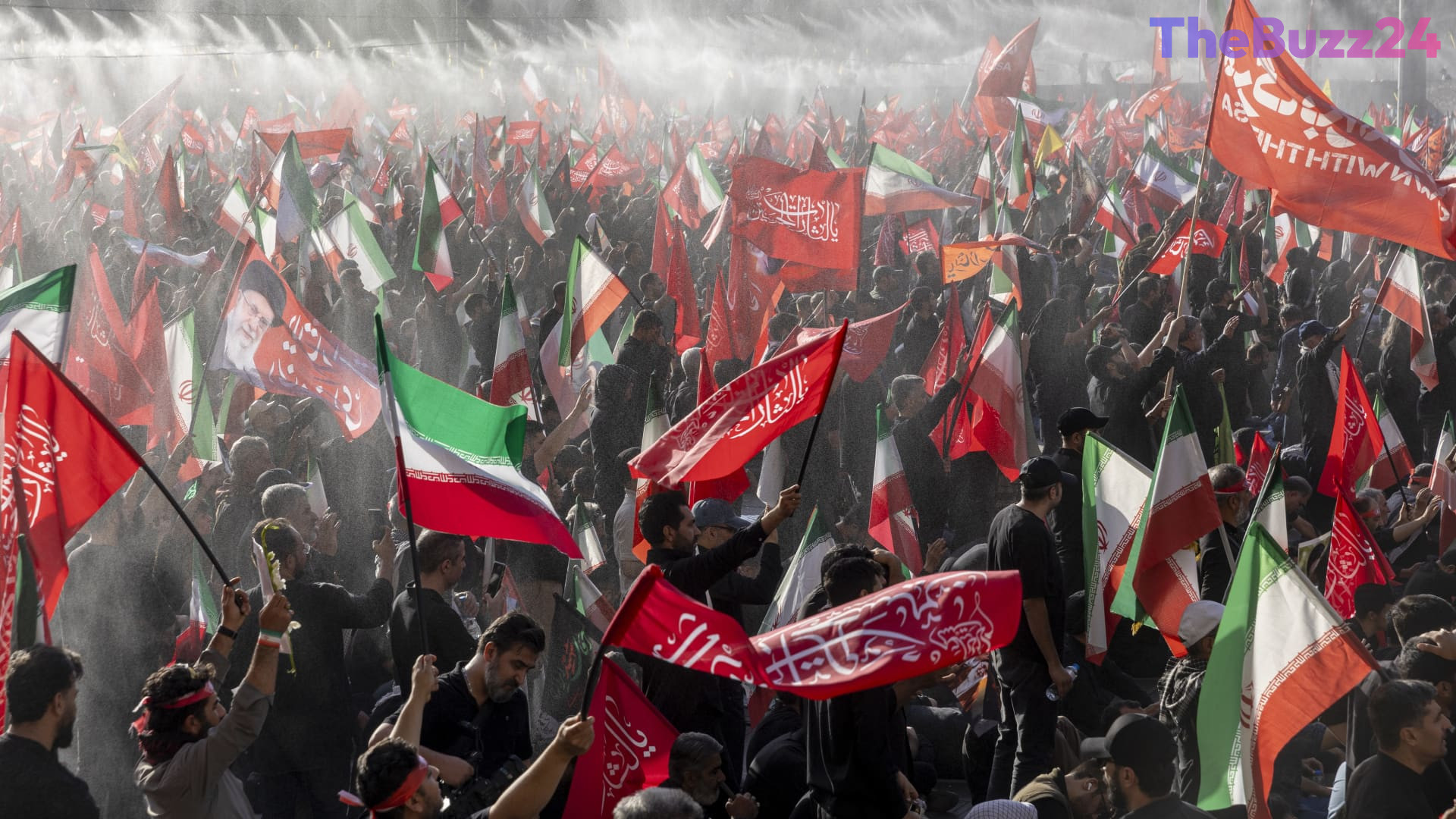
The funeral proceedings for the late Iranian leader Ayatollah Ali Khamenei have commenced in Tehran, drawing massive crowds to the Imam Khomeini Grand Mosalla. While three of his sons—Mostafa, Meysam, and Masoud—were observed praying beside the coffins of their father and other family members who perished in the February 28 airstrikes, the notable absence of Mojtaba Khamenei has fueled significant speculation. Mojtaba, who has been named as the successor to the supreme leadership, has not made a public appearance since the attack that claimed the lives of his relatives.
Reports from those within his inner circle suggest that Mojtaba sustained severe injuries during the military engagement, including facial disfigurement and significant leg trauma. Despite the high-profile nature of the state-sanctioned funeral, which is being treated as a major display of national unity and revolutionary resolve, the new leader remains out of the public eye. The funeral events are scheduled to span several days, with processions moving through key religious sites in Iran and Iraq, including Qom, Najaf, Kerbala, and Mashhad.
As the nation navigates the aftermath of a four-month conflict with the United States and Israel, the government is working to maintain stability under a fragile ceasefire. President Masoud Pezeshkian and other high-ranking officials have participated in the public mourning, emphasizing the state’s resilience. Meanwhile, millions of citizens have utilized public transport to attend the ceremonies, reflecting the intense political and religious significance the administration has placed on these memorial events.
Key Takeaways
- Three of the late Ayatollah Ali Khamenei's sons appeared at the funeral, but his successor, Mojtaba Khamenei, remained absent.
- Mojtaba Khamenei is reportedly recovering from severe injuries sustained during the February 28 airstrikes that killed his father and other family members.
- The Iranian government is organizing a week-long series of mass funeral processions across Iran and Iraq to solidify national unity following a recent ceasefire.
Editor’s Analysis & Impact
The absence of Mojtaba Khamenei at such a critical juncture for the Islamic Republic underscores the fragility of the current leadership transition. Following the death of Ayatollah Ali Khamenei, the regime is attempting to project strength and continuity through elaborate, state-sponsored funeral processions. However, the physical incapacitation of the successor creates a power vacuum or, at the very least, a period of uncertainty that could be exploited by internal factions or external adversaries. The ongoing ceasefire with the United States provides a temporary reprieve, but the long-term stability of the Iranian theocracy will depend on how quickly the new leadership can consolidate authority. The focus on religious sites in Iraq also signals an attempt to maintain regional influence despite the significant military and political setbacks suffered during the recent conflict.
Frequently Asked Questions
Q: Why was Mojtaba Khamenei not present at the funeral?
A: Mojtaba Khamenei is reportedly suffering from severe injuries, including facial disfigurement and leg trauma, sustained during the February 28 airstrikes that killed his father.
Q: What is the significance of the funeral route through Iraq?
A: The funeral procession is visiting Shi'ite holy cities in Iraq, such as Najaf and Kerbala, to reinforce the regime's religious legitimacy and its influence within the regional Shi'ite hierarchy.
AI Disclosure: This article is based on verified data and official reports. Our Team and AI have cross-referenced every financial detail with primary sources to ensure total accuracy.
More from this Category