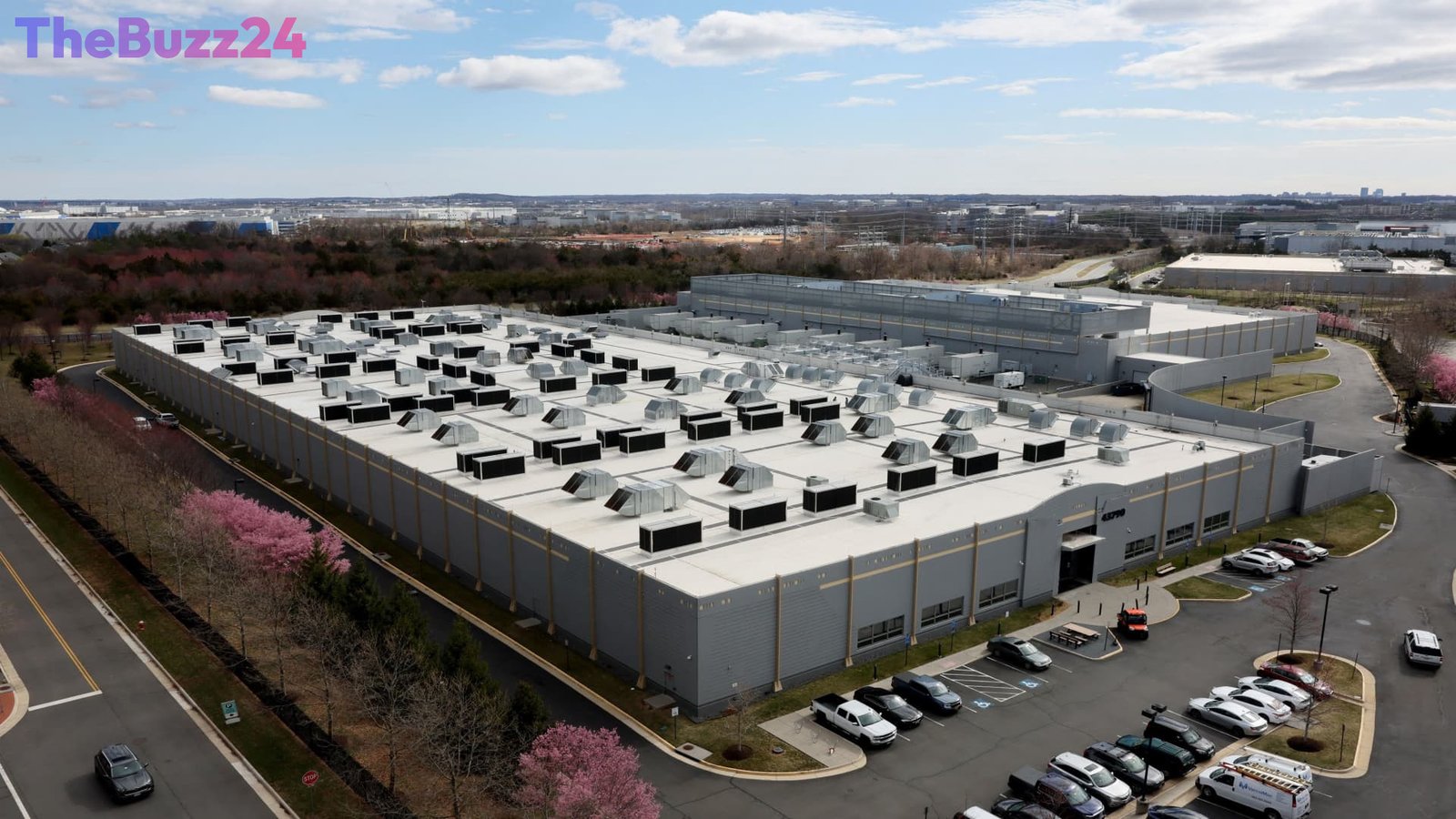
AI Development Slowdown Won’t Derail Data Center Boom, Says Digital Realty CEO
Calls for a tempered pace in artificial intelligence development by major players like Anthropic, OpenAI, and xAI have sent ripples through the technology sector, impacting related stocks, including those of prominent data center providers. However, Digital Realty CEO Andrew Power has asserted that these pledges for a slowdown do not signal an end to the demand for AI infrastructure.
Power emphasized that the broader digital transformation and significant growth in cloud computing continue to be substantial drivers for the data center industry. He noted that the intense focus on AI development had, in some instances, previously strained capacity, forcing hyperscalers to balance resources between commercial cloud services and AI initiatives. This dynamic has led to competition for space in key markets where demand has consistently outstripped supply for years, a situation exacerbated by the locational sensitivity of AI workloads.
Industry analysts concur that a moderation in AI model training might not significantly curb the physical infrastructure needs. Andrew Batson, global head of data center research and strategy at JLL, highlighted that the primary growth area for data centers in the coming years will be in AI inference – the widespread adoption and integration of AI tools into daily business and consumer workflows. With current daily AI usage among the general population still relatively low, there remains a substantial runway for increased adoption and, consequently, sustained data center demand.
Despite recent stock market fluctuations for companies like Digital Realty and Equinix, Power remains confident in the company’s strategic positioning. He highlighted Digital Realty’s robust development pipeline, valued at $20 billion, and its strengthened financial footing, including a flexible funding model and substantial private capital raising efforts. This proactive approach, he stated, ensures the company is well-prepared to navigate potential market volatility and capitalize on the ongoing digital infrastructure expansion.
Key Takeaways
- Digital Realty CEO Andrew Power believes calls for an AI development slowdown will not halt demand for data center real estate.
- Continued growth in cloud computing and the increasing adoption of AI inference are expected to sustain data center demand.
- Digital Realty is financially positioned to manage market fluctuations with a significant development pipeline and robust funding strategies.
Editor’s Analysis & Impact
The recent discourse surrounding a potential slowdown in AI development, while causing short-term stock volatility for data center REITs, underscores a fundamental shift in infrastructure demand. The long-term outlook for data centers remains robust, driven not only by AI training but increasingly by AI inference and broader digital transformation trends. Companies like Digital Realty, with substantial development pipelines and diversified demand drivers, appear well-positioned. The significant capital investment required, estimated in the trillions for data center capacity and real estate, signals continued opportunity for investors and infrastructure providers, even amidst evolving AI progress.
Frequently Asked Questions
Q: What is the difference between AI training and AI inference?
A: AI training is the process of feeding large datasets to an AI model to teach it how to perform a specific task. AI inference is the process of using a trained AI model to make predictions or decisions based on new data.
Q: Why is AI a significant driver of data center demand?
A: AI, particularly large language models and machine learning, requires immense computational power and storage, which are housed in data centers. Both the training of these complex models and their subsequent use (inference) demand substantial infrastructure.
Q: What are data center REITs?
A: Real Estate Investment Trusts (REITs) that own, operate, or develop income-producing data centers. They allow investors to invest in large-scale data center infrastructure without directly owning or managing the properties.
AI Disclosure: This article is based on verified data and official reports. Our Team and AI have cross-referenced every financial detail with primary sources to ensure total accuracy.
More from this Category