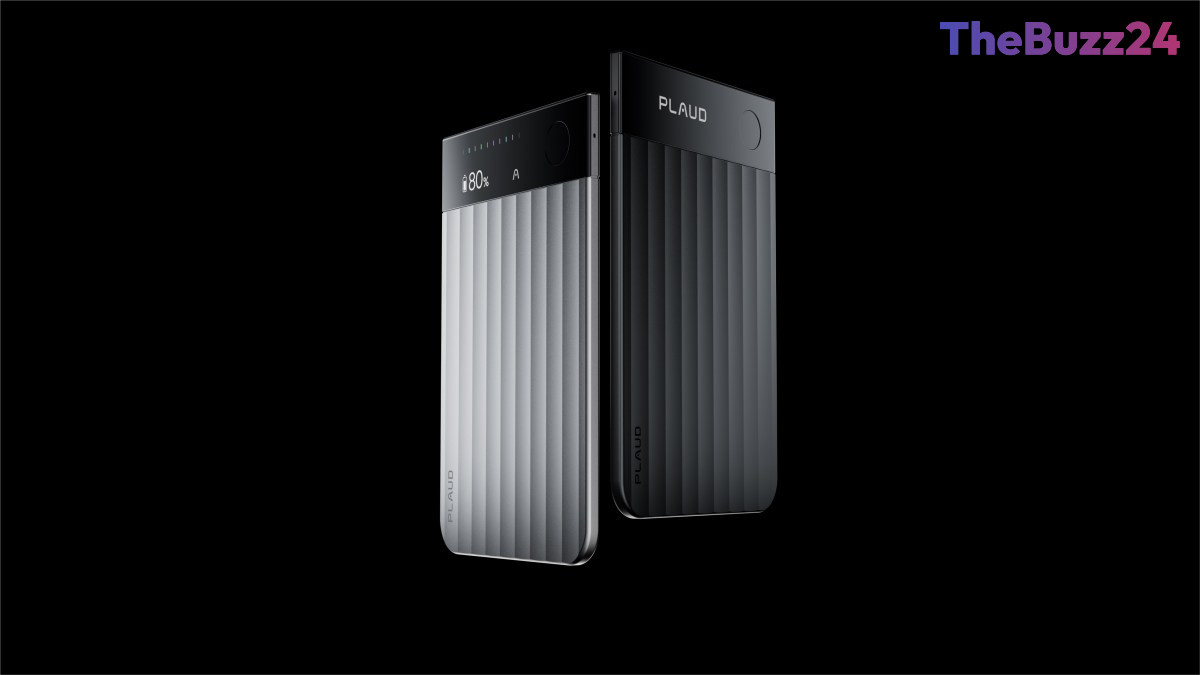
AI Hardware Pioneer Plaud Surpasses $100 Million ARR as Device Sales Top 2 Million
While many AI hardware startups have struggled to find their footing, Plaud is carving out a highly profitable niche by targeting busy professionals. The company, known for its screenless AI-powered notetakers, announced it has shipped more than 2 million devices globally. Alongside this hardware milestone, Plaud revealed that its software subscription business has crossed a major financial threshold, reaching over $100 million in annualized revenue run rate (ARR).
Plaud’s product lineup includes the credit-card-sized Plaud Pro and the recently launched Plaud Pin S, both priced around $179. These devices are designed to clip onto phones or clothing, capturing real-world conversations and converting them into structured summaries and action items. According to Plaud’s co-founder and CEO, Nathan Xu, the company’s success stems from focusing on “post-screen” interactions, capturing the critical discussions that happen away from keyboards and digital screens.
The company’s business model relies on a hardware-to-software funnel. While buyers receive 300 minutes of free transcription monthly, nearly 50% of users upgrade to paid monthly or annual tiers to accommodate heavier meeting schedules. Plaud has also expanded its ecosystem with a desktop application for recording virtual meetings and Plaud Teams, a collaborative enterprise solution featuring shared memory.
Despite its rapid growth, Plaud faces a crowded market of competitors, including established accessory brands like Anker, alongside specialized startups like Viaim, Vibe, and Pocket. However, Plaud’s ability to successfully monetize its hardware user base through high-margin software subscriptions sets a rare and promising precedent in the volatile consumer AI hardware sector.
Key Takeaways
- Plaud has successfully shipped over 2 million AI-powered notetaking devices, including the Plaud Pro and Plaud Pin S.
- The company's software subscription business has achieved a significant milestone, surpassing $100 million in annualized revenue run rate (ARR).
- Nearly 50% of Plaud hardware owners upgrade to paid subscription plans, proving a highly viable hardware-to-software monetization model.
Editor’s Analysis & Impact
The consumer AI hardware market has been notoriously difficult to crack, with several high-profile device launches failing to gain long-term traction. Plaud’s success offers a crucial blueprint for the industry: focus on a highly specific, high-utility professional use case rather than trying to replace the smartphone. By targeting meeting productivity, Plaud addresses a clear pain point for enterprise users and busy professionals who are willing to pay recurring fees. Furthermore, achieving a 50% subscription conversion rate from hardware buyers is an exceptional metric in consumer electronics. As Plaud expands into enterprise-level software with Plaud Teams, its challenge will be defending its market share against deep-pocketed competitors like Anker and tech giants integrating native AI recording features directly into smartphones and operating systems.
Frequently Asked Questions
Q: What products does Plaud offer?
A: Plaud offers screenless AI-powered recording devices, including the credit-card-sized Plaud Pro and the wearable Plaud Pin S, alongside a desktop app and enterprise software.
Q: How does Plaud's subscription model work?
A: Hardware purchases include 300 free minutes of transcription per month. Users requiring more transcription time or advanced features can upgrade to monthly or annual paid plans.
Q: Who are Plaud's main competitors in the AI notetaking space?
A: Plaud competes with several hardware and accessory brands, including Anker, Viaim, Vibe, and Pocket.
AI Disclosure: This article is based on verified data and official reports. Our Team and AI have cross-referenced every financial detail with primary sources to ensure total accuracy.
More from this Category