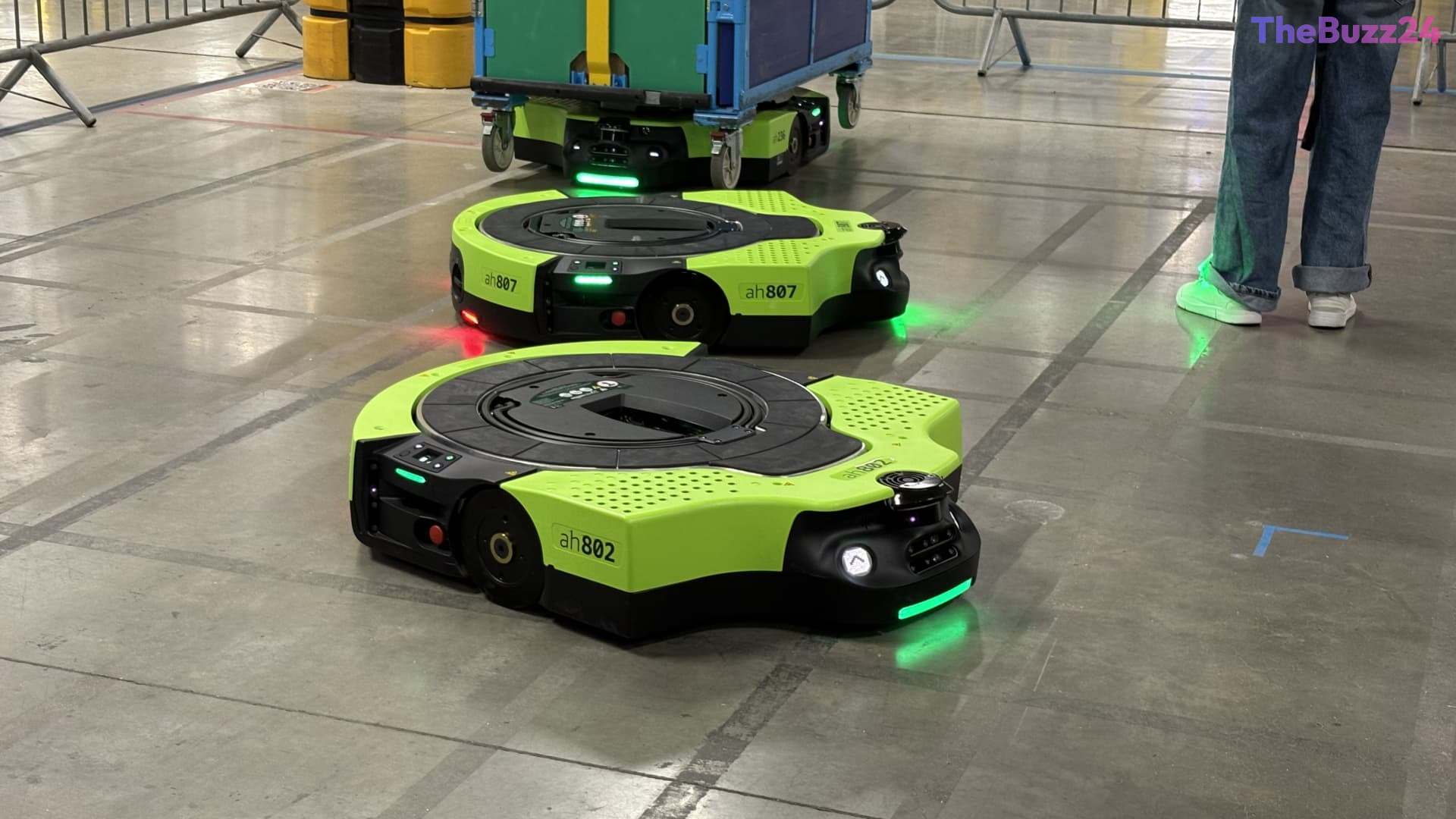
Amazon Debuts Conversational Warehouse Robots Amidst Corporate Workforce Restructuring
Amazon has officially unveiled its latest generation of warehouse robotics, featuring advanced natural language processing capabilities that allow machines to interpret and execute verbal commands from human staff. The new iteration of the ‘Proteus’ robot, showcased at the company’s Delivering the Future event in London, represents a significant leap in autonomous mobile technology. Unlike previous models that required technical programming, this version is designed to integrate seamlessly into fulfillment centers by responding to plain-language instructions, with a European rollout scheduled for the first half of 2027.
This technological advancement arrives as Amazon continues a broader strategy of corporate downsizing. The company has implemented significant layoffs over the past year, citing a strategic pivot toward AI-driven efficiencies and a reduction in organizational bureaucracy. CEO Andy Jassy has previously indicated that the integration of artificial intelligence will likely lead to a smaller total corporate workforce in the coming years, as the company shifts its human resource requirements toward specialized technical roles rather than traditional administrative functions.
While the company maintains that its investment in robotics has historically increased employment by creating new roles for technicians and engineers, the broader industry trend remains a subject of intense debate. Critics and economic analysts point to the rapid evolution of humanoid and autonomous systems as a potential threat to entry-level labor markets. As Amazon commits billions to modernize its European fulfillment infrastructure, the company is simultaneously attempting to address a widening skills gap, launching apprenticeship programs to prepare the workforce for a future defined by human-machine collaboration.
Key Takeaways
- Amazon introduced a new version of its Proteus robot capable of understanding natural language commands.
- The company is aggressively cutting corporate headcount to prioritize AI investment and operational efficiency.
- Amazon claims that robotics investment creates demand for skilled technical roles, despite broader concerns regarding AI-driven job displacement.
Editor’s Analysis & Impact
The dual narrative of Amazon’s robotics advancement and its corporate layoffs highlights the ‘productivity paradox’ currently facing the tech sector. By automating warehouse logistics with conversational AI, Amazon is optimizing its most capital-intensive operations while simultaneously trimming its corporate overhead. The long-term implication is a structural shift in the labor market: the demand for low-skill administrative labor is plummeting, while the demand for mechatronic and AI-literate technicians is surging. This creates a significant societal challenge regarding workforce transition. As other tech giants follow similar paths, the focus will likely shift from whether AI replaces jobs to how effectively corporations can retrain their existing staff to manage the very systems that are displacing them. The success of this transition will determine whether these companies face a talent shortage or a public relations crisis regarding unemployment.
Frequently Asked Questions
Q: How does the new Proteus robot differ from previous models?
A: The latest version of the Proteus robot features natural language processing, allowing it to understand and execute verbal commands from workers without the need for technical programming or specialized interfaces.
Q: Why is Amazon laying off corporate staff while investing in robotics?
A: Amazon is restructuring to reduce bureaucracy and increase efficiency through AI. The company expects that while some traditional roles will be phased out, the new technological infrastructure will require a different set of skills, such as robotics maintenance and engineering.
AI Disclosure: This article is based on verified data and official reports. Our Team and AI have cross-referenced every financial detail with primary sources to ensure total accuracy.
More from this Category