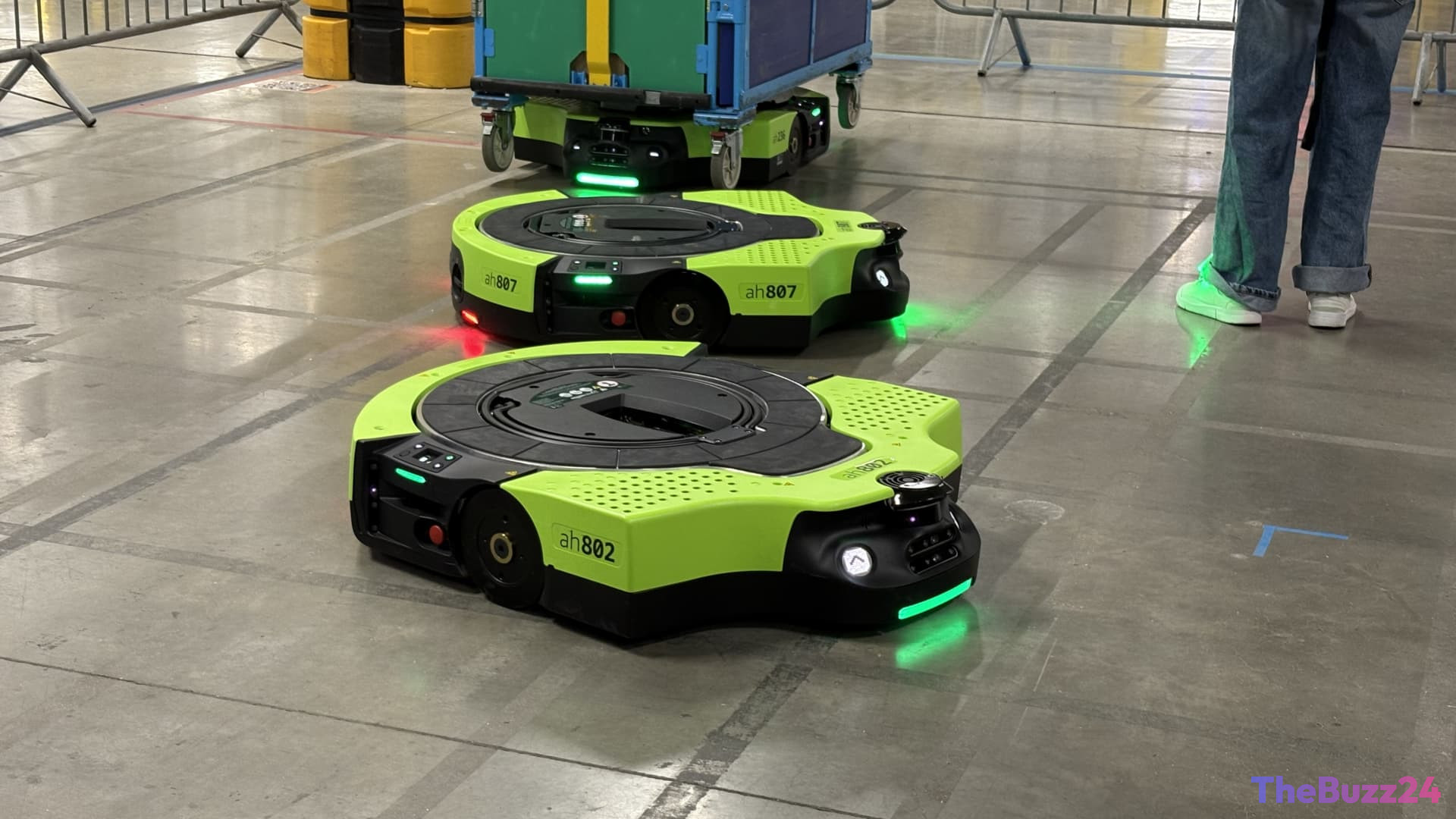
Amazon Unveils Natural-Language Warehouse Robots Amid Industry-Wide AI Restructuring
Amazon has introduced its next-generation autonomous warehouse robot, Proteus, which is capable of understanding and executing commands delivered in natural, conversational language. Unveiled at the company’s “Delivering the Future” event in London, this upgraded machine represents a significant leap in human-robot collaboration, allowing warehouse staff to direct operations without needing complex programming interfaces. The rollout of this technology, scheduled to hit European fulfillment centers in the first half of 2027, comes alongside other advanced systems like Vulcan, a robot equipped with tactile sensing, and STARK, a specialized tote-handling system.
This technological leap occurs against a backdrop of sweeping corporate restructuring across the tech sector. Amazon itself has executed substantial job cuts, including laying off 14,000 corporate employees in October and another 16,000 in January, as part of a strategic pivot toward artificial intelligence and automation. CEO Andy Jassy previously signaled that the integration of AI would likely lead to a leaner corporate workforce over the coming years. This trend is mirrored across the broader tech landscape, with major players like Microsoft, Salesforce, Meta, and Oracle collectively cutting tens of thousands of roles as they reallocate capital toward automation.
Despite the corporate downsizing, Amazon executives maintain that automation within fulfillment centers actually stimulates job creation rather than eliminating it. According to company leadership, the deployment of robotics increases operational capacity, which in turn requires a larger human workforce to manage the expanded throughput. However, finding workers with the necessary technical expertise remains a critical challenge. To combat this skills gap, particularly among younger generations facing high unemployment rates, the company has established thousands of apprenticeships and dedicated training funds to upskill workers into specialized roles like mechatronic engineering.
This optimistic view of automation is met with skepticism by industry analysts. Some financial forecasts suggest that the global population of humanoid and autonomous robots could reach 1.3 billion by 2035, eventually surpassing four billion by mid-century. Critics argue that the relentless corporate pursuit of profitability and the rapidly shrinking payback period for advanced robotics will inevitably lead to the widespread displacement of human labor, marking one of the most significant shifts in the history of the global workforce.
Key Takeaways
- Amazon's new Proteus robot can interpret conversational language commands, simplifying warehouse operations and eliminating the need for complex programming interfaces.
- The automation push coincides with massive corporate layoffs at Amazon and other tech giants as resources are shifted toward AI-driven efficiencies.
- While executives argue that robotics will ultimately boost warehouse employment, critics warn of long-term human labor displacement driven by corporate profitability goals.
Editor’s Analysis & Impact
The dual reality of Amazon’s strategy highlights a profound shift in the modern labor market. While corporate and administrative roles are being aggressively trimmed to fund AI initiatives, the physical logistics layer is receiving massive capital injections. By introducing natural-language processing to warehouse robotics like Proteus, Amazon is lowering the technical barrier for floor workers, potentially mitigating the very skills gap its executives lament. However, the long-term outlook remains highly contested. While Amazon frames automation as a job creator, macroeconomic pressures and the rapid ROI of humanoid robotics suggest that widespread labor substitution is a matter of “when,” not “if.” For the broader tech and logistics industries, this transition underscores the urgent need for robust upskilling programs to transition workers from manual tasks to high-value technical oversight roles before automation outpaces human adaptability.
Frequently Asked Questions
Q: What is the main feature of Amazon's new Proteus robot?
A: The next-generation Proteus is an autonomous mobile robot designed to understand and respond to natural, conversational language commands from warehouse workers, eliminating the need for technical programming interfaces.
Q: Why is Amazon laying off corporate workers while investing in robotics?
A: Amazon is restructuring its workforce to prioritize artificial intelligence and automation. The corporate layoffs are intended to reduce bureaucracy and free up capital to invest heavily in next-generation technologies.
Q: How does Amazon plan to address the skills gap in its automated warehouses?
A: To address the shortage of skilled workers like robotic technicians and mechatronic engineers, Amazon has launched thousands of apprenticeships and offers annual funding for employees to pursue nationally recognized training courses.
AI Disclosure: This article is based on verified data and official reports. Our Team and AI have cross-referenced every financial detail with primary sources to ensure total accuracy.
More from this Category