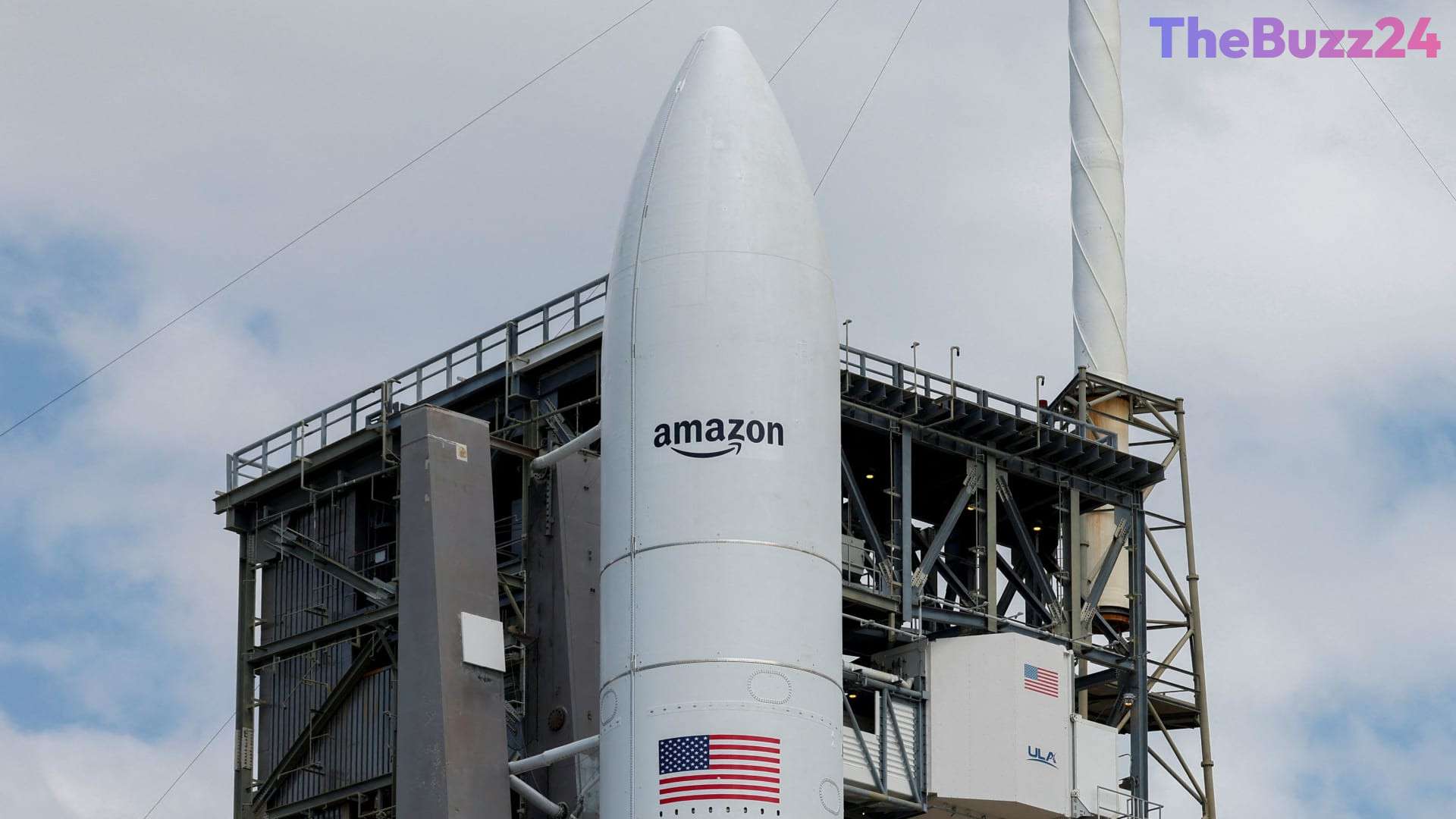
Amazon Files for FCC Approval to Launch 5,100 Direct-to-Device Satellites by 2028
E-commerce and cloud technology giant Amazon has officially submitted a regulatory filing with the Federal Communications Commission (FCC) seeking permission to launch and operate a constellation of 5,105 low Earth orbit satellites. Designed to offer direct-to-device (D2D) connectivity, the proposed network aims to bypass traditional terrestrial cell towers, delivering wireless signal directly to standard smartphones, enterprise equipment, and internet-of-things hardware worldwide.
The ambitious orbital network relies significantly on infrastructure and radio frequency spectrum from Globalstar, a satellite communications company that Amazon announced plans to acquire in an $11.6 billion deal earlier this year. Pending regulatory approvals, that acquisition is slated to close in 2027, clearing the path for Amazon to begin deploying its new D2D satellites in 2028. The enterprise plans to bring high-speed connectivity to unserved and underserved regions, while also aiding emergency search-and-rescue efforts and expanding network access for isolated worksites, supply chains, and commercial fleets.
This satellite initiative expands upon Amazon’s broader broadband effort, Project Kuiper, which aims to establish a major presence in low Earth orbit to compete directly with SpaceX’s Starlink. While SpaceX currently leads the space-based internet market with over 10,000 satellites and offers direct-to-cell services through mobile carriers like T-Mobile, Amazon is steadily accelerating its deployment. Having placed more than 390 satellites into orbit, Amazon recently confirmed it has enough capacity to launch initial commercial broadband services later this year.
The FCC application comes shortly after regulators granted Amazon a waiver regarding an intermediate deployment benchmark for its first-generation satellites. Although relieved of an earlier deadline to deploy 1,600 satellites by mid-2024, the company remains legally obligated to deploy its primary 3,232-satellite constellation by July 2029, underscoring an aggressive timeline in the emerging space-based telecommunications sector.
Key Takeaways
- Amazon requested FCC approval to launch 5,105 satellites to build a direct-to-device cellular network starting in 2028.
- The initiative leverages Globalstar's satellite spectrum assets following a planned $11.6 billion acquisition expected to close in 2027.
- The network aims to deliver mobile service to remote areas, emergency operations, and commercial fleets, directly competing with SpaceX's Starlink service.
Editor’s Analysis & Impact
Amazon’s strategic push into direct-to-device satellite communications marks a pivotal turn in the global telecommunications sector. By enabling direct communication between low Earth orbit satellites and standard smartphones, Amazon is positioning itself to capture vast markets in remote logistics, emergency services, and off-grid consumer connectivity. Combining Globalstar’s spectrum assets with Project Kuiper provides Amazon a viable framework to challenge SpaceX’s current dominance in space-based internet. Although managing constellation logistics and securing global regulatory approvals pose significant operational hurdles, successful execution could redefine mobile connectivity standards and unlock valuable synergies across Amazon’s logistics, enterprise, and cloud services ecosystems.
Frequently Asked Questions
Q: What is direct-to-device (D2D) satellite connectivity?
A: Direct-to-device connectivity allows standard smartphones, mobile devices, and internet-of-things equipment to connect directly to satellites in orbit without needing specialized satellite phones or ground-based cell towers.
Q: When will Amazon's D2D satellite network launch?
A: Amazon expects its $11.6 billion acquisition of Globalstar to finalize in 2027, with the physical deployment of the 5,105 D2D satellites scheduled to begin in 2028.
Q: How does Amazon's satellite strategy compare to SpaceX's Starlink?
A: SpaceX currently leads the market with over 10,000 active satellites and an operational direct-to-cell service paired with mobile operators. Amazon is rapidly scaling its Project Kuiper constellation to provide competing global broadband and direct device connectivity.
AI Disclosure: This article is based on verified data and official reports. Our Team and AI have cross-referenced every financial detail with primary sources to ensure total accuracy.
More from this Category