Amazon’s Bee Wearable: Balancing AI-Driven Productivity with Personal Privacy
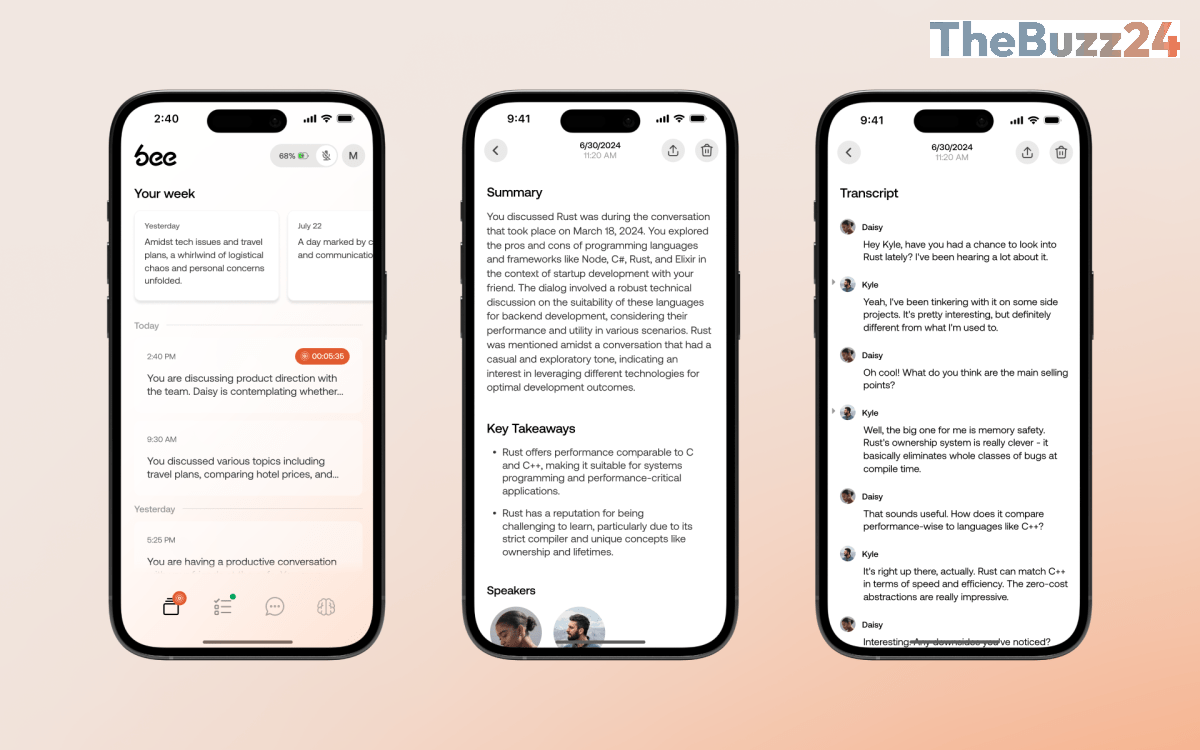
Amazon has introduced Bee, an AI-powered wrist-worn device designed to function as a comprehensive personal assistant. By capturing, transcribing, and summarizing conversations in real-time, the wearable aims to optimize workflow for professionals. The device integrates directly with digital calendars to provide automated meeting notes, allowing users to track commitments and key discussion points without the need for manual documentation. Operation is managed through a tactile button interface, featuring a visual indicator light to notify others when recording is active.
In a corporate environment, the device offers significant utility by distilling lengthy meetings into concise summaries. While it competes with established transcription platforms, it currently faces technical limitations, such as occasional inaccuracies in speaker identification and missed segments of dialogue that necessitate manual review. Despite these early-stage hurdles, the wearable highlights a growing trend toward hands-free, AI-assisted productivity tools in the workplace.
However, the device’s integration into daily life has sparked a broader debate regarding data privacy. To achieve full functionality, Bee requires access to a wide array of personal information, including location history, contact lists, photo libraries, and biometric data such as heart rate and sleep patterns. All data is currently processed and stored in the cloud, raising concerns among users regarding the security of their personal digital footprint. While Amazon maintains that it employs robust encryption and third-party audits, the lack of a local-processing option remains a significant barrier for privacy-focused consumers.
Ultimately, Bee serves as a case study in the trade-off between technological convenience and personal surveillance. While the device provides a streamlined approach to managing professional and personal tasks, it requires a high degree of trust from the user. Whether the benefits of such deep integration outweigh the potential privacy risks remains a central question for the future of wearable AI technology.
Key Takeaways
- Amazon's Bee wearable uses AI to transcribe and summarize conversations, aiming to boost professional productivity.
- The device currently faces technical challenges, including occasional transcription errors and difficulties with speaker identification.
- Extensive data collection requirements, including biometric and location data, have raised significant privacy concerns among potential users.
Editor’s Analysis & Impact
The launch of Amazon’s Bee wearable signals a strategic push into the ‘ambient computing’ market, where AI assistants move from static devices like smart speakers to constant, wearable companions. From a market perspective, this represents a shift toward hyper-personalized productivity tools that leverage deep data integration to provide value. However, the industry faces a critical inflection point regarding consumer trust. As AI becomes more intrusive, companies must balance the utility of data-driven insights with the growing demand for local processing and data sovereignty. If Amazon cannot address the privacy concerns surrounding cloud-based storage, the adoption of such wearables may be limited to niche professional use cases rather than mass-market consumer appeal. The long-term success of this product category will likely depend on the development of privacy-first AI architectures that allow for high-level functionality without compromising user anonymity.
Frequently Asked Questions
Q: Does the Bee wearable process data locally?
A: Currently, all data collected by the Bee wearable is stored and processed in the cloud. There is no version of the device available that processes data entirely on the local hardware.
Q: What kind of personal data does the Bee device collect?
A: To function at full capacity, the device requires access to location data, contacts, photos, and biometric metrics such as sleep patterns and heart rate.
AI Disclosure: This article is based on verified data and official reports. Our Team and AI have cross-referenced every financial detail with primary sources to ensure total accuracy.
More from this Category