Apple Addresses Display Failure Reports Following High-Profile iPhone Duo Launch
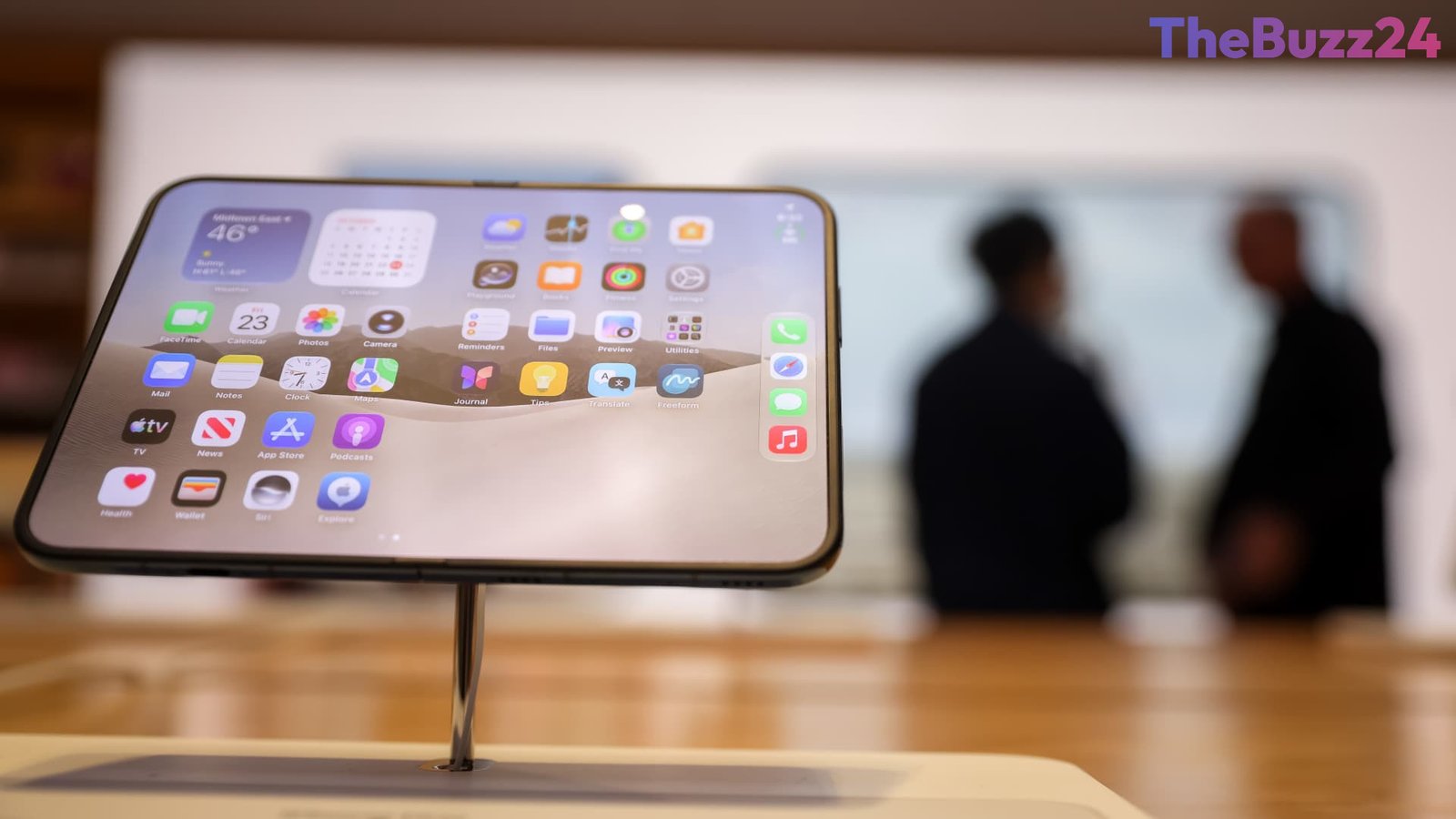
Tech giant Apple has acknowledged reports of display failures affecting its newly launched foldable smartphone, the iPhone Duo. Just days after making its commercial debut to long lines and extensive pre-order waitlists, early adopters began reporting hardware issues with the $1,999 flagship device. Affected users noted that the primary interior display developed severe damage, characterized by bright horizontal lines stretching outward from the central hinge mechanism.
In response to growing customer complaints on community forums, Apple confirmed it is actively addressing the matter, describing the flaw as affecting a small subset of units. The company announced that impacted owners can receive a replacement device through its AppleCare warranty program. However, official service documentation indicates that out-of-warranty inner screen repairs will carry a steep $999 price tag for customers without extended coverage.
Hardware experts at third-party repair firm iFixit analyzed the device’s internal structure to identify potential root causes after conducting teardown tests. Technicians noted that the intricate hinge mechanism, comprised of dozens of high-precision components, leaves the fragile folding display vulnerable to microscopic debris or minute manufacturing tolerances. Observers highlighted that audible resistance or crunching noises when opening the phone frequently preceded the display failure.
Display durability challenges have historically plagued the foldable smartphone segment, recalling similar launch hurdles faced by competitors like Samsung when early folding models debuted in 2019. Despite the initial hardware setbacks, consumer response to the unfolded multitasking capabilities remains positive, with software developers rapidly updating applications to support the new dual-screen form factor.
Key Takeaways
- Early adopters of the $1,999 iPhone Duo report interior screen damage featuring bright lines originating near the central hinge.
- Apple confirmed the issue affects a small number of units and is offering replacements through AppleCare, though out-of-warranty repairs cost $999.
- Teardowns indicate that fine dust particles or micro-variances in the complex hinge assembly may be damaging the delicate foldable display panel.
Editor’s Analysis & Impact
The release of the iPhone Duo marks Apple’s long-awaited entry into the flexible screen ecosystem, a sector historically challenged by structural fragility. While launch demand remains high, early hardware failures threaten to undercut consumer confidence, particularly given the device’s premium pricing. If display defects prove more widespread than initially estimated, Apple faces substantial warranty replacement costs and potential brand fallout akin to early Samsung Galaxy Fold difficulties. Furthermore, a $999 out-of-warranty repair fee could alienate enthusiasts looking to enter the folding market. Apple’s long-term success in this emerging category will depend on its ability to rapidly mitigate manufacturing vulnerabilities and maintain trust through strong customer support.
Frequently Asked Questions
Q: What display issues are iPhone Duo users experiencing?
A: Owners have reported bright horizontal lines appearing across the interior display, originating from the hinge area, sometimes accompanied by a crunching sound when opening or closing the device.
Q: How much does it cost to repair a broken iPhone Duo inner screen?
A: Apple is replacing defective devices under the AppleCare warranty. However, out-of-warranty screen repairs for the iPhone Duo are priced at $999.
Q: Why are foldable phone screens prone to cracking?
A: Foldable screens rely on flexible panels and complex mechanical hinges containing dozens of micro-parts. Small manufacturing variances or tiny particles like sand can easily breach the hinge and puncture the fragile display layer.
AI Disclosure: This article is based on verified data and official reports. Our Team and AI have cross-referenced every financial detail with primary sources to ensure total accuracy.
More from this Category