Artemis II Post-Flight Research Unlocks Key Insights for Deep Space Human Exploration
NASA’s Artemis II mission, following its successful circumlunar journey and splashdown in the Pacific Ocean on April 10, has transitioned into an intensive phase of scientific data collection and analysis. This crucial post-flight research is designed to gather vital insights into human adaptation to spaceflight and different gravitational environments, laying the groundwork for safe and sustained human presence on the Moon and eventually Mars. The comprehensive investigations aim to inform future mission planning, crew health protocols, and the development of a lunar base.
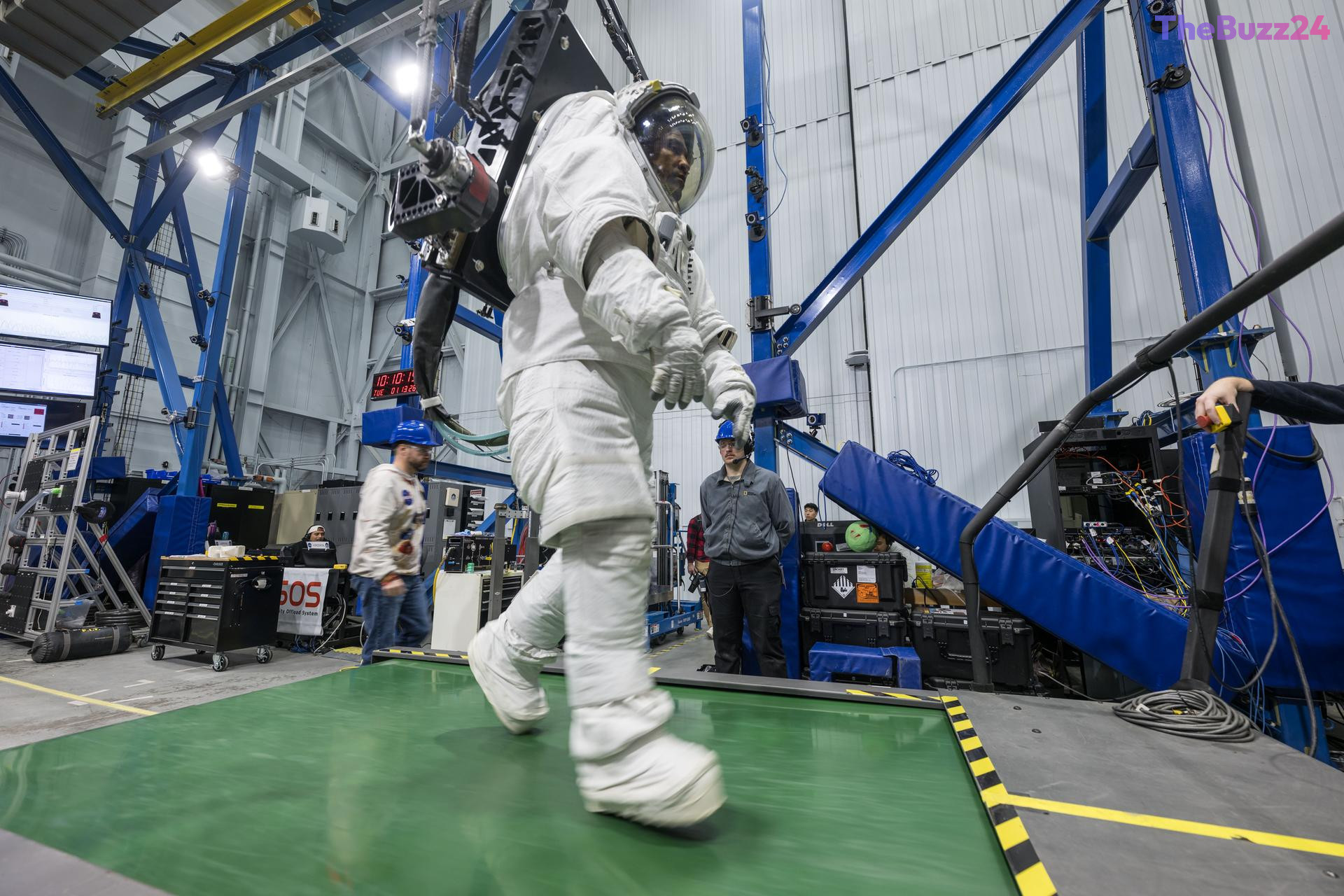
Immediately after their return, the Artemis II crew – NASA astronauts Reid Wiseman, Victor Glover, Christina Koch, and CSA (Canadian Space Agency) astronaut Jeremy Hansen – underwent extensive medical evaluations and performance tests. Researchers prioritized collecting data rapidly to understand the body’s transition from microgravity back to Earth’s gravity. This included a suite of measurements for the Spaceflight Standard Measures study, assessing blood pressure, heart rate, eye health, and motor control. Crew members also navigated a mini obstacle course and later, while wearing spacesuits offloaded to lunar gravity, completed similar tasks at NASA’s Johnson Space Center. These efforts are critical for determining how quickly astronauts can perform mission-critical tasks on planetary surfaces without immediate ground support. Furthermore, the Immune Biomarkers study is analyzing blood and saliva samples to investigate how spaceflight affects the immune system, including the potential reawakening of dormant viruses. Cognition tests and simulated spacecraft docking tasks, part of the ARCHeR (Artemis Research for Crew Health & Readiness) study, are also being analyzed to understand space hazards’ impact on well-being and performance.
A groundbreaking aspect of the Artemis II research involves the analysis of “organ chips” from NASA’s AVATAR (A Virtual Astronaut Tissue Analog Response) investigation. These chips, containing bone marrow cells from each astronaut, traveled around the Moon alongside the crew. Now being studied at Emulate’s laboratory in Boston, researchers are comparing these flight-exposed chips with ground controls and crew blood samples using advanced techniques like single-cell RNA sequencing. The goal is to understand the molecular-level effects of deep space radiation and microgravity on human health. This pioneering work could lead to the development of personalized medical kits, potentially allowing future astronauts’ AVATAR chips to be sent ahead on missions to tailor health interventions.
Beyond human physiology, the Artemis II mission also yielded significant observational data of the Moon. During Orion’s closest approach on April 6, the crew spent nearly seven hours meticulously studying lunar features, guided by a detailed observation plan from the Artemis II lunar science team. Astronauts applied their geology training to photograph and describe impact craters, ancient lava flows, surface cracks, and ridges, noting variations in color, brightness, and texture that offer clues about the Moon’s composition and history. Scientists are currently reviewing these extensive images, video, and audio files, with an initial data interpretations report expected later this year. Over 100 science-related audio recordings with transcripts and approximately 11,500 Earth and Moon image and video files will be made publicly available through NASA’s Planetary Data System, ensuring this invaluable data is accessible for future generations of researchers.
Key Takeaways
- Artemis II post-flight research is gathering extensive data on astronaut health, performance, and adaptation to different gravitational environments to prepare for future deep space missions.
- Groundbreaking "organ-on-a-chip" technology, carrying astronaut cells, is being analyzed to understand the molecular effects of deep space radiation and microgravity, potentially leading to personalized space medicine.
- The mission collected thousands of images, videos, and audio recordings of the Moon, providing crucial geological insights that will be publicly archived for future scientific study.
Editor’s Analysis & Impact
The comprehensive post-flight research from the Artemis II mission marks a pivotal moment for the burgeoning space exploration industry. By meticulously studying human physiological responses and the effects of deep space, NASA is not only advancing its own ambitious lunar and Martian goals but also providing invaluable data that could benefit commercial space ventures. This research will directly influence the design of future spacecraft, habitats, and life support systems, potentially spurring innovation in aerospace engineering and biotech. The development of personalized medical kits based on “organ chip” technology could revolutionize space healthcare, offering tailored solutions for astronaut well-being. Furthermore, the public release of lunar data through the Planetary Data System fosters global scientific collaboration and could inspire new research directions, solidifying humanity’s path towards sustained deep space presence.
Frequently Asked Questions
Q: What is the primary goal of the Artemis II post-flight research?
A: The primary goal is to collect and analyze critical data on how the human body adapts to spaceflight and different gravitational environments, such as lunar gravity, to ensure the safety and effectiveness of future long-duration missions to the Moon and Mars.
Q: How are "organ chips" being used in this research?
A: "Organ chips" from the AVATAR investigation, containing bone marrow cells from each astronaut, flew around the Moon. Researchers are now analyzing these chips to understand the molecular-level effects of deep space radiation and microgravity on human health, with the potential to develop personalized medical kits for future astronauts.
Q: What kind of data was collected about the Moon during the mission?
A: During its closest approach to the Moon, the Artemis II crew collected extensive imagery, video, and audio files, documenting geological features like impact craters, lava flows, and surface cracks. This data provides insights into the Moon's composition and history and will be made publicly available for scientific study.
AI Disclosure: This article is based on verified data and official reports. Our Team and AI have cross-referenced every financial detail with primary sources to ensure total accuracy.
More from this Category