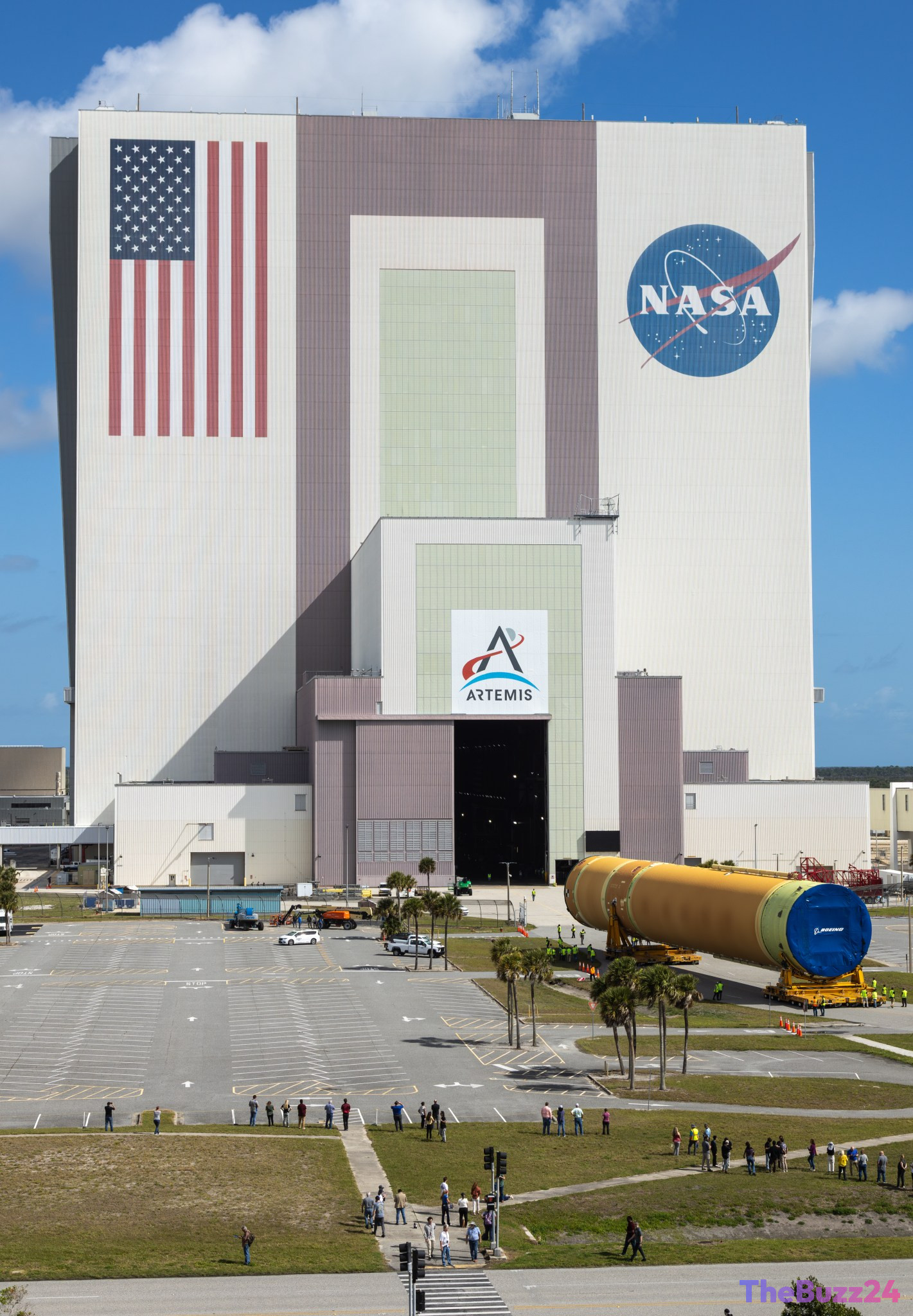
Artemis III Core Stage Reaches Kennedy Space Center for Lunar Mission Assembly
The primary core stage for the Artemis III lunar mission has officially arrived at the Kennedy Space Center in Florida, marking a pivotal advancement in the nation’s return to the Moon. The massive rocket component completed a 900-mile journey from the Michoud Assembly Facility in New Orleans, navigating inland waterways aboard the Pegasus barge before being delivered to the iconic Vehicle Assembly Building.
As the backbone of the Space Launch System, the core stage houses the essential engines required to produce the immense thrust needed for deep-space transit. With the hardware now on-site, engineering teams are transitioning into a rigorous integration phase. This process involves meticulously connecting the core stage with the remainder of the rocket’s architecture, followed by comprehensive system validations to ensure the vehicle meets the stringent safety requirements for human spaceflight.
Artemis III represents a critical milestone in modern space exploration, specifically testing the complex maneuvers required for the Orion spacecraft to dock with commercial lunar landers. By refining these operational procedures, the mission seeks to establish a sustainable framework for future lunar activity. As the global space sector pivots toward a long-term presence on the Moon, the successful assembly of this launch vehicle serves as a foundational step in expanding human reach into the solar system.
Key Takeaways
- The Artemis III core stage has arrived at Kennedy Space Center, signaling the start of final rocket integration.
- The component was transported 900 miles from New Orleans via the Pegasus barge to the Vehicle Assembly Building.
- The mission will focus on critical docking procedures between the Orion spacecraft and commercial lunar landers to support sustainable exploration.
Editor’s Analysis & Impact
The arrival of the Artemis III core stage at Kennedy Space Center underscores the transition from manufacturing to operational readiness in the lunar program. This milestone is significant not only for the technical achievement of the Space Launch System but also for the broader commercialization of space. By integrating commercial landers with the Orion spacecraft, the mission highlights a shift toward a collaborative ecosystem between government agencies and private aerospace firms. The success of this integration phase is vital for maintaining the timeline for future lunar landings. Looking ahead, the ability to reliably assemble and launch these heavy-lift vehicles will dictate the pace of long-term lunar infrastructure development, ultimately serving as a proving ground for future crewed missions to Mars and beyond.
Frequently Asked Questions
Q: What is the primary function of the Artemis III core stage?
A: The core stage acts as the backbone of the Space Launch System, housing the primary engines necessary to generate the thrust required for deep-space travel.
Q: Why is the Artemis III mission considered a high-stakes demonstration?
A: It is a critical test of the technical procedures required to dock the Orion spacecraft with commercial lunar landers, which is essential for establishing a sustainable human presence on the Moon.
AI Disclosure: This article is based on verified data and official reports. Our Team and AI have cross-referenced every financial detail with primary sources to ensure total accuracy.
More from this Category