Celestial Highlights: What to Watch in the Night Sky This May 2026
As May 2026 approaches, amateur astronomers and casual stargazers alike have a series of remarkable celestial events to look forward to. The month is packed with astronomical activity, ranging from high-speed meteor showers to rare lunar phenomena, offering a perfect opportunity to engage with the mechanics of our solar system.
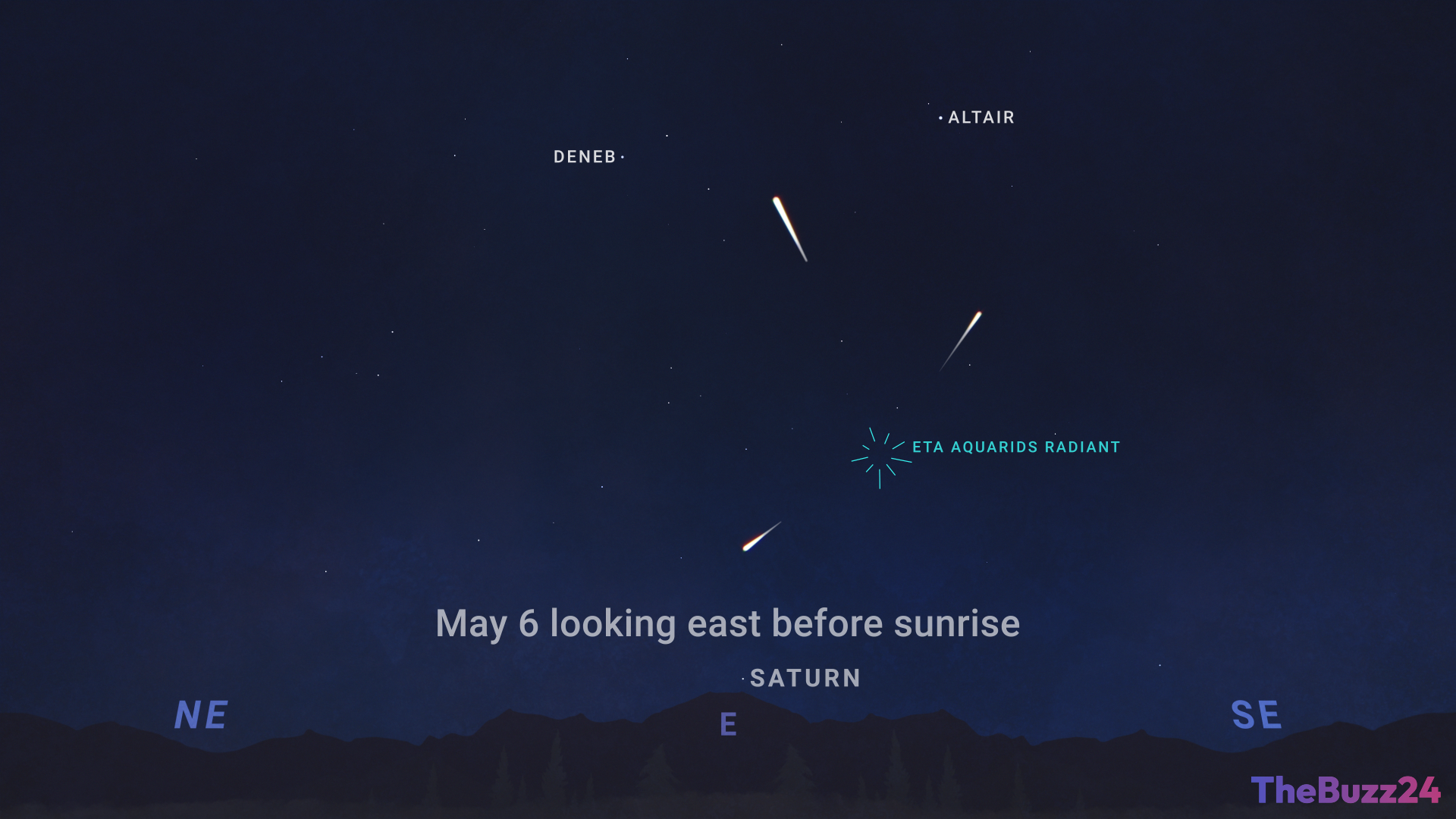
The month kicks off with the Eta Aquarid meteor shower, which is expected to reach its peak activity on May 5 and 6. These meteors are the result of Earth passing through the debris trail left behind by the famous Halley’s Comet. Because these particles travel at high velocities—roughly 40 miles per second—they often produce long-lasting, glowing trails across the sky. To catch the best view, experts recommend finding a location with minimal light pollution and allowing at least 20 minutes for eyes to adjust to the darkness in the pre-dawn hours.
Mid-month, the sky will feature a stunning planetary conjunction on May 18. Shortly after sunset, the crescent Moon will appear to pass very close to Venus. While the two objects are separated by millions of miles in reality, their proximity from our vantage point on Earth will create a brilliant visual display. Venus, often called the ‘Evening Star,’ will shine brightly alongside the lunar crescent, making it an easy target for those without specialized equipment.
May concludes with a rare lunar event on May 31: a Blue Moon. Despite the name, the Moon will not change color; rather, the term describes the occurrence of a second full moon within a single calendar month. This event serves as a fitting finale for the month’s astronomical calendar, providing a final, striking image to close out the spring stargazing season.
Key Takeaways
- The Eta Aquarid meteor shower peaks on May 5-6, originating from the debris of Halley’s Comet.
- A visually striking conjunction between the crescent Moon and Venus will occur on May 18.
- A 'Blue Moon'—the second full moon in a single month—will take place on May 31.
Editor’s Analysis & Impact
The upcoming astronomical events in May 2026 highlight the growing public interest in amateur astronomy and space science. These events serve as accessible entry points for science education, requiring no expensive equipment, which helps foster a broader appreciation for planetary mechanics. From a market perspective, the increased interest in stargazing often correlates with a rise in demand for consumer-grade optics, such as binoculars and entry-level telescopes, as well as mobile applications designed for sky mapping. As light pollution remains a significant challenge for urban observers, these events also underscore the importance of dark-sky preservation initiatives. Looking ahead, the ability to predict and promote such events continues to drive engagement in STEM-related hobbies, reinforcing the role of celestial observation in both cultural and educational spheres.
Frequently Asked Questions
Q: Will the Blue Moon on May 31 actually appear blue?
A: No, the term 'Blue Moon' refers to the timing of the moon—specifically the second full moon in a single calendar month—rather than its physical color.
Q: Do I need a telescope to see the Venus and Moon conjunction?
A: No, the conjunction of the Moon and Venus on May 18 will be bright enough to be clearly visible to the naked eye shortly after sunset.
AI Disclosure: This article is based on verified data and official reports. Our Team and AI have cross-referenced every financial detail with primary sources to ensure total accuracy.
More from this Category