Mars Odyssey Orbiter Celebrates 25 Years of Unprecedented Planetary Discovery
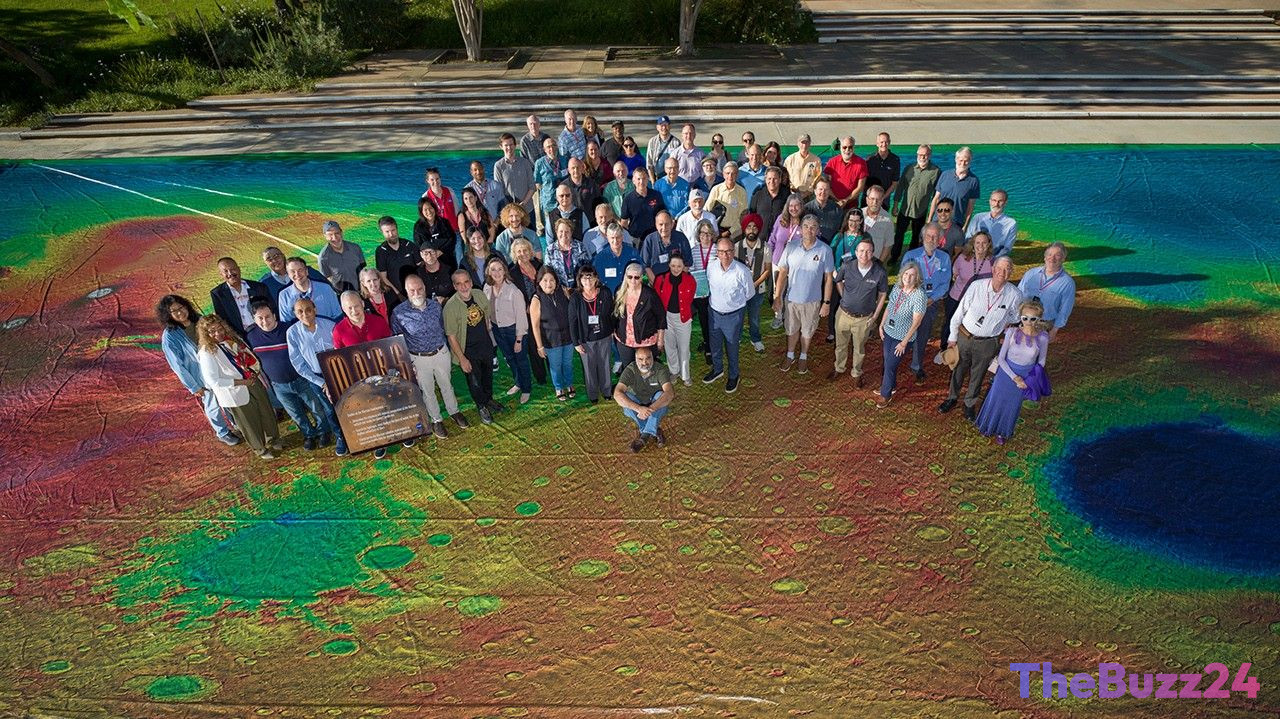
The 2001 Mars Odyssey orbiter has officially reached a historic quarter-century milestone, marking 25 years of continuous service in the exploration of the Red Planet. On April 15, 2026, mission personnel gathered at the Jet Propulsion Laboratory in Southern California to honor the spacecraft, which first launched on April 7, 2001. Since its arrival, the orbiter has served as a vital asset for planetary science, far exceeding its original operational expectations.
To commemorate this silver anniversary, the mission team unveiled a comprehensive global map of Mars. This detailed visualization was constructed using data from the Thermal Emission Imaging System (THEMIS), an infrared camera onboard the spacecraft that has been critical in analyzing the Martian surface. The map provides a high-resolution look at the planet’s topography, showcasing the immense volume of data collected over the last two and a half decades.
Throughout its extended tenure, the Mars Odyssey mission has fundamentally reshaped the scientific community’s understanding of Martian geology and climate patterns. By operating well beyond its initial mission parameters, the orbiter has secured its place as one of the most successful and resilient projects in the history of deep-space exploration, continuing to provide essential insights into the Martian environment.
Key Takeaways
- The Mars Odyssey orbiter has officially completed 25 years of continuous operation since its 2001 launch.
- A new, detailed global map of Mars was released to celebrate the mission's silver anniversary, utilizing data from the THEMIS infrared camera.
- The mission has significantly advanced human knowledge regarding Martian climate and geological history, far exceeding its original design life.
Editor’s Analysis & Impact
The longevity of the Mars Odyssey mission serves as a testament to the robustness of early 21st-century aerospace engineering. By operating for 25 years, the orbiter has provided a longitudinal dataset that is rare in planetary science, allowing researchers to observe long-term climatic shifts on Mars that would be impossible to track with shorter-term missions. This success highlights the value of ‘extended mission’ phases in space exploration, where legacy hardware continues to yield high-value scientific returns at a fraction of the cost of new launches. Looking forward, the data gathered by Odyssey will remain a foundational resource for future crewed missions, as the mapping of surface minerals and thermal properties is essential for identifying potential landing sites and resource availability for future human explorers.
Frequently Asked Questions
Q: What is the primary purpose of the Mars Odyssey orbiter?
A: The orbiter is designed to map the Martian surface, study its geology, and analyze the planet's climate and mineral composition using instruments like the THEMIS infrared camera.
Q: Why is the 25-year milestone significant for space exploration?
A: It represents an extraordinary achievement in engineering, as the spacecraft has operated for over two decades past its original mission parameters, providing a rare, long-term record of Martian environmental data.
AI Disclosure: This article is based on verified data and official reports. Our Team and AI have cross-referenced every financial detail with primary sources to ensure total accuracy.
More from this Category