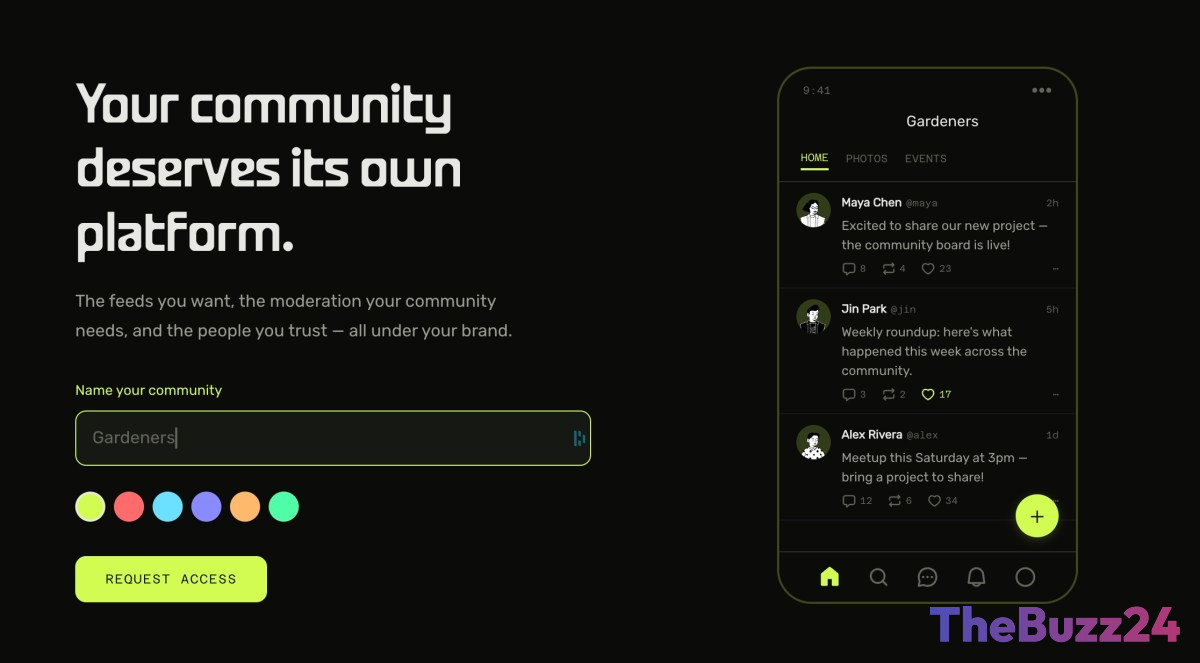
Acorn Launches Decentralized Community Platform as Alternative to Big Tech
As major social media platforms continue to shift their policies and sunset popular features, a new project called Acorn has emerged to offer creators and organizations a decentralized alternative. Built by the firm Blacksky, Acorn leverages the AT Protocol—the same underlying technology that powers Bluesky—to provide users with a toolkit for building independent online spaces. This move arrives at a critical time, particularly following the recent decision by X to shut down its Communities feature, which left many group administrators searching for new homes for their members.
Acorn distinguishes itself by allowing community leaders to maintain full control over their digital environments. Instead of being subject to the opaque algorithms and fluctuating moderation policies of centralized tech giants, users can deploy their own domains, customize feeds, and implement tailored moderation tools. The platform includes features such as ‘Starter Packs’ to help onboard new members, reputation systems with custom badges, and robust analytics to track engagement and growth. By utilizing the AT Protocol, Acorn ensures that these communities remain interoperable with the broader open social web.
The platform is designed to be accessible to those without deep technical expertise, offering a range of deployment options. While some organizations may choose to run their own Personal Data Servers (PDS) for maximum independence, others can opt for a managed client experience. Currently, Acorn operates on a customized pricing model, with plans to transition into a tiered software-as-a-service (SaaS) structure as the platform scales. Early adopters already include specialized groups like Latinsky, Medsky, and The Invite, with the company actively expanding its reach to nonprofits and media organizations.
This shift toward decentralized infrastructure reflects a growing public distrust in platforms that prioritize advertising revenue over user experience. With increasing regulatory scrutiny and the frustration caused by automated account bans on platforms like Facebook and Instagram, Acorn aims to provide a resilient, user-centric environment. By empowering creators to own their community data and moderation policies, the project seeks to foster a more sustainable model for online interaction that is not beholden to the whims of a single corporate entity.
Key Takeaways
- Acorn provides a decentralized community-building platform based on the AT Protocol, offering an alternative to centralized social media giants.
- The platform allows creators to maintain ownership of their data, customize moderation policies, and avoid reliance on opaque platform algorithms.
- Acorn is currently targeting organizations and creators with a flexible SaaS model, with early adoption already underway in niche interest groups.
Editor’s Analysis & Impact
The launch of Acorn signals a maturing phase for the decentralized web, moving beyond simple social networking toward functional community management. By providing a ‘plug-and-play’ infrastructure for the AT Protocol, Blacksky is effectively lowering the barrier to entry for organizations that want to escape the ‘walled garden’ model of Big Tech. The market impact here is significant: as users become increasingly frustrated with automated moderation and algorithmic volatility, the demand for portable, sovereign digital spaces will likely grow. If Acorn can successfully balance ease-of-use with the technical complexities of decentralized hosting, it could become a primary infrastructure provider for the next generation of online communities. The long-term success of this model depends on its ability to scale while maintaining the community-first ethos that currently drives its development.
Frequently Asked Questions
Q: What technology does Acorn use to power its communities?
A: Acorn is built on the AT Protocol, which is the same open-source technology that powers the decentralized social media app Bluesky.
Q: How does Acorn differ from traditional social media platforms?
A: Unlike traditional platforms, Acorn allows creators to host their communities on their own domains, set their own moderation policies, and avoid reliance on centralized algorithms that often dictate visibility and content control.
AI Disclosure: This article is based on verified data and official reports. Our Team and AI have cross-referenced every financial detail with primary sources to ensure total accuracy.
More from this Category