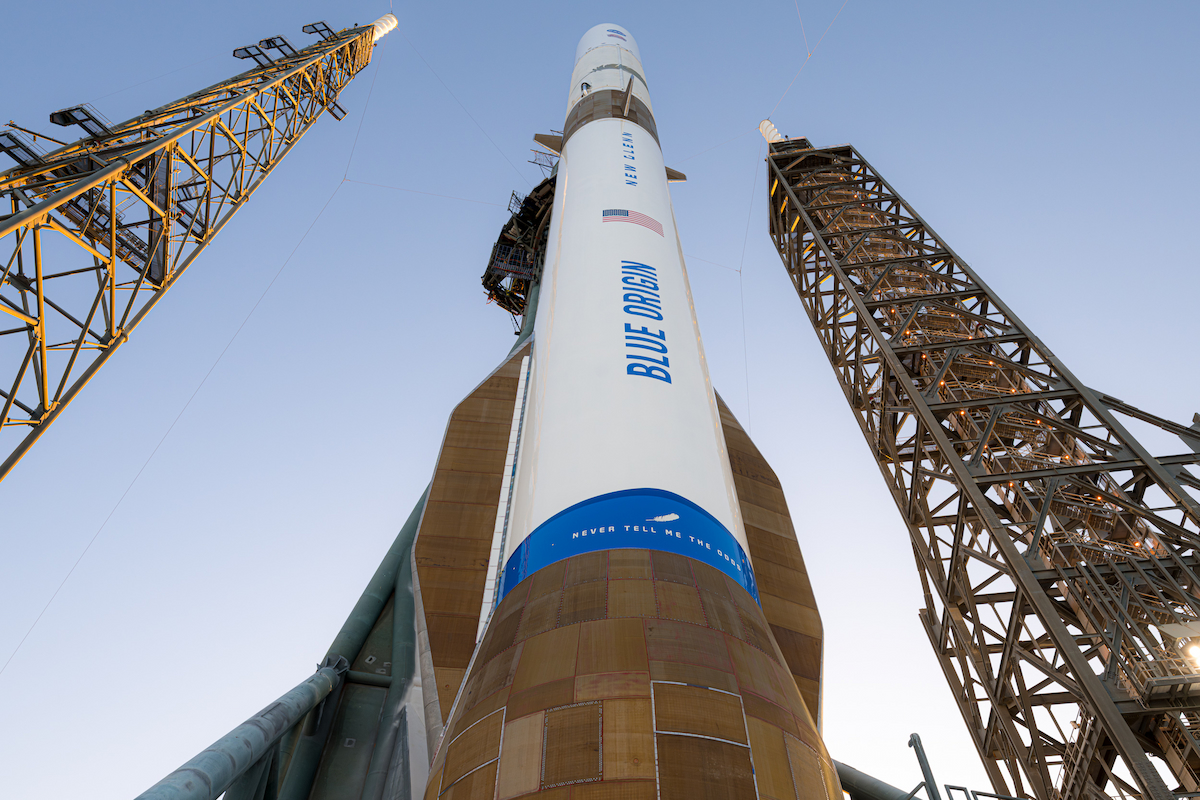
Blue Origin’s New Glenn Faces Orbital Failure During Satellite Deployment Mission
Blue Origin’s New Glenn rocket program encountered a significant technical setback this past Sunday during its third mission. While the launch successfully achieved a major milestone by landing a previously flown booster on a drone ship, the mission failed to deliver its primary payload to the correct orbital destination. The rocket’s upper stage did not reach the required altitude, resulting in the BlueBird 7 communications satellite being stranded in an orbit too low to maintain operational status.
The satellite, owned by AST SpaceMobile, was able to power on following separation, but the company has confirmed that the unit will be de-orbited to burn up in the atmosphere. Despite the loss, AST SpaceMobile stated that the asset is covered by insurance and that the company remains committed to its long-term deployment strategy, which includes launching 45 additional satellites by the end of 2026. The firm continues to coordinate with various launch partners to ensure its network goals remain on track.
This event represents the first major operational complication for the New Glenn rocket, which only entered active service in early 2025 after a decade of development. The failure has drawn attention to the reliability of the vehicle’s second-stage systems, a critical component for Blue Origin’s aspirations to support NASA’s Artemis lunar missions. As the company faces pressure to meet strict timelines for lunar lander deployments, the industry is closely monitoring how Blue Origin will address these performance gaps.
Blue Origin has not yet released a comprehensive technical analysis regarding the cause of the orbital discrepancy. The company’s strategy of integrating commercial payloads early in the New Glenn program has invited scrutiny, particularly when compared to the more conservative testing cycles typically employed by other heavy-lift launch providers. Future missions will be pivotal as the company attempts to demonstrate the consistency required for high-stakes space exploration and commercial satellite deployment.
Key Takeaways
- Blue Origin's New Glenn rocket successfully landed a booster but failed to place the BlueBird 7 satellite into its intended orbit.
- AST SpaceMobile confirmed the satellite will be de-orbited, though the loss is covered by insurance and will not derail their 2026 deployment plans.
- The failure raises questions about the reliability of New Glenn's second-stage systems as Blue Origin prepares for critical NASA Artemis lunar missions.
Editor’s Analysis & Impact
The failure of the New Glenn mission highlights the inherent risks associated with the rapid commercialization of heavy-lift launch vehicles. While the successful recovery of the booster demonstrates progress in reusability, the inability to reach the target orbit exposes potential vulnerabilities in the second-stage architecture. For Blue Origin, this is a critical juncture; as a key contractor for NASA’s Artemis program, the company must prove that its systems can handle the precision required for lunar missions. The market will likely react with increased caution, potentially impacting investor confidence and the company’s ability to secure future high-value commercial contracts. Moving forward, Blue Origin must provide transparency regarding the technical root cause to maintain its standing against established competitors in the aerospace sector.
Frequently Asked Questions
Q: What happened to the BlueBird 7 satellite?
A: The satellite was deployed into an orbit too low to sustain operations. Consequently, AST SpaceMobile will de-orbit the satellite to allow it to burn up in the atmosphere.
Q: Did the New Glenn rocket fail entirely?
A: No. The mission successfully demonstrated the reusability of the rocket’s booster by landing it on a drone ship, but it failed to complete the secondary objective of placing the payload into the correct orbit.
AI Disclosure: This article is based on verified data and official reports. Our Team and AI have cross-referenced every financial detail with primary sources to ensure total accuracy.
More from this Category