Humanoid Robots Shatter Athletic Records in Beijing Half-Marathon Showcase
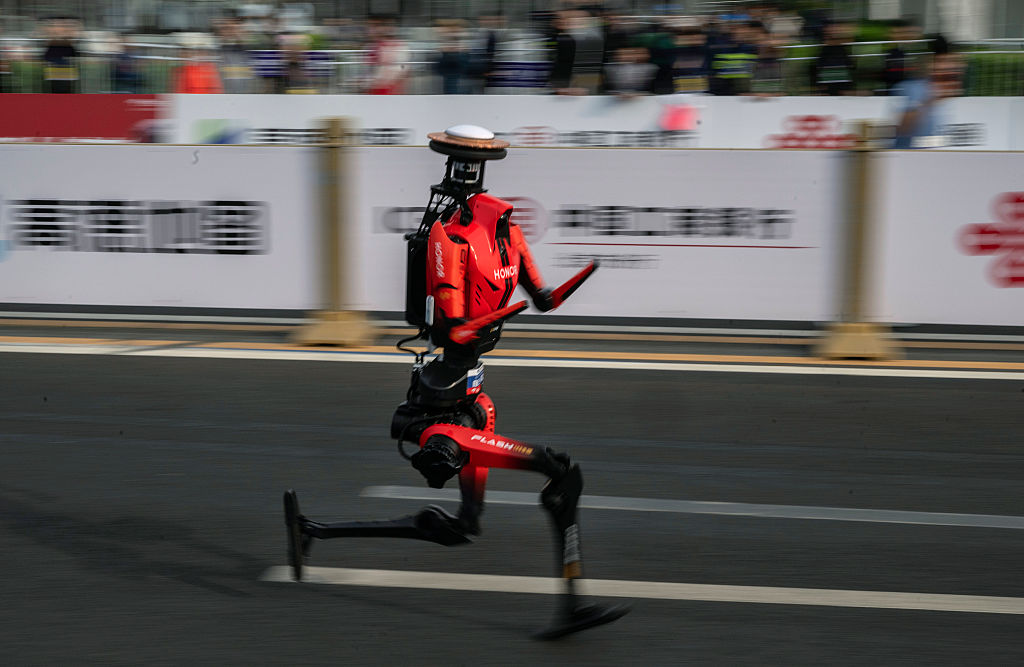
The landscape of robotics reached a significant milestone during the recent Beijing half-marathon, as humanoid machines demonstrated remarkable advancements in both speed and autonomous navigation. An autonomous robot successfully completed the 13.1-mile course in just 50 minutes and 26 seconds, a feat that surpasses the current human world record of 57 minutes. This performance marks a staggering improvement over the previous year’s event, where the leading robot required two hours and 40 minutes to finish the same distance.
The event featured a mix of fully autonomous units and remote-controlled machines, with approximately 40% of the participants operating without any human input. While a remote-controlled unit from Honor achieved a faster raw time of 48 minutes and 19 seconds, the event organizers awarded the top honor to the autonomous winner. This decision was based on a scoring framework that prioritizes independent decision-making and environmental navigation over pure velocity.
Despite these record-breaking achievements, the race highlighted the persistent technical challenges facing the robotics sector. Several machines struggled with the unpredictability of a real-world course, resulting in mechanical failures at the starting line and collisions with barriers. These incidents underscore the ongoing difficulty of mastering complex, dynamic environments, even as the performance gap between human athletes and robotic systems continues to close at an unprecedented pace.
Key Takeaways
- An autonomous humanoid robot finished a half-marathon in 50 minutes and 26 seconds, outperforming the human world record.
- Robotic performance has seen massive year-over-year gains, with the top finisher cutting nearly two hours off the previous year's time.
- Real-world environmental factors remain a significant hurdle, as evidenced by mechanical failures and navigation errors during the race.
Editor’s Analysis & Impact
The Beijing half-marathon results represent a critical inflection point for humanoid robotics, signaling a transition from laboratory-bound prototypes to functional, real-world performers. The ability of these machines to navigate public spaces suggests that bipedal locomotion is nearing commercial viability for sectors like logistics, search and rescue, and outdoor labor. However, the mechanical failures observed during the event serve as a reality check, highlighting that durability and environmental adaptability remain the primary bottlenecks for widespread adoption. As developers refine AI-driven navigation and hardware resilience, the integration of these robots into public infrastructure appears increasingly inevitable. This shift will likely have profound implications for labor markets and the physical service industry, as the line between human and machine capability continues to blur.
Frequently Asked Questions
Q: Did the autonomous robot's time officially beat the human world record?
A: Yes, the autonomous robot completed the 13.1-mile course in 50 minutes and 26 seconds, which is faster than the current human world record of 57 minutes.
Q: Why was the autonomous robot awarded the top prize despite a slower time than a remote-controlled unit?
A: The competition used a weighted scoring system that favored autonomous decision-making and independent navigation over raw speed, which is why the fully autonomous unit was prioritized over the remote-controlled entry.
AI Disclosure: This article is based on verified data and official reports. Our Team and AI have cross-referenced every financial detail with primary sources to ensure total accuracy.
More from this Category