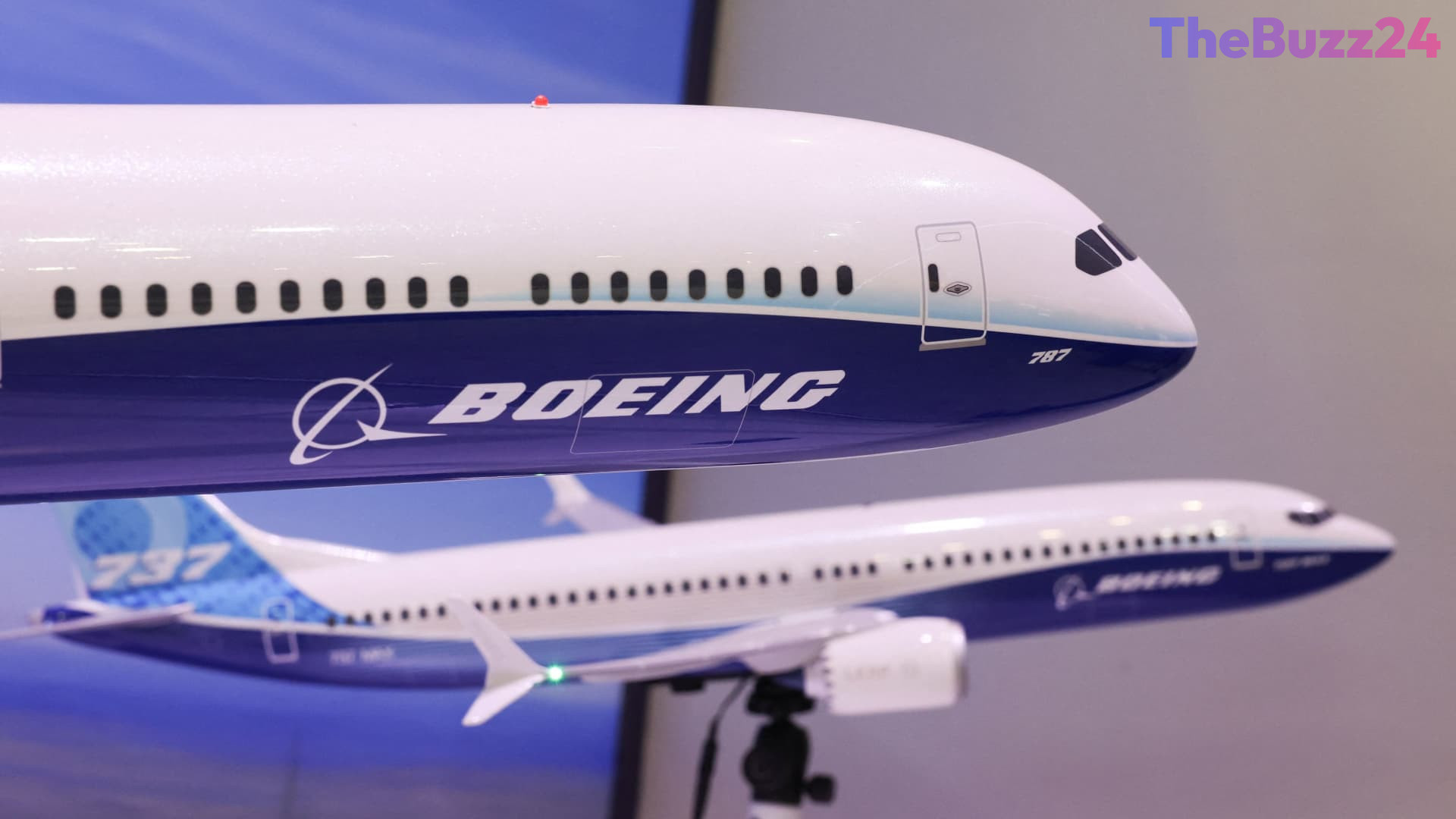
Boeing Accelerates Deliveries, Marks Strongest First Half Since 2018 Amid Production Push
Aerospace giant Boeing has reported a significant surge in aircraft deliveries for the first half of the year, reaching 314 jets. This figure represents a 12% increase compared to the same period last year and marks the company’s highest first-half delivery total since 2018, signaling a robust recovery in its production capabilities. Despite this strong performance, Boeing continues to trail its European competitor, Airbus, which delivered 351 aircraft during the same six-month period, including 89 jets in June alone.
The U.S. planemaker anticipates an even stronger second half of the year, driven primarily by an accelerated production schedule for its highly popular 737 MAX aircraft. Boeing is actively increasing its 737 output from 42 jets per month to 47, aiming to meet the substantial demand for its narrow-body workhorse. June deliveries included 42 737 MAX jets and 13 787 Dreamliners, with five of the 787s previously delayed due to seat certification issues for the new airline Riyadh Air now successfully delivered. Additionally, the company delivered three 777 freighters and five 767s, three of which are destined for conversion into KC-46 aerial refueling tankers by Boeing’s defense division.
Beyond deliveries, Boeing also demonstrated strong order activity in June, securing 121 new orders while experiencing eight cancellations, resulting in a net total of 113 new aircraft orders for the month. Notably, the 737 MAX has now accumulated 7,206 orders, surpassing its predecessor, the 737 Next Generation, which had 7,159 orders. Among the recent order movements, Canadian airline WestJet canceled six 737 orders, but Aviation Capital Group subsequently ordered six 737s, which it plans to lease to WestJet, effectively maintaining the airline’s fleet expansion plans. Through June, Boeing’s net orders after cancellations and conversions stand at 408 aircraft, underscoring a positive trajectory for the company’s commercial aircraft division.
Key Takeaways
- Boeing delivered 314 aircraft in the first half of the year, marking its best performance since 2018 and a 12% increase year-over-year.
- The company is ramping up production of its best-selling 737 MAX, expecting higher deliveries in the second half of the year.
- Boeing recorded 113 net new orders in June, with the 737 MAX surpassing its predecessor in total orders.
Editor’s Analysis & Impact
Boeing’s robust first-half delivery performance signals a significant step in its recovery and an optimistic outlook for the aerospace sector. The increased output of the 737 MAX indicates a strong demand for narrow-body aircraft and Boeing’s ability to overcome past production hurdles. While still trailing Airbus, this momentum could help Boeing narrow the gap in market share. The strong order book, particularly for the 737 MAX, reinforces confidence in the company’s long-term growth trajectory. This positive trend has broader implications for the global supply chain, employment in the aerospace industry, and the overall health of the airline sector as it continues its post-pandemic rebound.
Frequently Asked Questions
Q: How do Boeing's first-half deliveries compare to its rival, Airbus?
A: Boeing delivered 314 aircraft in the first half of the year. Its European competitor, Airbus, delivered 351 jets during the same period, indicating Airbus still holds a lead in first-half deliveries.
Q: Which aircraft model is driving Boeing's increased production?
A: Boeing is significantly increasing the output of its best-selling 737 MAX, raising production from 42 to 47 jets per month, which is expected to boost deliveries in the latter half of the year.
Q: What was the net number of new orders Boeing received in June?
A: In June, Boeing booked 121 new orders and eight cancellations, resulting in a net total of 113 new orders for the month.
AI Disclosure: This article is based on verified data and official reports. Our Team and AI have cross-referenced every financial detail with primary sources to ensure total accuracy.
More from this Category