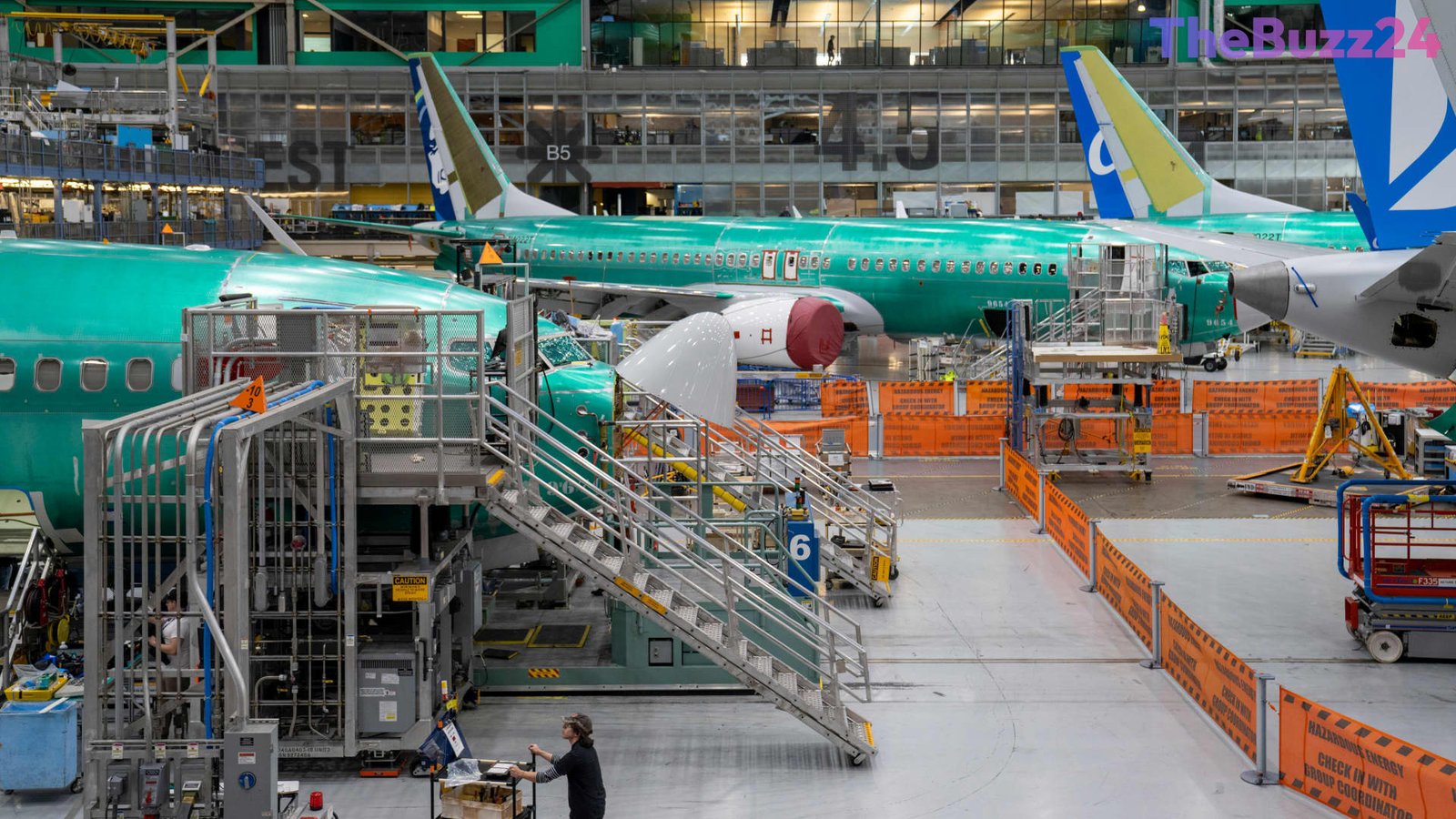
Boeing Adjusts Workforce as 737 Max Production Pace Falls Short of Projections
Aerospace giant Boeing is set to reduce its commercial airplane workforce by approximately 5%, a move attributed to a slower-than-anticipated increase in production rates. The company confirmed that these reductions will be implemented through a combination of attrition and involuntary layoffs, with notifications to affected employees commencing in December. This strategic adjustment reflects the ongoing challenges in stabilizing manufacturing output, particularly for its flagship 737 Max aircraft.
Stephanie Pope, who leads Boeing’s commercial aircraft unit, communicated to staff that the revised production schedules have resulted in an “overstaffed position.” The company has been actively working to stabilize the manufacturing pace of its bestselling 737 Max planes. The decision to align staffing levels with the updated business plan underscores the need for operational efficiency amidst the current production environment.
CEO Kelly Ortberg previously informed investors that a substantial increase in Max aircraft production is not expected until the second half of next year. He specifically cited slower-than-expected wing production as a contributing factor to the delays. Boeing is currently striving to maintain an output of around 47 of its 737 Max planes per month, with a long-term goal of reaching a production rate of 52 planes monthly by the latter half of 2027. The impending workforce adjustments are a direct consequence of these recalibrated production targets.
Key Takeaways
- Boeing plans to cut approximately 5% of its commercial airplane workforce through a combination of attrition and layoffs.
- The workforce reduction is a direct result of a slower-than-expected ramp-up in production rates, particularly for the 737 Max aircraft.
- Significant production increases for the 737 Max are now delayed until the second half of next year, with wing production identified as a key bottleneck.
Editor’s Analysis & Impact
This workforce adjustment by Boeing underscores persistent challenges within the aerospace manufacturing sector, particularly concerning supply chain resilience and production stability. While a 5% reduction might seem modest, it signals that the company is taking decisive steps to align its operational capacity with realistic production timelines, rather than overextending. For investors, this could be a mixed signal: a short-term negative due to reduced output, but a long-term positive if it leads to more predictable and efficient operations. The broader implications for the airline industry include potential delays in fleet upgrades and expansion, which could impact capacity and pricing. This move highlights the intricate balance manufacturers must strike between demand, supply chain capabilities, and workforce management in a highly complex global industry.
Frequently Asked Questions
Q: Why is Boeing cutting its commercial airplane workforce?
A: Boeing is reducing its workforce because its production ramp-up, especially for the 737 Max, is proceeding slower than anticipated, leading to an overstaffed position relative to current output.
Q: Which aircraft production is primarily affected by these delays?
A: The production of Boeing's bestselling 737 Max aircraft is primarily affected, with slower-than-expected wing production being a key factor contributing to the delays.
Q: When will the workforce reductions take effect?
A: Notifications for the workforce reductions, which include both attrition and involuntary layoffs, are scheduled to begin in December.
AI Disclosure: This article is based on verified data and official reports. Our Team and AI have cross-referenced every financial detail with primary sources to ensure total accuracy.
More from this Category