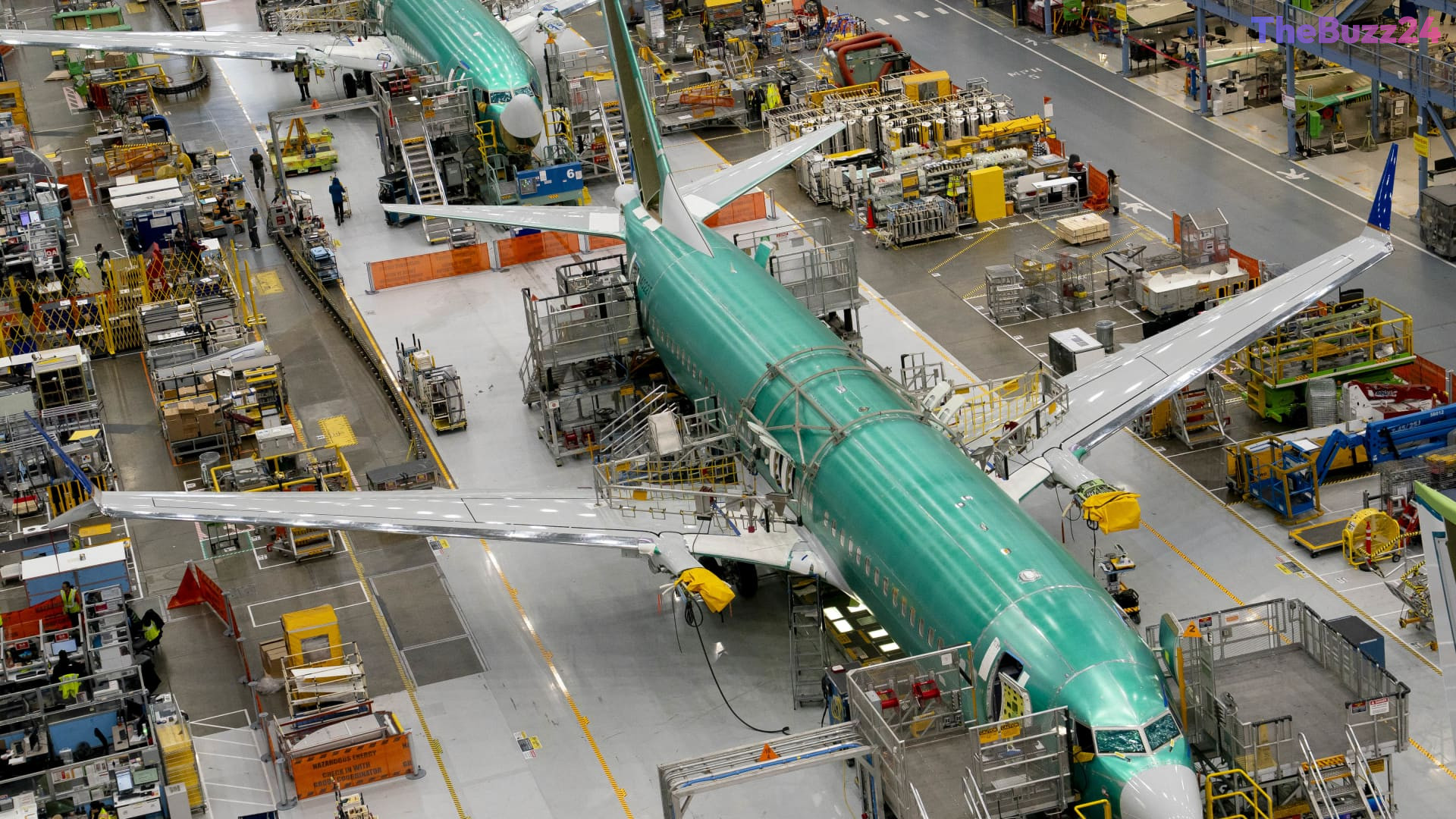
Boeing Receives Green Light to Scale 737 Max Manufacturing
Boeing is set to accelerate the manufacturing of its 737 Max aircraft following the successful navigation of regulatory requirements. The company has been granted permission to increase its monthly production rate to 47 units, a significant step in stabilizing its assembly operations. This move comes as the manufacturer seeks to restore consistency across its production lines after a period of intense scrutiny.
Currently, the production rate sits at 42 aircraft per month. CEO Kelly Ortberg has emphasized that the transition to the new target of 47 jets will be a phased process focused on operational stability. By adopting a measured approach, the company aims to ensure that the increase in volume does not come at the expense of the rigorous safety and quality standards required by the Federal Aviation Administration.
Looking further ahead, Boeing is targeting a long-term production capacity of 63 aircraft per month to meet global market demand. However, the company is not rushing this expansion. Leadership is currently evaluating intermediate milestones, such as a 52-unit monthly rate, which may take several months of sustained performance to implement. This cautious strategy is intended to rebuild industry confidence through reliable, high-quality manufacturing.
Key Takeaways
- Boeing is increasing 737 Max production from 42 to 47 aircraft per month.
- The expansion follows regulatory clearance and focuses on maintaining safety and quality standards.
- A long-term production goal of 63 aircraft per month remains the ultimate objective.
Editor’s Analysis & Impact
The approval to increase 737 Max production marks a vital turning point for Boeing as it attempts to move past recent operational setbacks. By securing regulatory clearance to reach 47 units per month, the company is demonstrating a renewed commitment to the quality management systems demanded by oversight bodies. This incremental scaling is a strategic necessity; rushing to meet demand without first stabilizing the production environment could trigger further regulatory intervention. For the broader aerospace industry, Boeing’s ability to successfully manage this ramp-up will be a bellwether for global supply chain health and airline delivery schedules. If Boeing can hit its long-term target of 63 jets per month while maintaining impeccable safety records, it will significantly strengthen its market position and financial stability.
Frequently Asked Questions
Q: What is the immediate production goal for the 737 Max?
A: Boeing is moving from a current rate of 42 aircraft per month to a new target of 47 units.
Q: How is Boeing ensuring safety during this production increase?
A: The company is utilizing a measured, phased approach to prioritize operational stability and quality control over rapid expansion.
AI Disclosure: This article is based on verified data and official reports. Our Team and AI have cross-referenced every financial detail with primary sources to ensure total accuracy.
More from this Category